
Macao
What to do in Macau? And……
What is a Portuguese city doing in the middle of China?
The Portuguese arrived in Macau in 1557 in search of the coveted spices, for which demand was growing steadily in Europe. After helping the Chinese authorities rid the area of pirates, they were granted a concession over this small peninsula with a high degree of autonomy….
…and so it remained until 1999, when Macau was “returned” to the Chinese—although the handover treaty stipulated that the region would retain its existing institutions for another 50 years, leaving everything, for the time being, as it was before the handover
THINGS TO DO IN MACAO: PLANNING YOUR VISIT
Documentation
You don't need a visa, but you must bring your passport, since they'll ask for it when you check in—whether at an airport, bus station, train station, etc.
Currency
Macau has its own currency: the pataca
The term “pataca” originally derives from the Portuguese word “pataca” (which in turn comes from “patacón”), used to refer to the eight-real Spanish silver coins (the famous “pesos duros”) that were widely circulated in Asia and the Americas during the 16th and 19th centuries. Since 1983, the pataca has maintained a fixed exchange rate with the Hong Kong dollar (approximately 1 HKD = 1.03 MOP).

But if you're coming from Hong Kong, you don't have to worry about exchanging currency, since they accept the Hong Kong dollar everywhere; just be aware that the same isn't true in Hong Kong—they don't accept patacas there….
Getting There and Getting Around
There are many ferries from Hong Kong that depart from the ferry terminals in Kowloon or Sheung Wang

To check prices and schedules: https://www.turbojet.com.hk/en/routing-sailing-schedule/hong-kong-macau/sailing-schedule-fares.aspx
Although the peninsula is small and can be explored on foot, there is an extensive bus network. For anyone who wants to take a general tour from north (ferry terminal) to south (maritime museum), I recommend taking bus 10A (3.20 patacas)—by the way, this bus passes through the casino district 🤑
The official languages in Macau are Chinese and Portuguese, although I didn't hear any Chinese people speaking it 😛 But anyway, it's helpful for finding your way around, since reading a street name or sign in Portuguese is different from reading it in Chinese.

THINGS TO DO IN MACAO: WHAT TO SEE
Great, we've already disembarked—let's get started… What to do in Macau in just one day?
Contrary to popular belief in China, I don't think there is any repression of religion as a general policy—it would be impossible, since the Chinese people are deeply religious (I suppose that as long as religion doesn't interfere with politics, the Chinese government doesn't care who you worship).
The result of all this is that in China, temples and cultures of all kinds coexist without any apparent conflict between them—the best thing about the Chinese is that they do their own thing and won’t bother you as long as you don’t bother them.
Macau is a good example of what I'm saying, since within its small area it is home to all kinds of cultures: there is a Muslim cemetery, a Protestant cemetery, numerous Catholic churches, Chinese temples, and the new “religion” that is gaining more and more traction—that of the casinos.
Portuguese neighborhood
Portugal's original presence in Macau began in the mid-16th century, specifically in 1557. Unlike what happened with the British in Hong Kong centuries later, the Portuguese arrival in Macau was not the result of a war of conquest, but rather of a peaceful agreement that was mutually beneficial.
Portuguese sailors helped the imperial authorities of the Ming Dynasty rid the southern coast of China of fierce pirates. In exchange, the Chinese allowed them to establish a trading post on the peninsula in return for an annual rent. Thus, the first permanent European settlement in East Asia was established.
This long coexistence gave rise to some truly unusual and amusing historical moments, such as the one related to the city’s very name: When the first Portuguese sailors landed on the peninsula in the early 16th century, they did so right next to a beautiful temple dedicated to the Taoist goddess of fishermen and sailors: Mazu (or A-Ma).
Curious to know where they were, the Portuguese asked the local Chinese: What's the name of this place?
The locals, thinking the foreigners were referring to the imposing religious building in front of them, replied in their dialect: “A-Ma-Gau” (which literally means Ma-A Bay). The Portuguese wrote down the name phonetically in their logbooks, and over time it became “Macau”
Well, when the Portuguese settled in Macau, the first thing they did was occupy the high ground on the peninsula (just in case…). Let's take a tour of the main points of interest.

One of them is Guía Hill, where they built a lighthouse and a small chapel, just west of the ferry terminal. The chapel still has its original paintings and is worth a visit—plus, it's free.

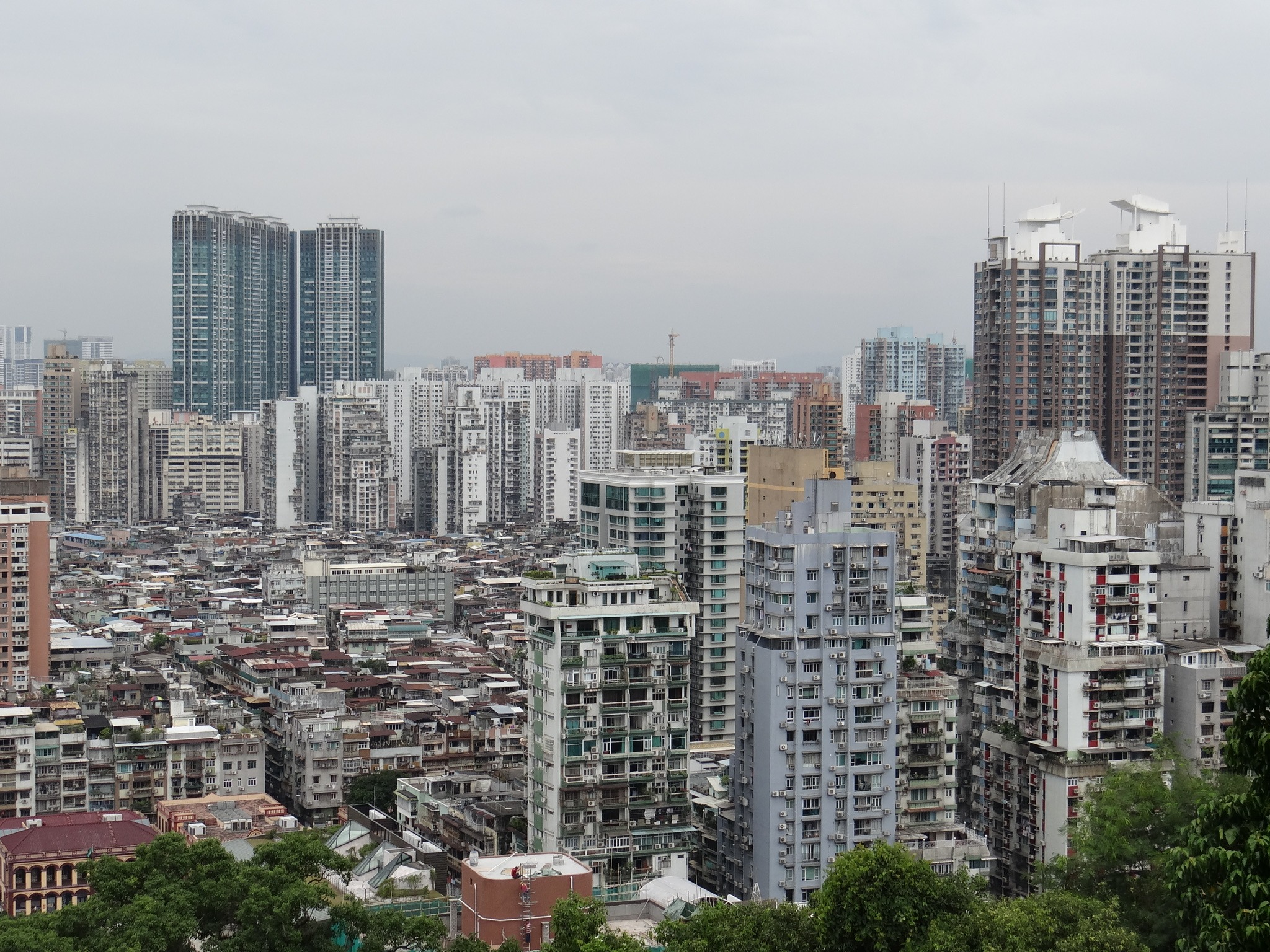
The best part of the climb up the hill is that you take the cable car (3 patacas round-trip) and get a unique view of the other side of Macau: the side marked by poverty and overcrowding. It’s by no means a poor city, but the contrast between the glitzy casino district and this neighborhood is still striking….
On another of the city’s hills, the Jesuits built St. Paul’s Church, of which only the facade remains (the rest of the church was made of wood and was destroyed by a fire in 1835). Approaching it is quite a sight, as you come across hundreds and hundreds of Chinese tourists taking the obligatory selfies….

The Jesuits—true explorers, by the way—realized that for the Chinese to understand and accept Christianity, it had to be adapted to the local culture, so on the facade they blended images typical of any church (the Virgin Mary, for example) with Chinese elements

On that same hill, the Portuguese built a fort, which has now been converted into the Macao Museum (http://www.macaumuseum.gov.mo/w3Eng/default.aspx
Very good and very informative—I highly recommend it.
Heading south from the church, we'll walk along the old merchants' street, where we can sample the local specialties: the petiscos, which are essentially the same as tapas or pinchos in Spain.
You have petiscos of all kinds: minchi made with ground beef, cod fritters, or the clams typical of Macao

…as well as thin slices of pork or beef glazed with honey

Once you reach the bottom, at Largo de Santo Domingo, you enter the Portuguese heart of the city, now a UNESCO World Heritage Site: a multitude of colonial buildings (charitable institutions, the former seat of government) redecorated by the Chinese, who really liven up the place… that, and another zillion Chinese people taking selfies.

Chinese neighborhood
If you're looking for some peace and quiet, head to the end of Largo, to a white colonial building that says “Instituto para os Assuntos Civicos e Municipais,” and take the street that runs behind it. And then there was silence….
From here to the southern part of the city, it’s just a short walk to enjoy a more “Chinese” side of Macau all to yourself. As you walk down the streets of S. Lorenzo, Padre Antonio, and Barra, you’ll find yourself increasingly immersed in an ordinary Chinatown that’s very different from the colonial hustle and bustle.

At the end of Padre Antonio Street, there is a plaza, and tucked away on a side street to the right is the Mandarin House…even though it might seem hard to hide a house that takes up almost an entire block (4,000 square meters) 😅

This “moon gate” leads you into the history of the Zhen Guaying family. Much like the Kennedys, this family gradually gained power, influence… and more square meters in Macau. The architecture of the house perfectly reflects the family’s status: of Chinese origin but deeply connected to Macau’s international trade. The structure follows the traditional style Lingnan from southern China (with endless inner courtyards connecting the various rooms of the mansion)

Beyond simply visiting the building—which is a monument to harmony—it’s interesting to read a bit about the family’s ups and downs (their highs and lows while serving in the Chinese government) and their work on behalf of the community.
The connection between the wealthiest members of the community, neighborhood, or city and charitable institutions is a constant wherever I go in China: hospitals, schools, and orphanages appear time and again, sponsored by these wealthy merchants.
On another note, anyone who lives in a coastal town in Europe knows that there’s always one or more churches that serve as landmarks for local sailors—a church they used to visit to give thanks for having survived yet another voyage…
The Chinese weren't about to be outdone, so at the southern tip of Macau they built the A-Ma Temple (A-Ma being the Goddess of the Sea). Unlike most Chinese temples, which can be somewhat oppressive, the A-Ma Temple is built on a hillside with several stories, in perfect harmony with its surroundings.

Much like the current Poetic Action movement, the Chinese already had a tradition of engraving poems on rocks—in this case, about the history and culture of Macau. Don’t ask me to translate what it says 😅

Things to Do in Macau…!! At Night !!: The Casinos
The area south of Guía Hill is where you need to go if you want to lose all your money: one casino after another, each one brighter and more spectacular than the last…
When I was in Macau, they were still building a few more… So there you have it: slightly pricier restaurants, fancy cars, and beautiful people to wrap up a long day in Macau and kick off a night that promises to be even longer…
Well, this is my idea of what to do in Macau in one day… To find out what to do at night, I’ll have to come back again, haha…
If you want to know more about China: https://999millas.net/category/paises/china/
If you liked this post or have more information to add, let me know in the comments!
Texto y fotos : Mike !
 EN
EN  ES
ES