
What to see in Guangzhou and Chaozhou
What to see in Guangzhou and Chaozhou
One of the West's gateways to China is Guangdong Province (or Canton, as we know it in Spain), which includes these two cities, Guangzhou and Chaozhou, among others

In the past, it included the port of Hong Kong (now a separate autonomous region of Guangdong), through which goods, people, and ideas flowed into the most isolated inland regions. This maritime, commercial, and open-minded character of Guangdong can still be experienced in the cities featured in this post: in Guangzhou, people more or less understand and speak basic English, and the residents of Chaozhou, if not particularly hospitable, are at least curious—they can’t stop taking pictures of you over and over again 😅 – Translated with DeepL.com (free version)
What to see in Guangzhou and Chaozhou? Let's start with the capital, Guangzhou
THE CAPITAL: GUANGZHOU (CANTON)
Guangzhou is a good example of what you'll find in Guangdong in particular and China in general: the distances between places in the cities are enormous, so you'll always need to take the subway, a bus, or a taxi to get from one place to another….
Getting There and Getting Around the City
Guangzhou has several train and bus stations, so it's helpful to know which one you're arriving at (or departing from); fortunately, an extensive subway network serves virtually all of them.

For anyone planning to visit from Hong Kong by train (2 hours, about 180 HK$), please note that you’ll be asked to show your passport with the appropriate visa at the train station, and it’s a good idea to arrive about half an hour early to check in; the same applies to those traveling in the opposite direction.
Train stations are complicated: there are no signs in English, and there isn't a single ticket window—instead, each window sells tickets for a specific destination; just finding the right window is a little adventure in itself.
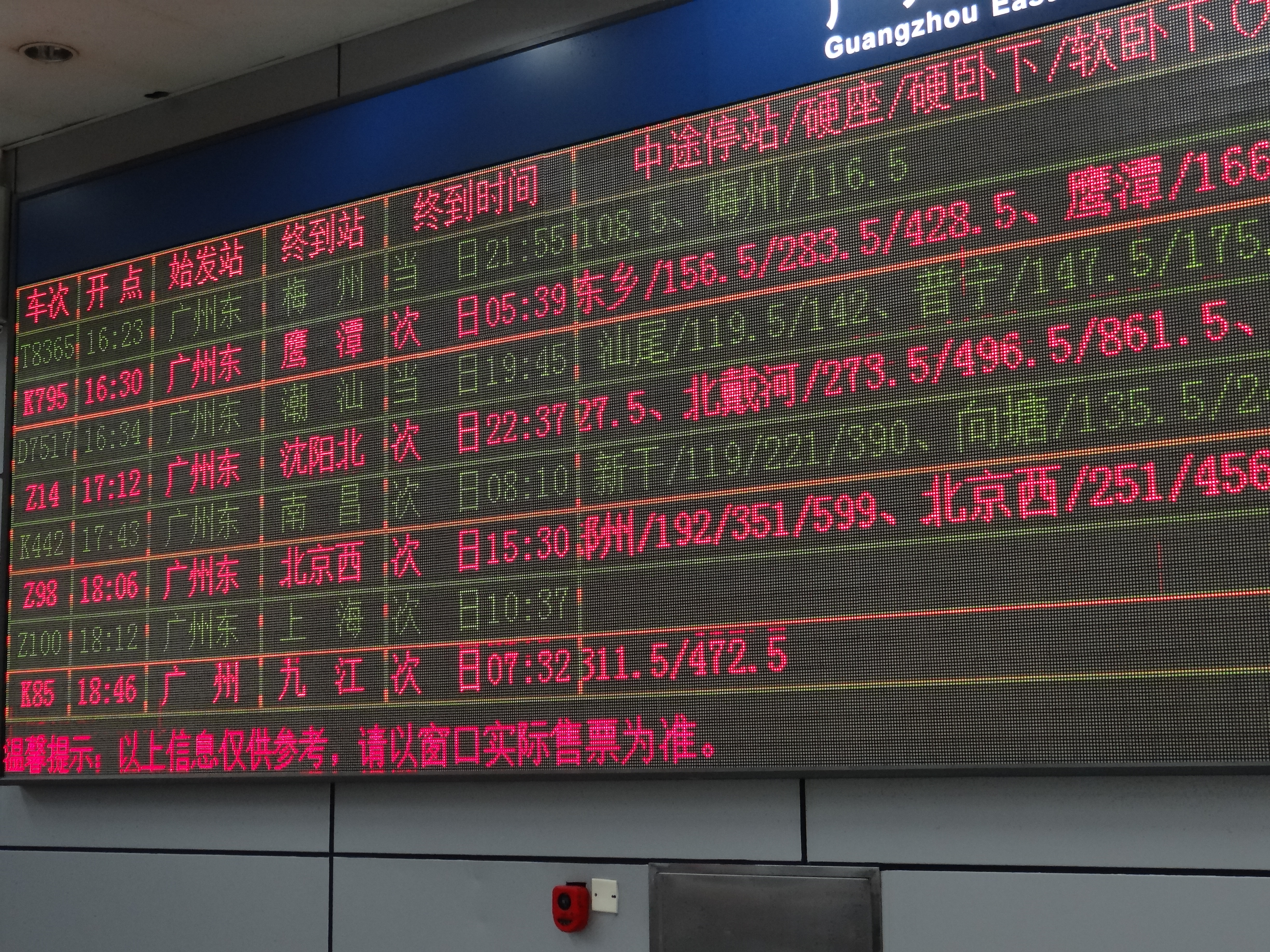
Things get complicated because the officials at the windows don’t speak English, and to make matters worse, you might get the dreaded “red sign”: at any moment, without any explanation, the guy at the window gets up, puts up a red sign, and closes the window. He doesn’t care if there are 50 people waiting. You look in horror at those 50 people left without a window, hoping the same thing doesn’t happen to you 😬
Tip: Make sure to write down all the details of the train you want to take so you don't have to say a word to the attendant on duty.
I don't usually promote any websites, but http://www.travelchinaguide.com It has a really good train search tool. Find the train you’re interested in, take a screenshot, photo, etc., of all the details, and simply show your phone at the ticket window. Even so (as happened to me), the ticket agent might assign you whatever train she wants if you get distracted… make sure the train is the right one BEFORE you leave your coveted spot at the front of the line.
Once you're on the subway, you can buy a pass for 20 ¥ that gives you unlimited rides for the whole day. It probably isn't worth it—a single ride costs between 2 and 4 ¥—but it's much more convenient.
What to See in Guangzhou and Chaozhou: A Visit to Guangzhou
Guangzhou quickly became the epicenter of the Maritime Silk Road, which allowed it to evolve into a highly cosmopolitan city. As early as the Tang and Song dynasties (7th to 13th centuries), the city was home to thousands of Arab, Persian, and Indian merchants, and it established China’s first formal customs office.
Its importance reached its global peak during the Qing Dynasty with the Canton System. After being designated by the emperor as the China's only port open to foreign trade, Guangzhou was the focal point of all the wealth generated by trade with the West.
On a busy day, you'll see the highlights, even though the city has so much more to offer… What can we see?

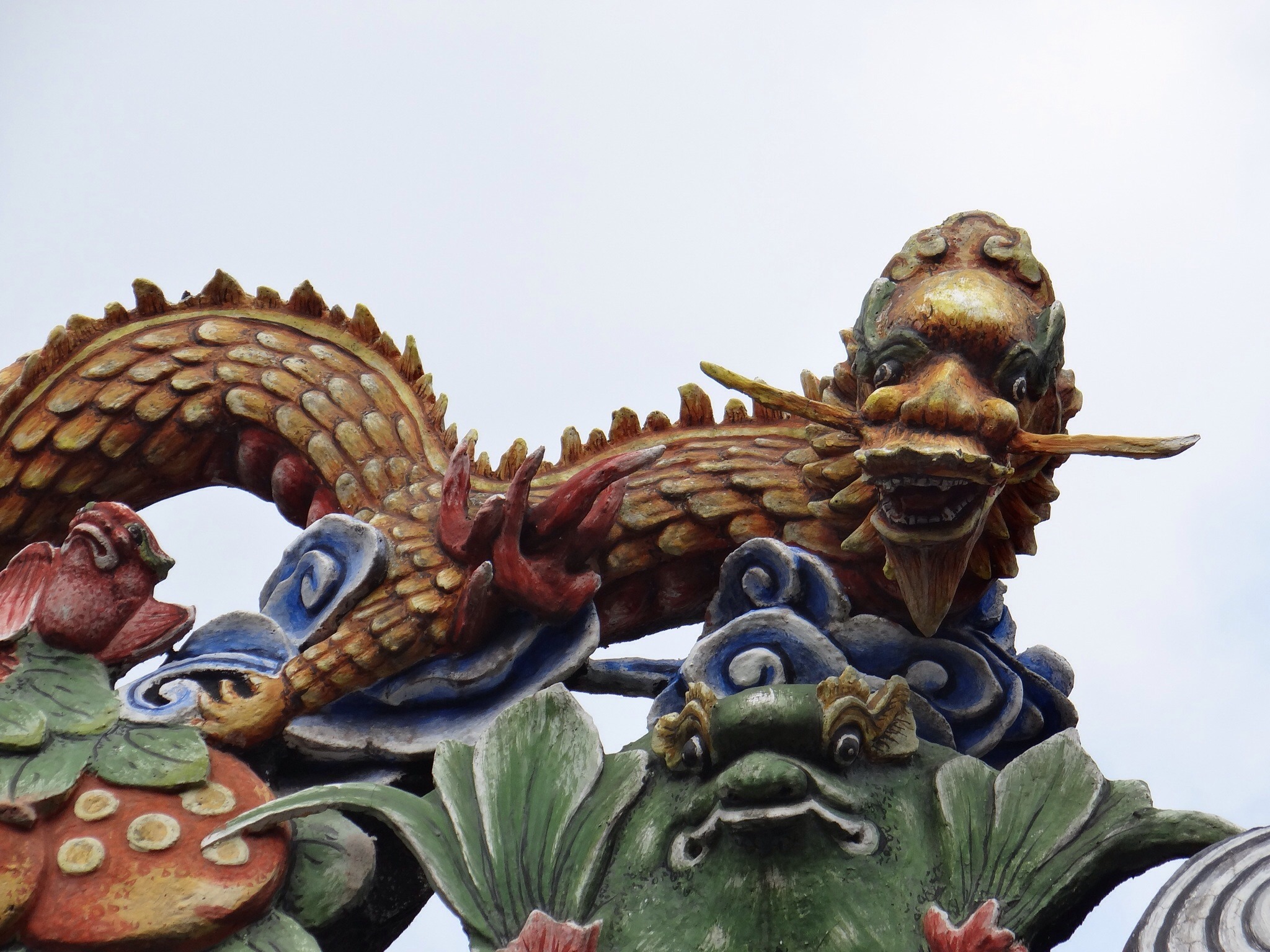
Chén Clan Ancestral Hall
If you only had a few hours here, I'd be the one you'd need most.
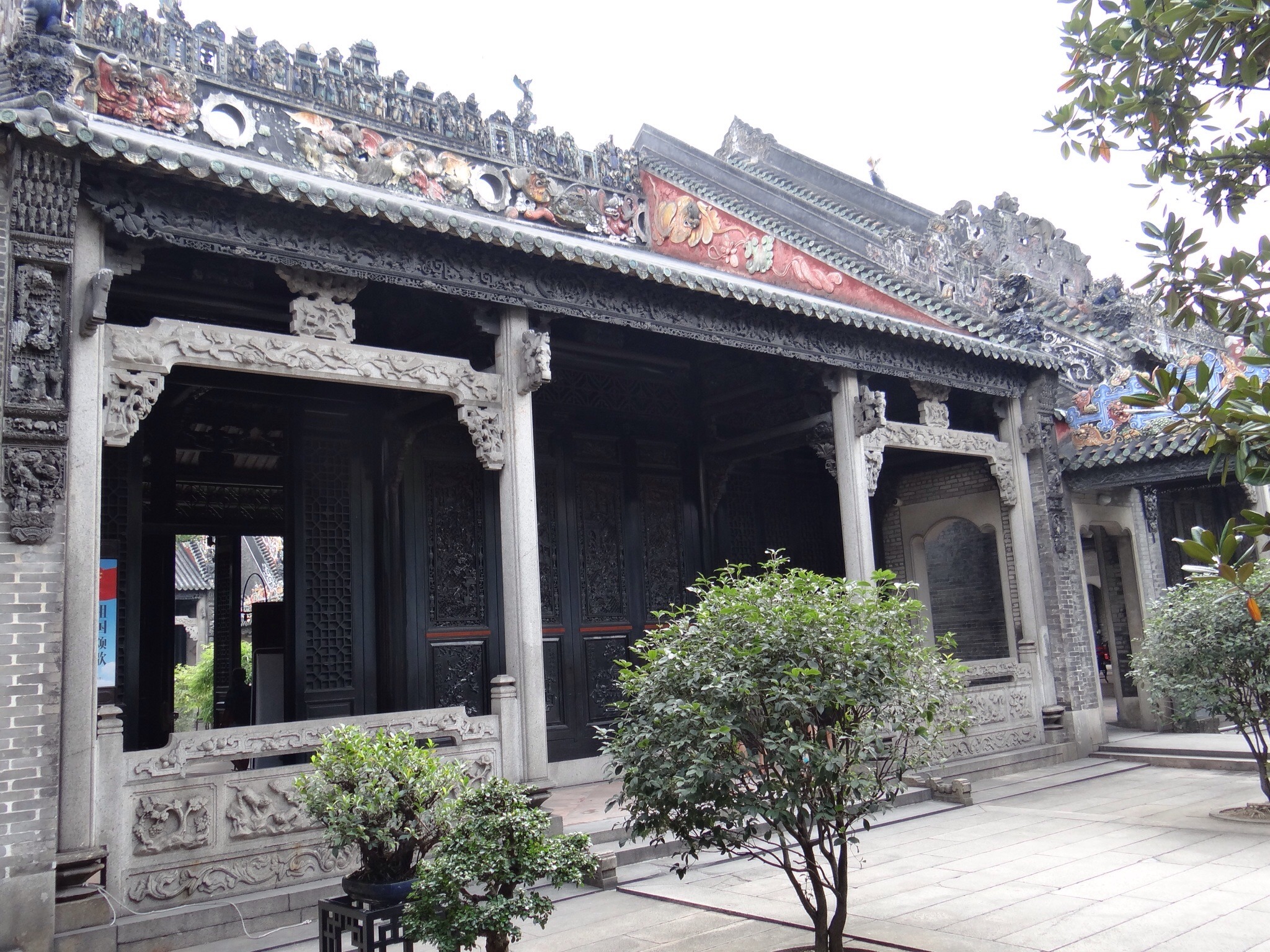
Let's imagine a family—a clan—that moves to another city. They buy a house, of course. Little by little, the family becomes wealthier and expands and decorates the house more and more….
At the same time, more immigrants are arriving at this new home, and we have to find a way to accommodate them… so it’s time to build more rooms… and so on, until a vast complex is built right in the heart of the city, which was becoming more and more refined…
Guangzhou's official tourism website doesn't say much, but it's better than nothing: https://www.prdculture.org.cn/ygawlzxwen/gds/202509/3d5289debcb74c2a9e7504f1d552b07d.shtml
Guangxiao Temple
Contrary to popular belief that there is no religion in China, you actually find it everywhere. Shinto shrines, Catholic churches, and this Buddhist gem where people worship as usual—there are no Communist police showing up to break up Mass or anything like that….
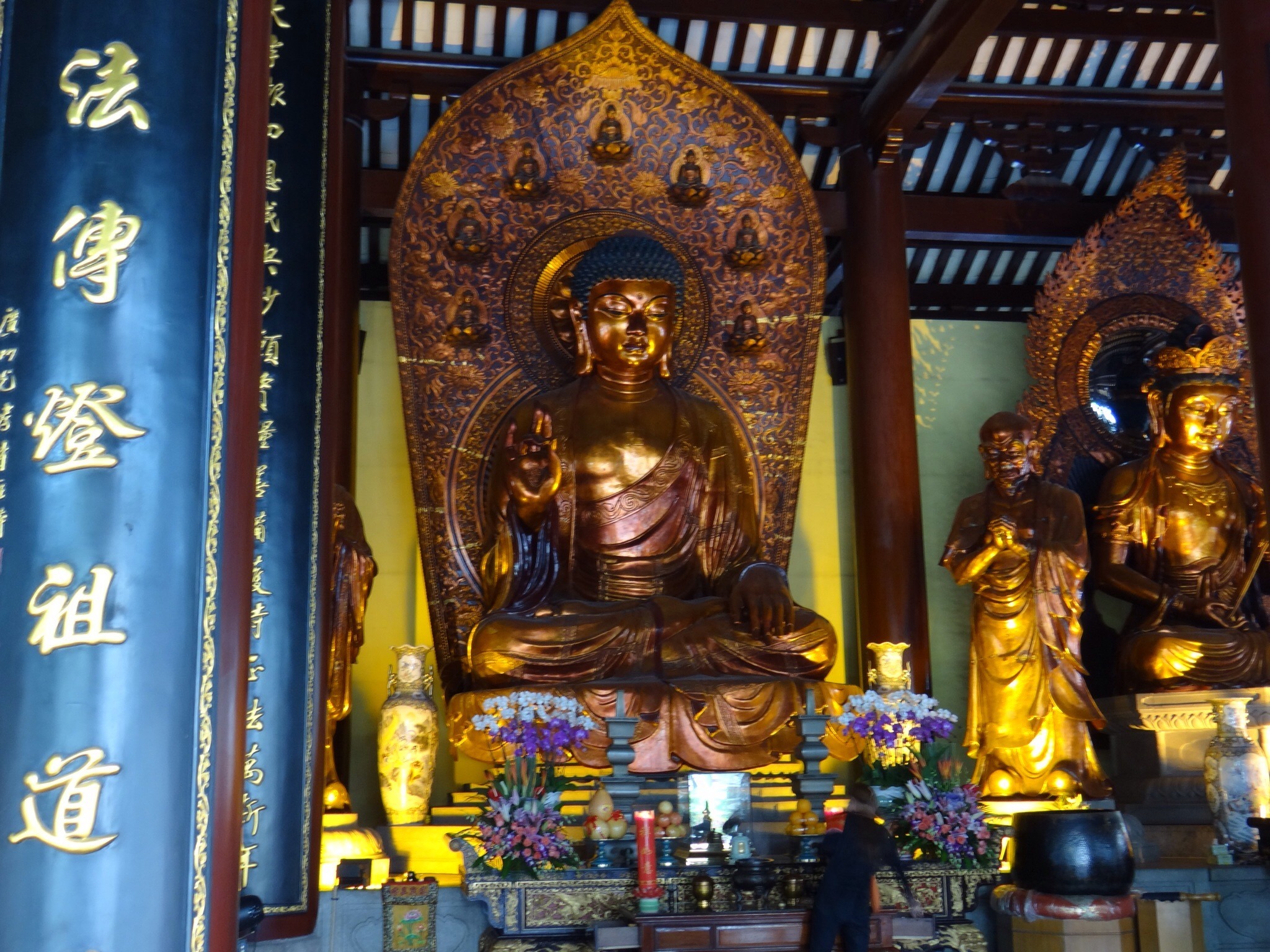
Very close to the Ancestral Hall (Ximenkou subway station, Line 1), for just 5 ¥ you can take a break from the big city in this peaceful haven: monks in brown robes and quirky slippers stroll silently, people praying amid the scent of incense, bonsai trees scattered throughout the courtyard… very relaxing.

Museums
There are a couple of museums that are nice, but it's not the end of the world if you don't go.
The first is the Guangdong New Museum (http://www.gdmuseum.com/english/) that tells the story of the entire province of Guangdong. Like everything else in China, it’s huge, and it takes quite a while to see it all, but it’s quite informative—with signs in English and audio guides.
By the way, they ask for some form of identification (passport or national ID card) at the entrance.
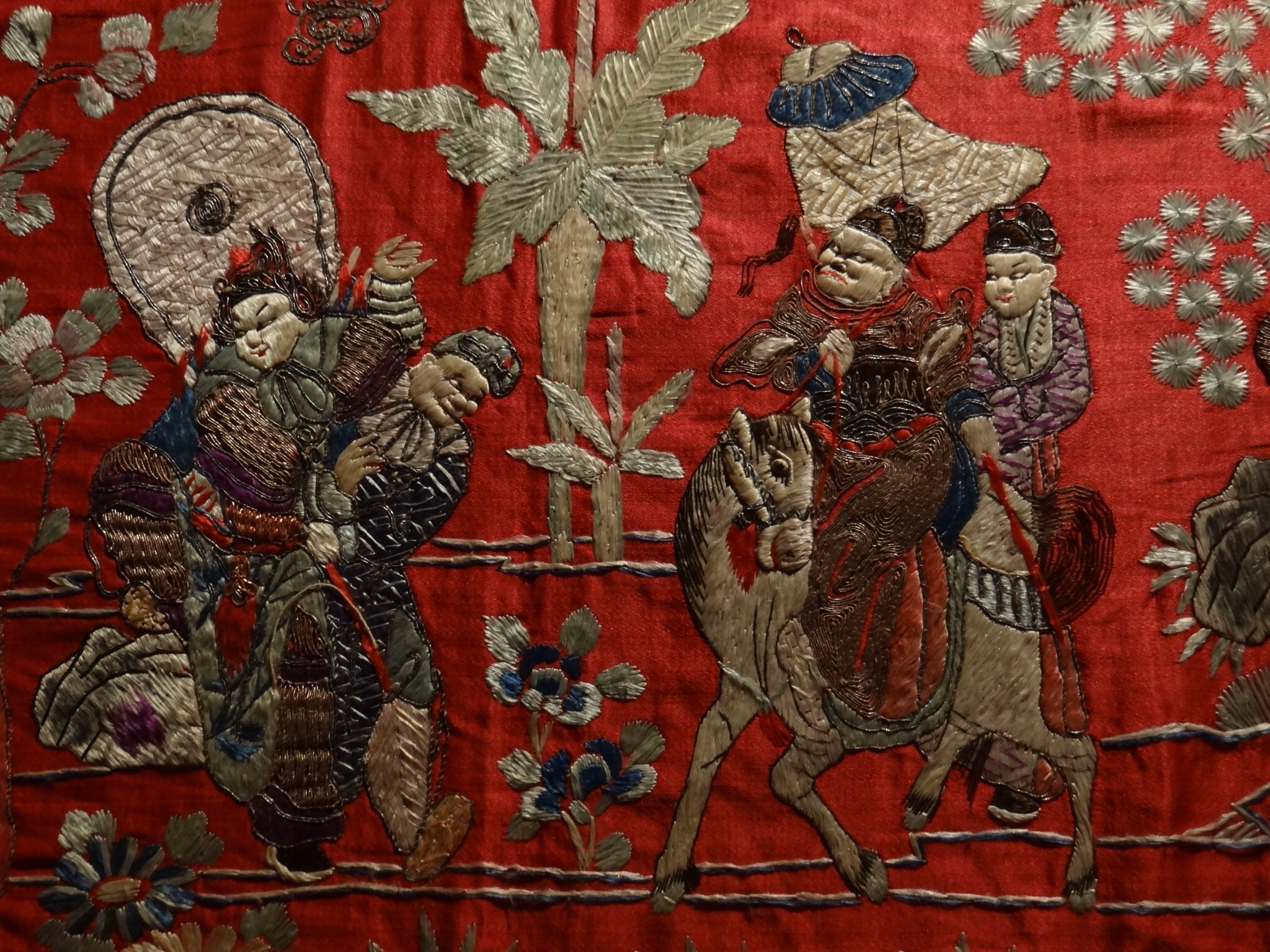
It’s located right across from the Opera House (Zhugian New Town metro station, Line 3, Exit B1), and on your way there, you can get a sense of China’s vastness: an incredibly long boulevard lined with skyscrapers dedicated to finance, one after another, with no end in sight….
The other museum is the Mausoleum of the Nanyue King (metro Uexiu Park, línea 2)
We've all seen mummies at some point. But I bet we've never seen them encased in a special, spectacular, and valuable shroud… a jade shroud.
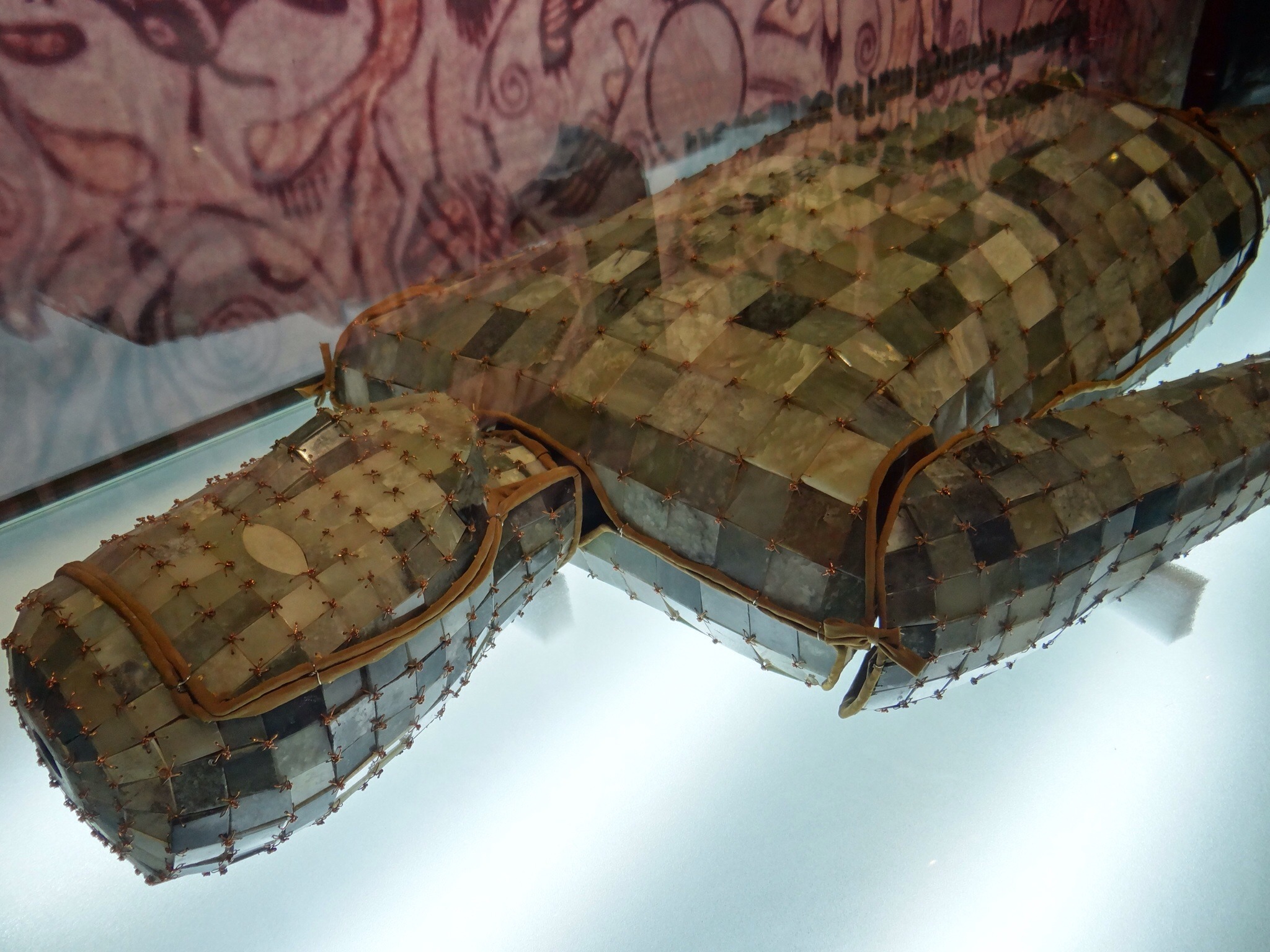
One of the ancient kings of Guangdong rests in this jade “armor.” Buried on the hill that is now the museum, he was discovered relatively recently along with his vast grave goods…also made of jade.
It's a visit you can skip, since aside from the mummy, the rest isn't all that impressive….
Shamian Island
After China lost the Second Opium War, England forced it to cede this island to it under a concession so that all the companies that had been ruined or destroyed in the war could settle there.
The result is a very European neighborhood, with elegant neoclassical buildings and luxurious, expensive Western-style cafés. It's best to visit during the day because it's very dreary at night.
Foshan
About 45 minutes from Guangzhou, a surprise awaits martial arts enthusiasts: at Zumiao Temple (Zumiao subway station, Guangfo Line), you can enjoy more than just stunning architecture….
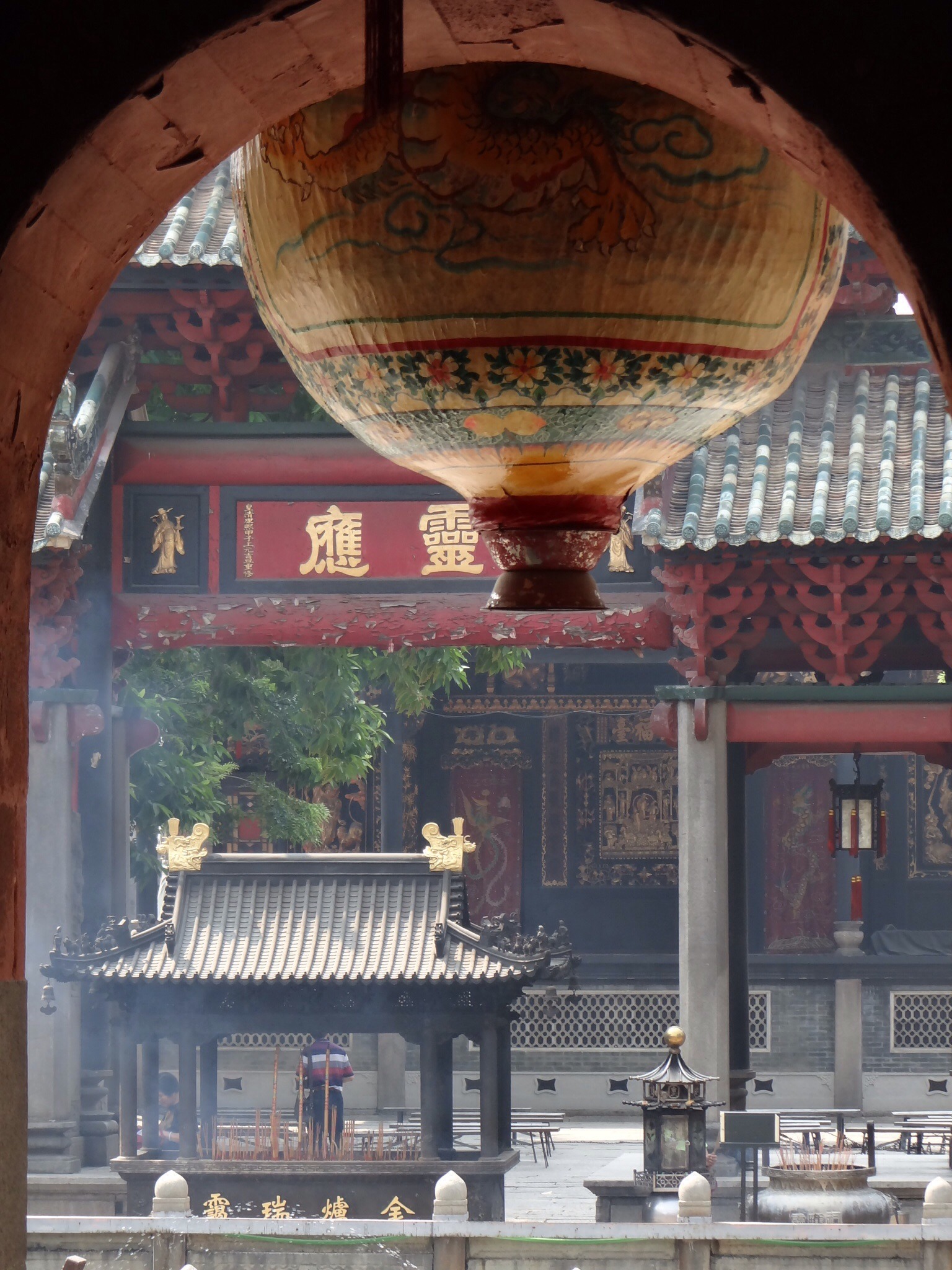
…but they also put on kung fu demonstrations. This is because the temple also serves as a museum dedicated to a native of Fushan who apparently became a star in this discipline.
In addition, groups of older adults gather in the mornings to practice tai chi or simply to hang out…
Let's continue with the series: What to see in Guangzhou and Chaozhou? Let's move on to the second one
CHAOZHOU
Arriving and Getting Around
This city (population 2.5 million) is, I suppose, a good example of what has happened in China: a small town originally built on the banks of a river (now the spectacular historic district) that grows and grows out of control until it becomes an endless succession of ugly buildings…
The train station is quite far from downtown (about 8 km), and a taxi from there costs 40 ¥; the bus station, on the other hand, is quite close to the historic district, and you can take a bike taxi for just 10 ¥
Downtown Chaozhou is easy to get around on foot or by bike—the main street (Taiping Lu) is supposed to have bollards blocking motorized traffic. But no one pays any attention to them. It’s funny to stand next to them and watch as the Chinese get around them in every possible and imaginable way—riding up onto the sidewalk, walking alongside their motorcycles between the bollards—their imagination in this regard knows no bounds.
By the way, the hotels provide maps… in Chinese, so you have to ask them to point out the places worth visiting because otherwise it’s impossible to figure anything out 😁
What to See in Guangzhou and Chaozhou: A Visit to Chaozhou
What can we see here? Well, quite a few things 🙂

The aforementioned Taiping Lu Street is the main thoroughfare of the old town, running north to south alongside the city walls next to the river
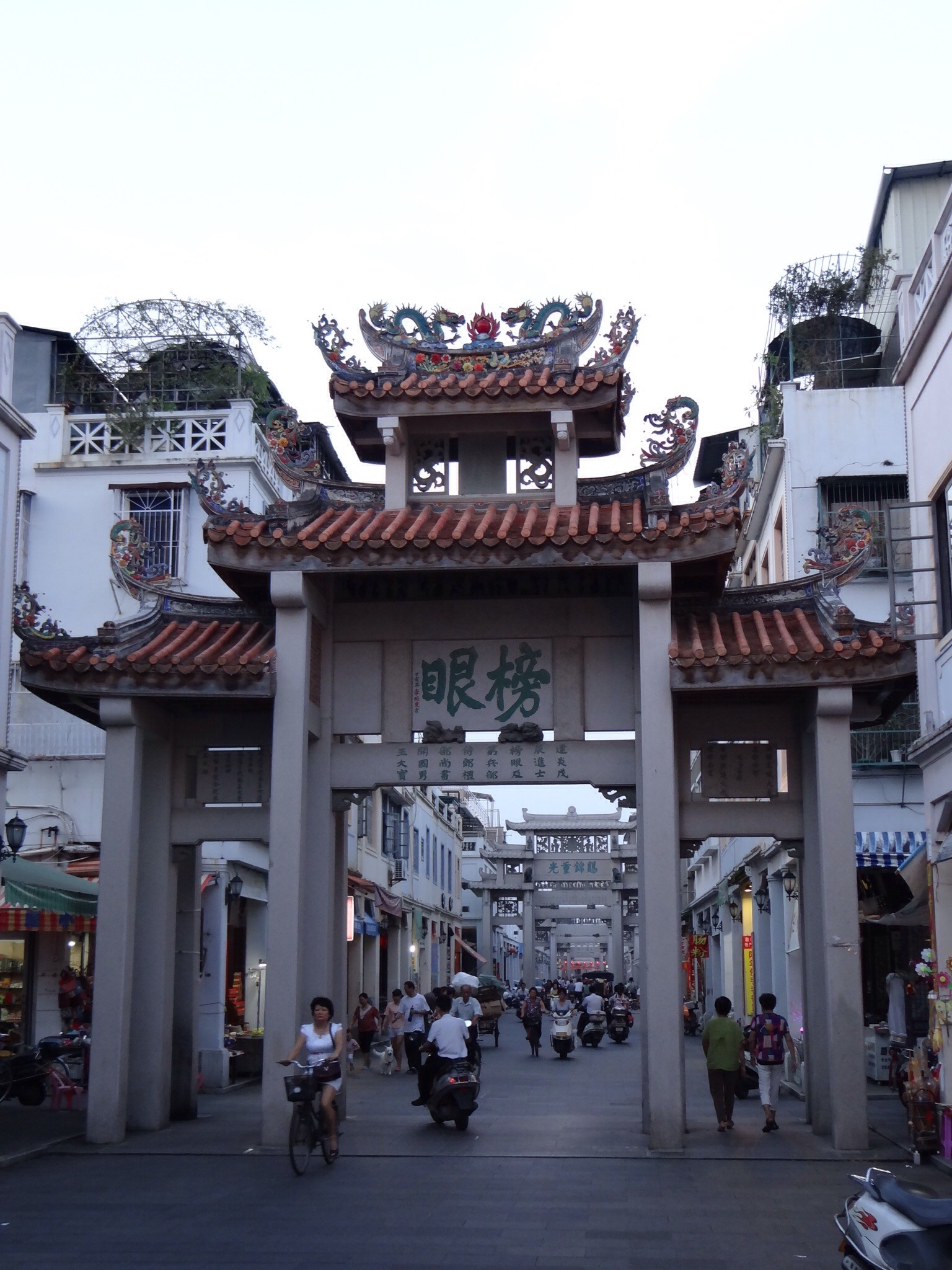
The numerous arches that crown it were erected to commemorate its illustrious residents who held important positions at the Emperor's court.
In China, this was highly valued, as was passing the “civil service examinations” held periodically to enter the imperial administration—their names were engraved in stone and displayed in a public place as a tribute.
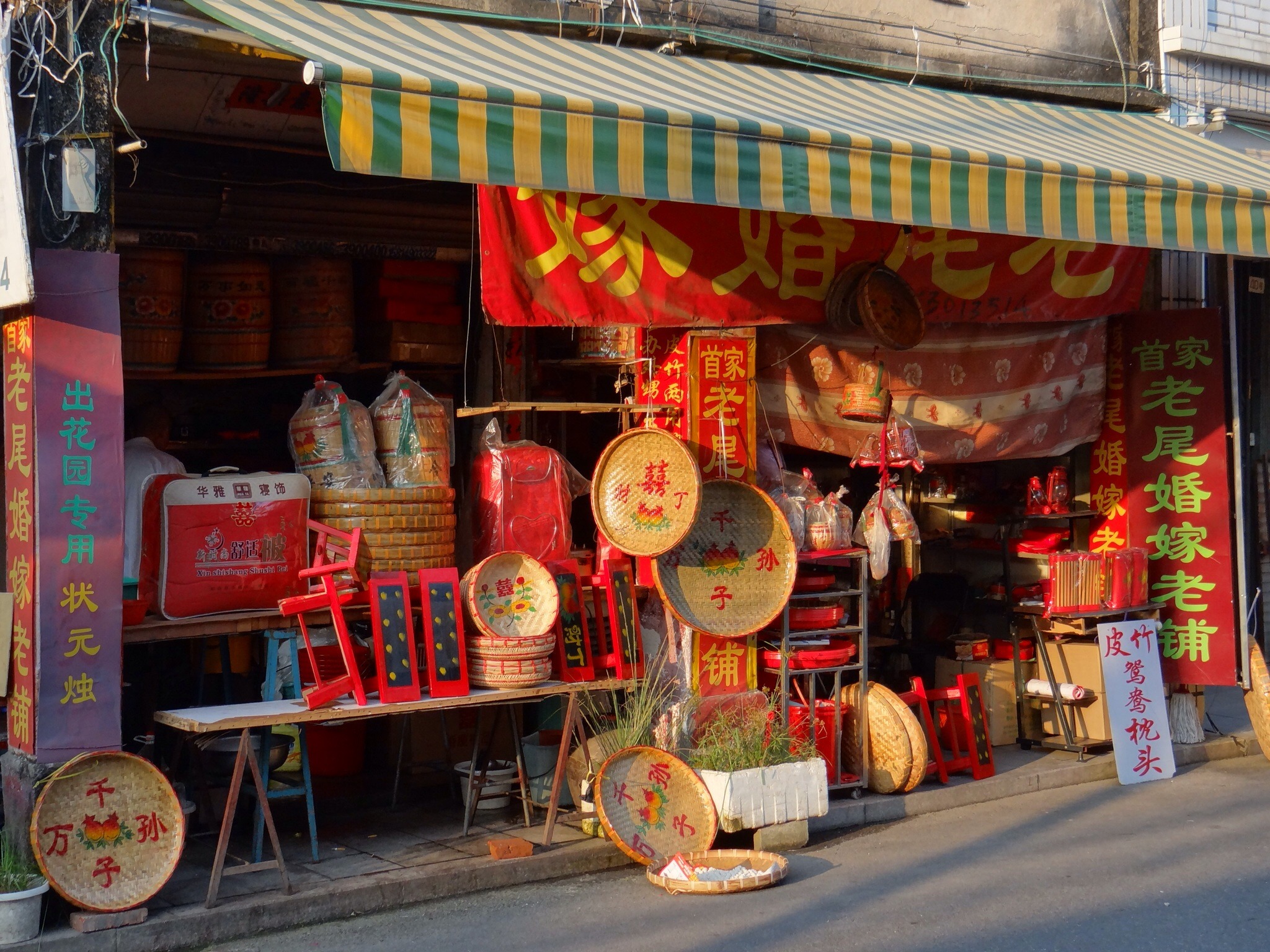
It’s the city’s tourist street, where you’ll find shops selling local specialties. It never ceases to amaze me in Guangdong how efficiently space is used in the shops: not only do many of them double as the owners’ homes, but not a single centimeter goes to waste—everything is dedicated to the business; nothing is there just for the sake of it.
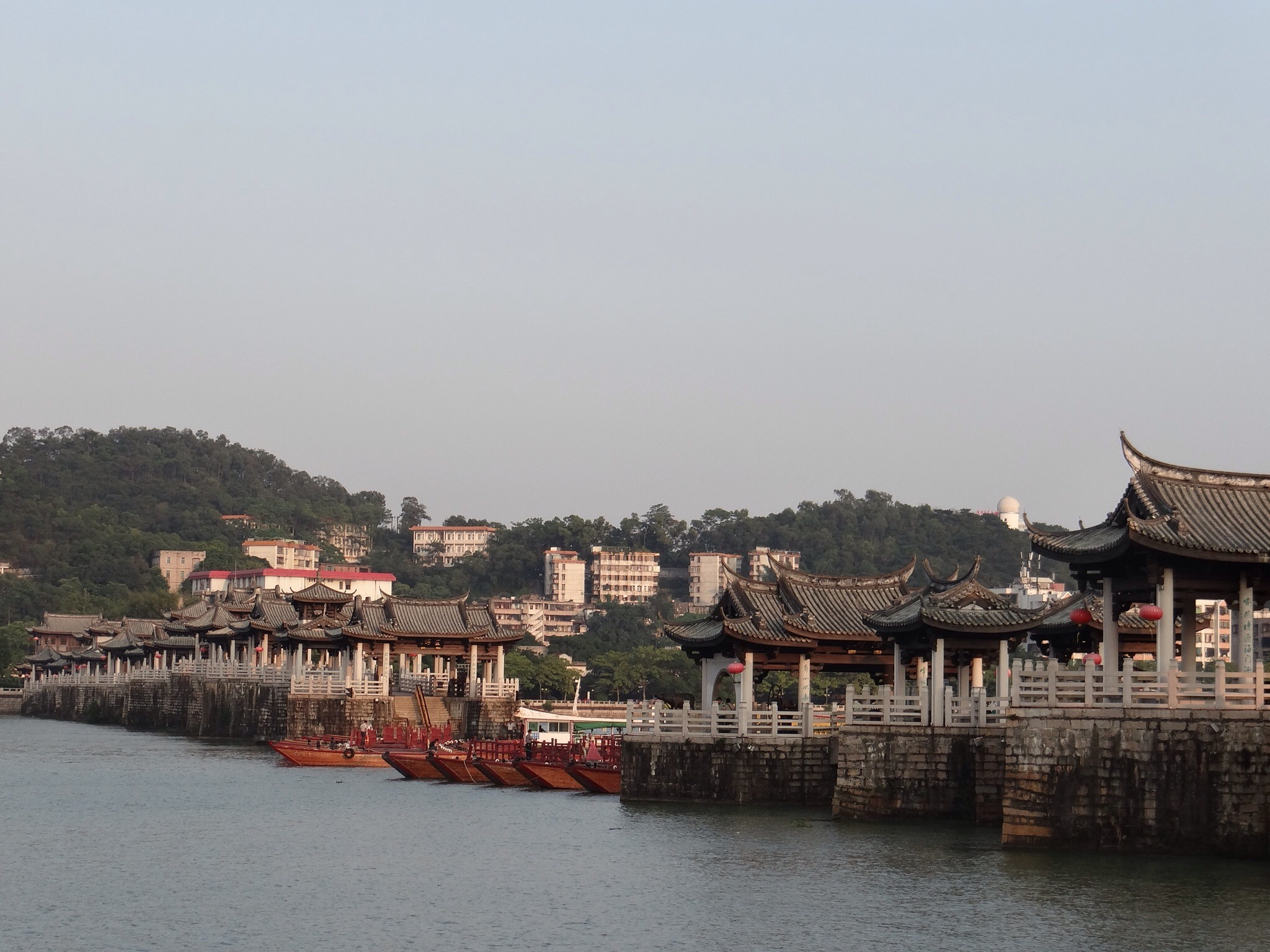
The city's crown jewel is the Guangji Bridge (50 ¥)
It is a very unique type of drawbridge: its original structure combines sections of stone-beam bridges, arch bridges, and, at its center, a floating span consisting of 18 wooden boats connected which are opened to allow boats on the Han River to pass through and are closed again for pedestrian traffic.
There are iron oxen at both ends of the bridge… Why?
During the Qing Dynasty (in 1724), the local government cast and installed these two large iron oxen, one at the eastern end of the bridge and the other at the western end. In Chinese culture, metal oxen are powerful spiritual symbols used to “subdue” the waters and prevent catastrophic floods.
One night, a fierce storm lashed the city and caused the Han River to rise dramatically. The next morning, local residents were horrified to discover that the ox on the west side had completely disappeared, swept away by the force of the water…and it wasn’t long before the townspeople began teasing them, pointing out how the poor ox had grown tired of its work and gone off “for a swim.”
Taking a stroll or just hanging out here is a real treat; it would be the perfect spot at night, but they close early, and to top it all off, they've installed some awful artificial lighting 😡
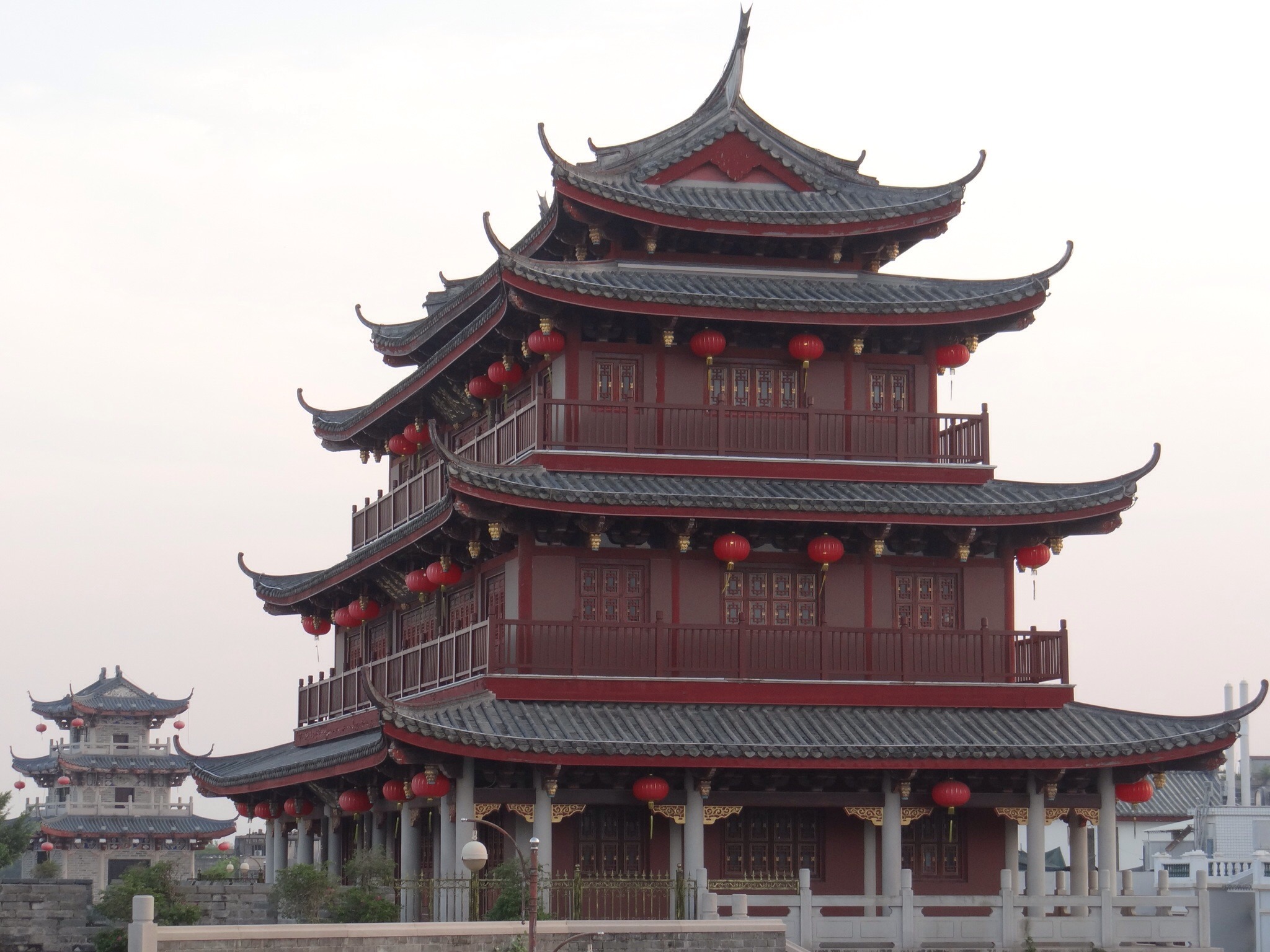
Guarding the bridge and the wall that surrounds the historic district stands an impressive restored castle; in addition, there must have been several smaller towers at regular intervals along the wall (I believe only two remain today).
There are a few temples here as well, of course… the most famous one is right on the corner of the two main streets (Taiping Lu and Kaiyuan Lu), and if you come early in the morning, you’ll see the parishioners singing a catchy hymn to this… goddess?
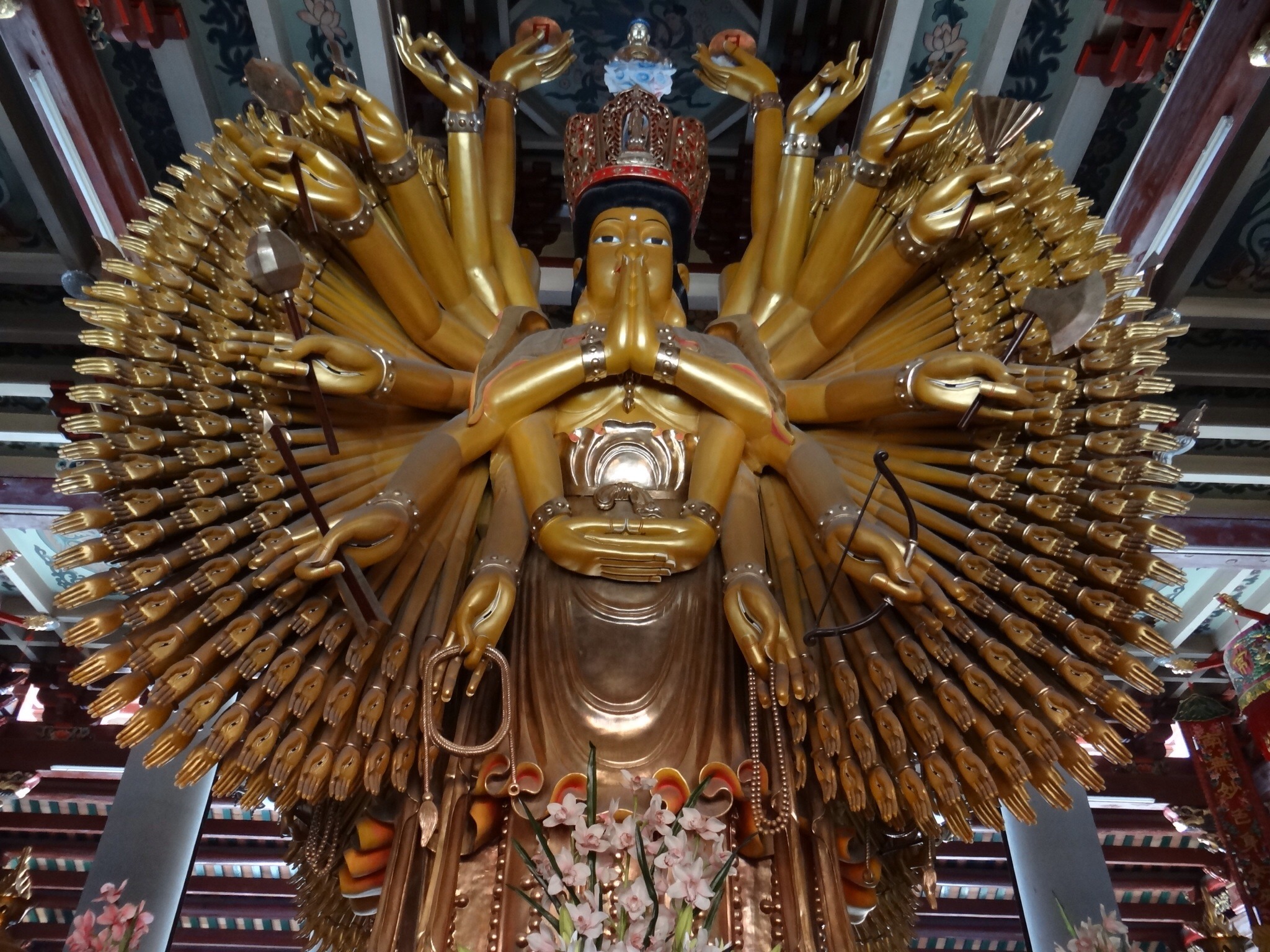
It's supposed to have 1,000 hands that see everything—there's a half-open eye painted on each hand—but that's about all the people there explained to me—between my English and their Chinese, we weren't really in a position to get into a deep philosophical discussion 😛
And to wrap up your visit—it takes a day or a day and a half to explore the old quarter—you can go to the West Lake (a park with a lake) and just take it easy for a bit
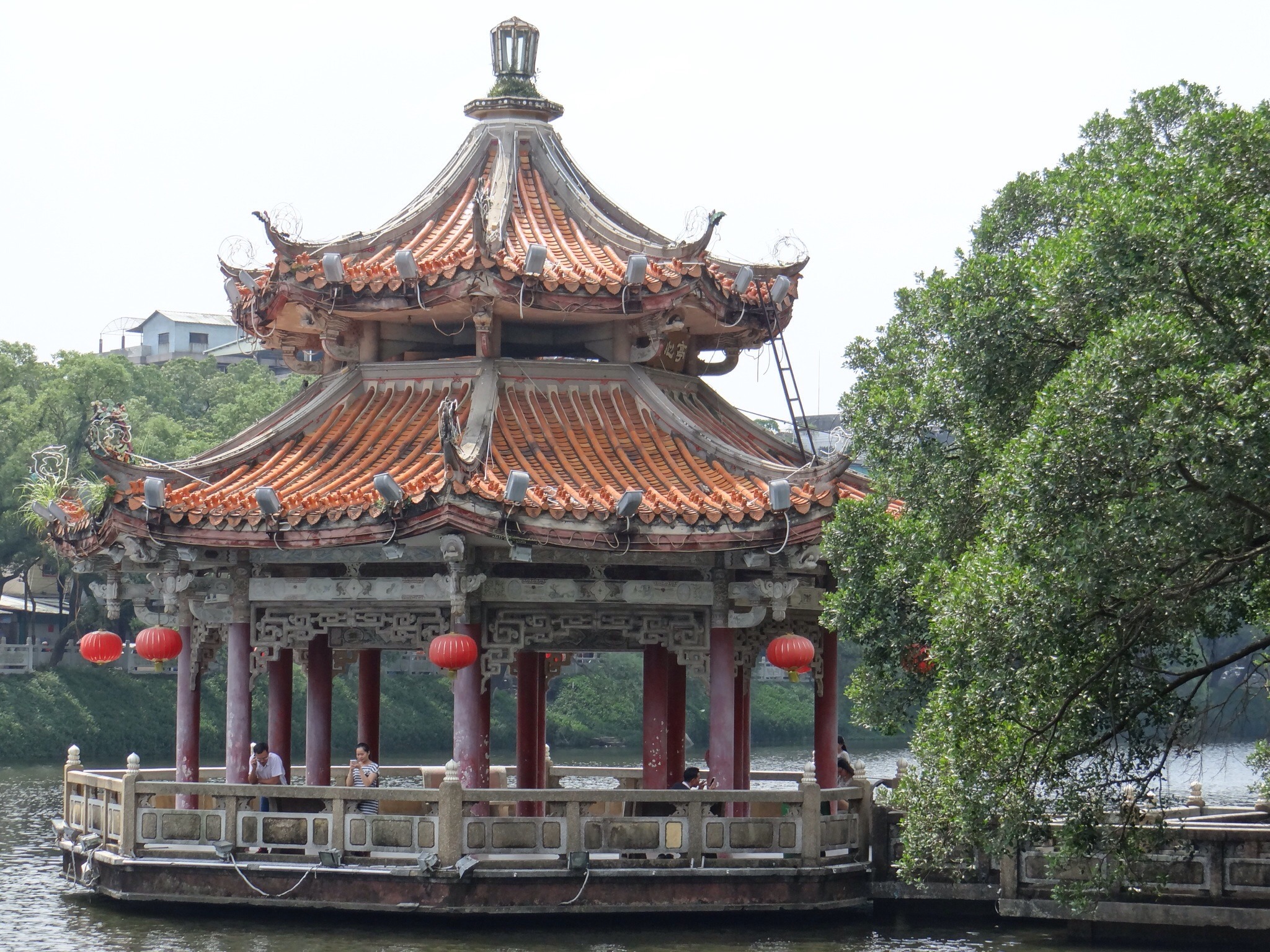
Guangdong has so much more to see, but everything is so far apart that in the end you have to pick and choose… and that was it; next stop—India!
Well, I hope I've helped you figure out what to see in Guangzhou and Chaozhou
If you want to know more about China: https://999millas.net/es/category/paises/china/
Well, if you liked this post, let me know by leaving a comment!
Texto y fotos : Mike !
 EN
EN  ES
ES