
Yogyakarta
Since you've come to see Borobudur and Prambanan, you might also be wondering… what is there to do in Yogyakarta?
If Jakarta is the financial heart of Indonesia, then Yogyakarta is undoubtedly its soul: not only is the sultan’s official residence located here, but some of the country’s most important temples are found in the surrounding area
You can see the city itself in about two days, and the sights are all located close to one another.
I'll start in Yogyakarta and end with the highlights of Borobudur and Prambanan
Kebun Buah Lookout
Everyone in Indonesia is obsessed with watching the sunrise; there are sunrise tours everywhere: at Bromo, Borobudur, Bali—whether you're perched on a shipping container or tucked inside an igloo. You name it.
I wasn't about to be left out, and luckily the hostel owner took us to a small hill an hour away from Yogyakarta, to a place where only locals went—though there were a few hundred of them!!
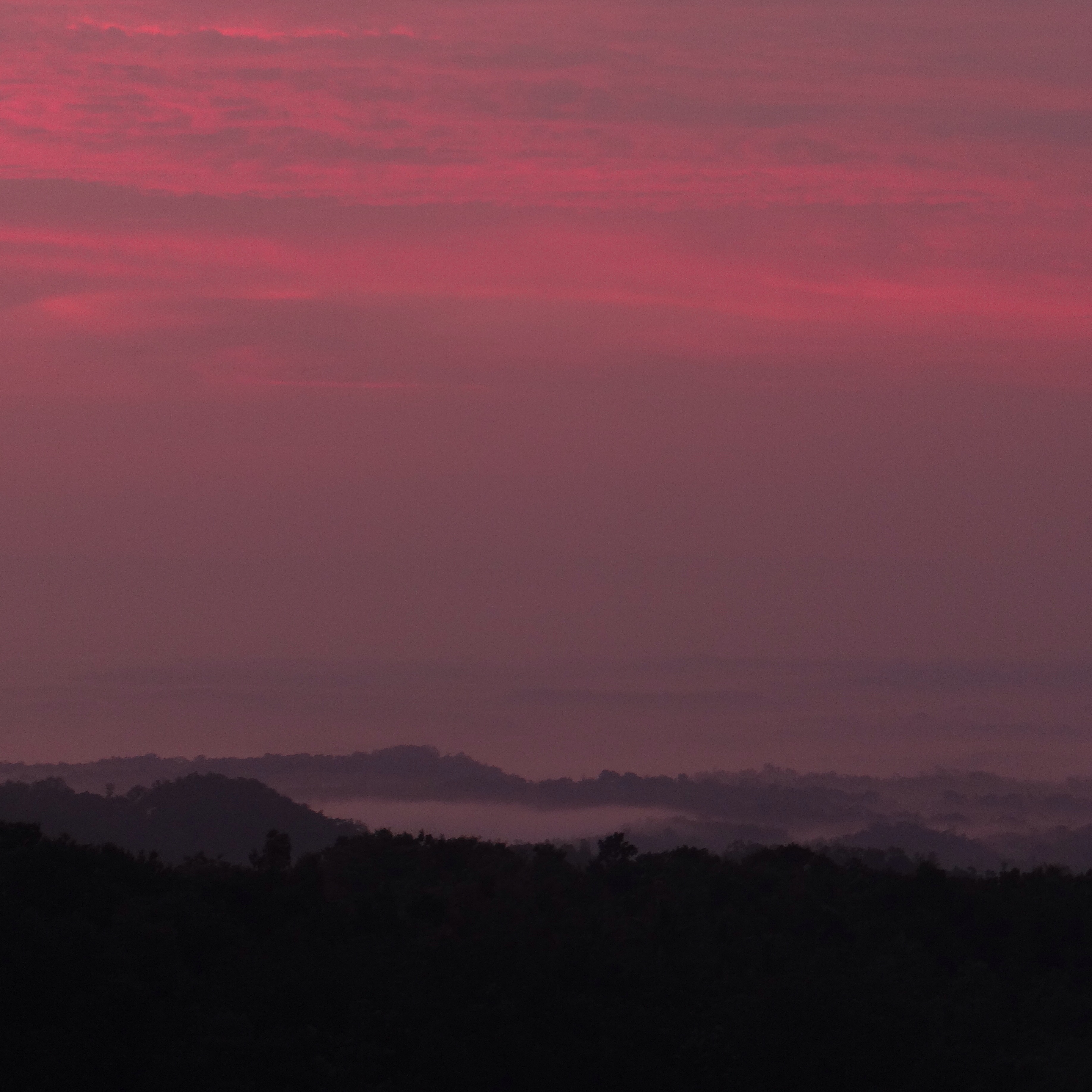
The place is called Kebun Buah, and admission is 4,750 Rp. It's true that you'll see a spectacular sunrise there.
And setting the viewpoint aside… what tourist attractions are there in Yogyakarta itself? Well, there are a couple of them, and fortunately, they’re located very close to each other.
Kraton Palace
On your list of things to do in Yogyakarta, this should be number one: the Kraton. Kraton means “palace” in Indonesian, and this is where the Sultan theoretically resides. Admission is 14,000 Rp (12,500 for admission and 1,500 for a photo permit).
There are two entrances to the palace, but only one is the “right” one: as you approach from the north on Malioboro Street, skip the first entrance you see—there are a lot of horse-drawn carriages there—and walk about 50 meters further south, where there’s a clock.
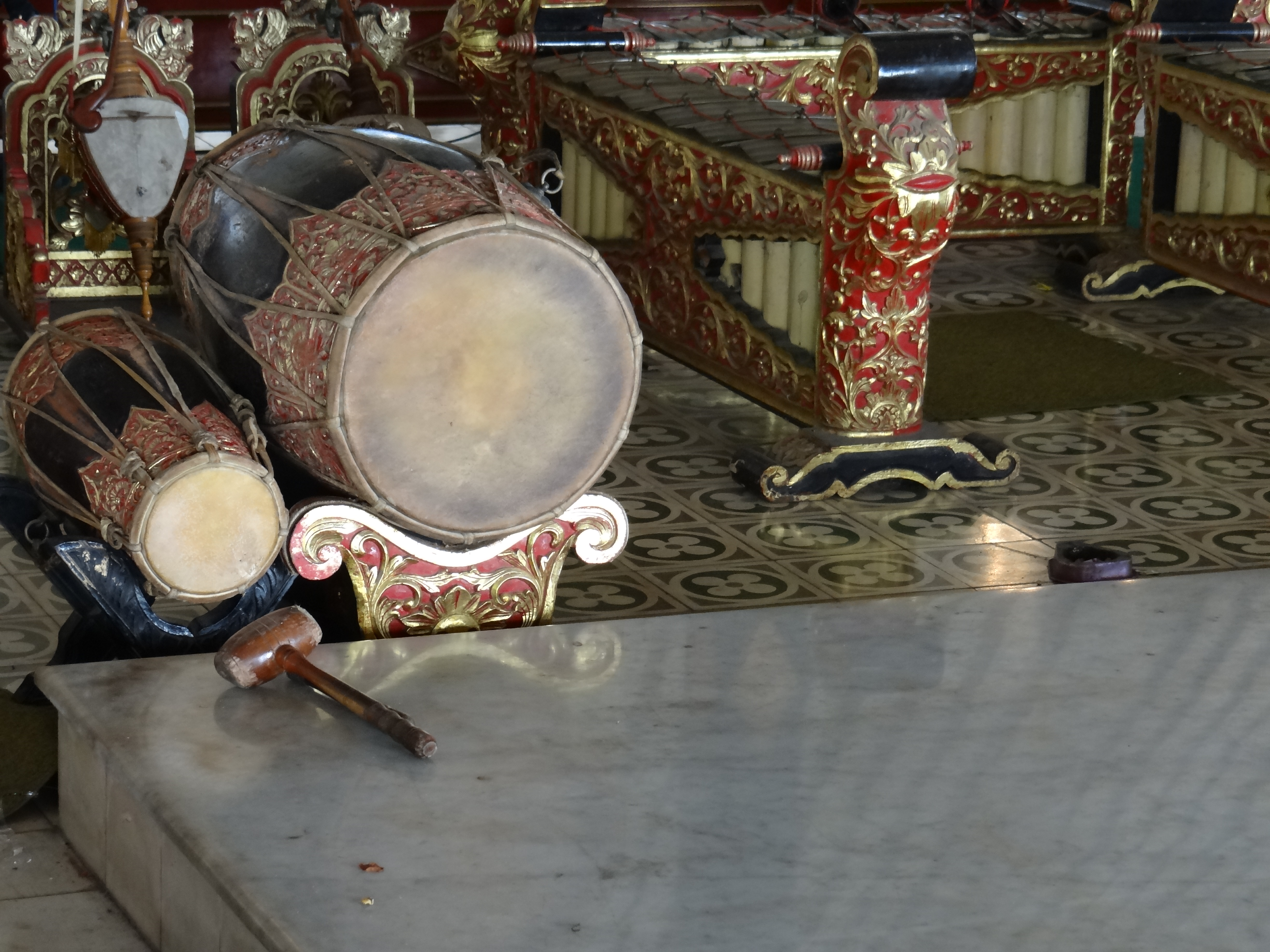
Right at the entrance, there's a display of traditional Indonesian musical instruments, a gamelan; I guess they put on shows/concerts every now and then, but since I arrived during Ramadan, I ended up missing them 😩
The palace is pretty nice, with a distinctly European feel but very cool; it's not very informative because all the signs are in Indonesian.
Let's take a look at the photo below—a man sitting with a huge dagger at his waist… he's one of the members of the so-called Abdi Dalem, court attendants dressed in traditional Javanese attire who can be found throughout the palace. It’s important to remember that the Sultan actually lives here, even though you won’t see any of the hustle and bustle of court life because many of his rooms are closed to the public
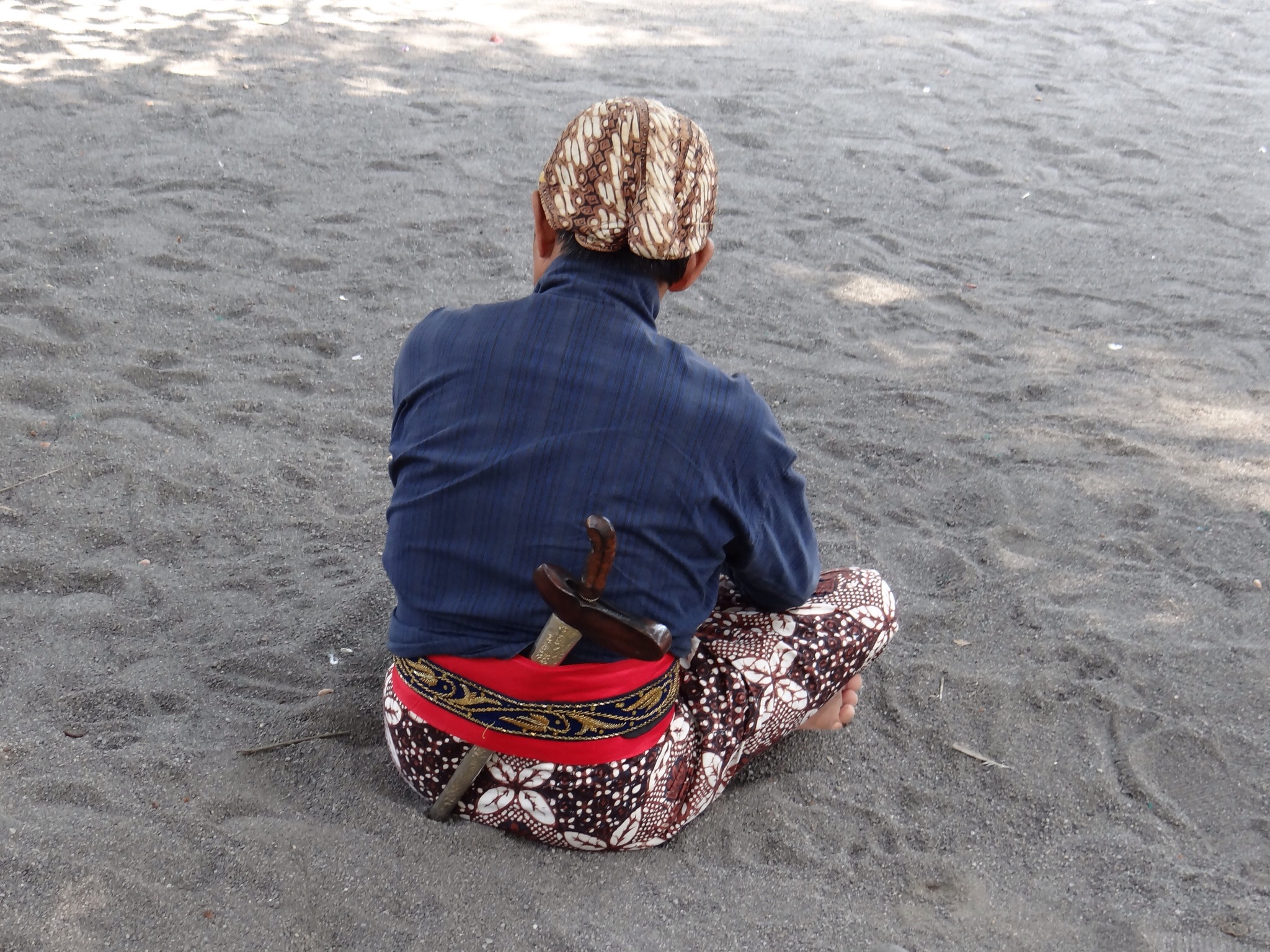
And what about that huge ceremonial dagger on his back? If you're from Bali and have visited the museum there, you'll know that it's called kris and it is Indonesia's most iconic symbol, so much so that it was designated an Intangible Cultural Heritage of Humanity by UNESCO. The kris It functions not so much as a weapon but as a spiritual extension of the Indonesian; they also believe it possesses a power espiritual (khodam) that protects the wearer.
We can see that he’s carrying it on his back, tilted to the right, right? Carrying the weapon in front is considered a sign of aggression. Carrying it behind him shows humility, submission, and peace toward the Sultan and the palace’s visitors. In Javanese philosophy, the kris It represents passion. Wearing it on the back symbolizes that human beings must be able to control their anger and impulses, so as not to bring shame upon themselves by losing control.
I snuck this photo, hehe 😎. I hope this gentleman will forgive me.
All in all, it's a fun place to spend a couple of hours.
Taman Sari (Water Castle)
Tucked away in a maze of narrow streets to the south, near the Kraton, is this unusual building, which is said to have been designed as a place for the Sultan of Yogyakarta to relax and have fun, featuring fountains and ponds reminiscent of an old-fashioned amusement park.
There are plenty of pushy “guides” in the area who will offer to take you to their underground lodgings in exchange for the inevitable tip.
I recommend ignoring them and getting a little lost in the winding streets filled with cafes, graffiti, cats, and birdcages… Eventually, almost by chance, you’ll find the entrance to the underground.
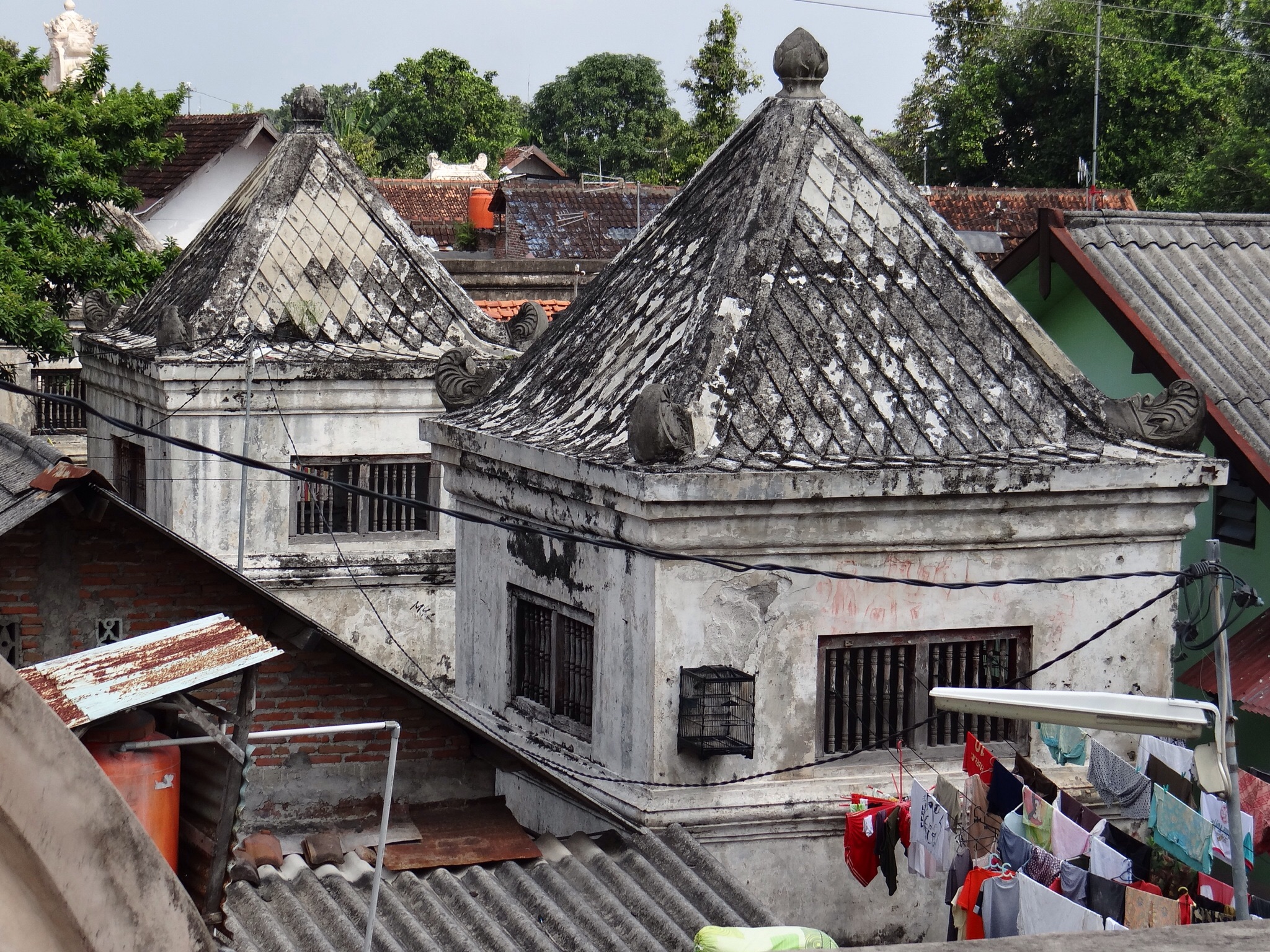
Just the introduction alone sounds promising… and here we are, at the Sumur Gumuling or the Palace's Underground Mosque.
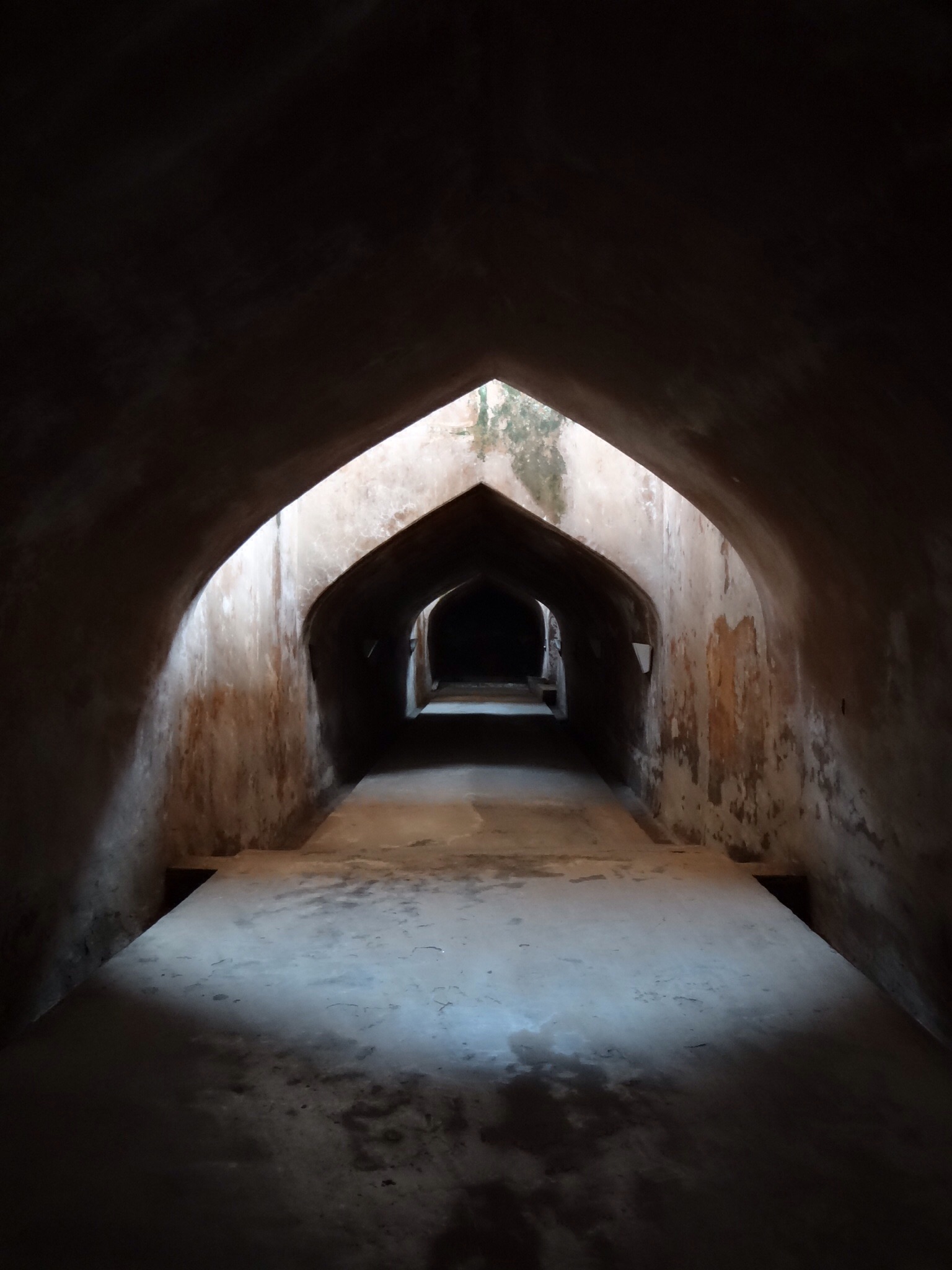
Once you walk through the corridor, you come to a circular, two-story building connected in a somewhat surreal way by a room with several staircases
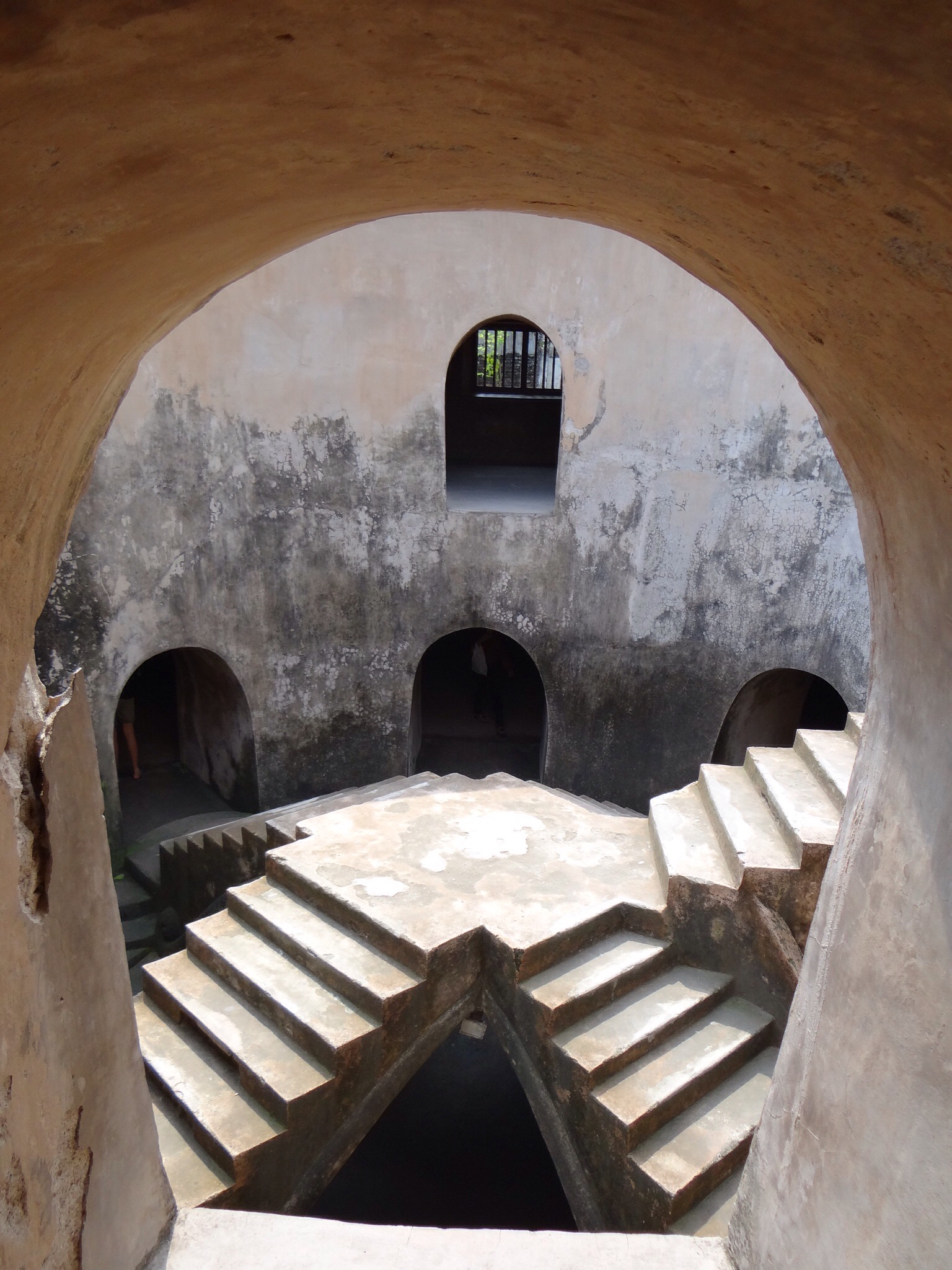
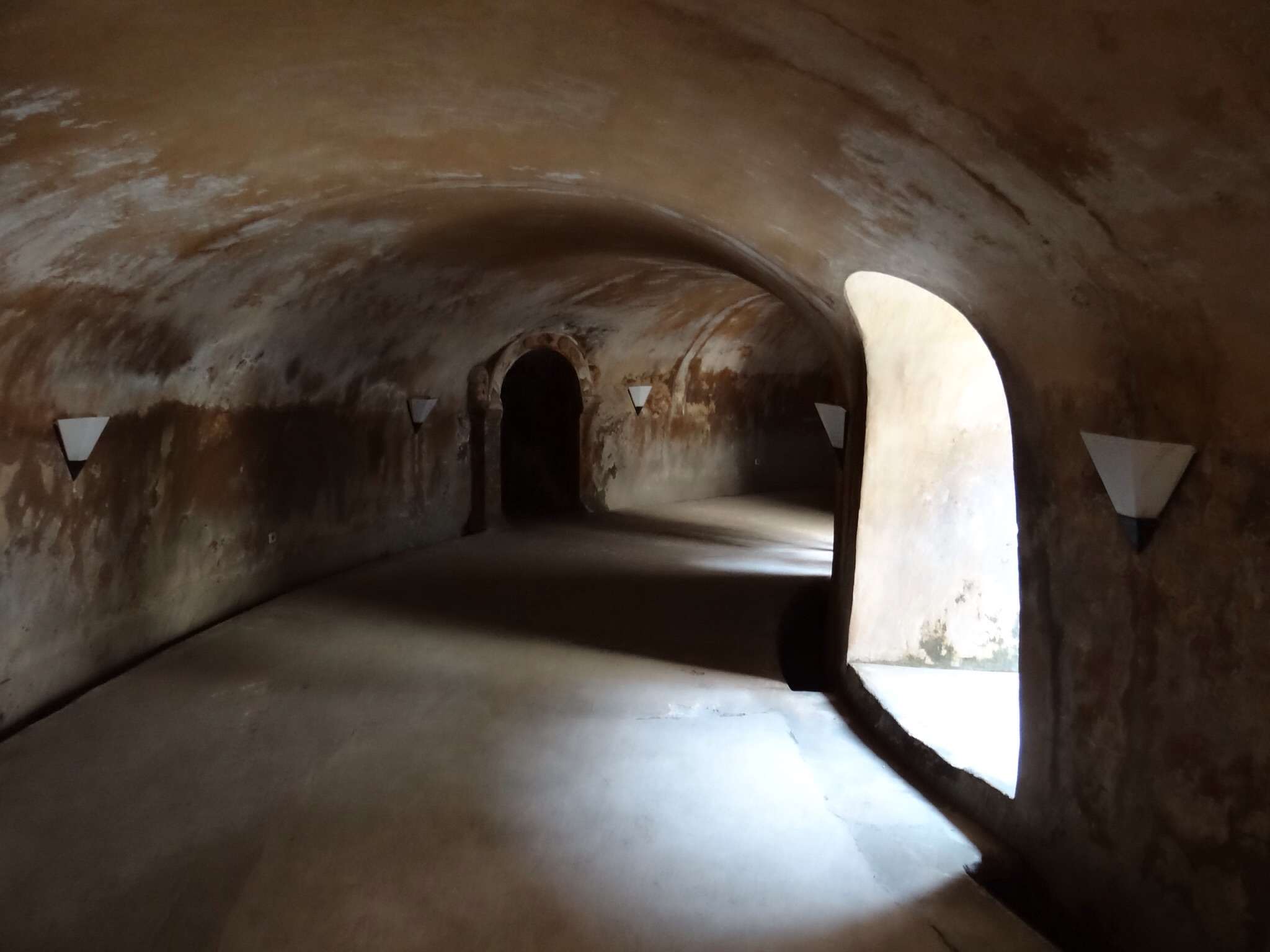
As you can see, there are five staircases: four of them lead up from the lower level, and the fifth continues to the upper level. The number five symbolizes the five pillars of Islam, and it was in this room that the imam would stand to deliver his sermon. The perfect acoustics of the tunnels we saw above ensured that his words carried throughout the entire complex.
The stone's beige color, the dim lighting, and the echo that reverberates off the walls give it a mysterious atmosphere that feels even better when you stroll through late in the afternoon, when there are fewer people around.
North of Taman Sari there is a Bird Market.
It's really disappointing—just four or six stores with common little birds in cages, and a sad-looking man spraying them with water.
Puppet Theater
The shadows of sharp-featured figures writhe, fight, and bicker behind a translucent stage, accompanied by a deafening soundtrack and the monotonous narration of a puppeteer
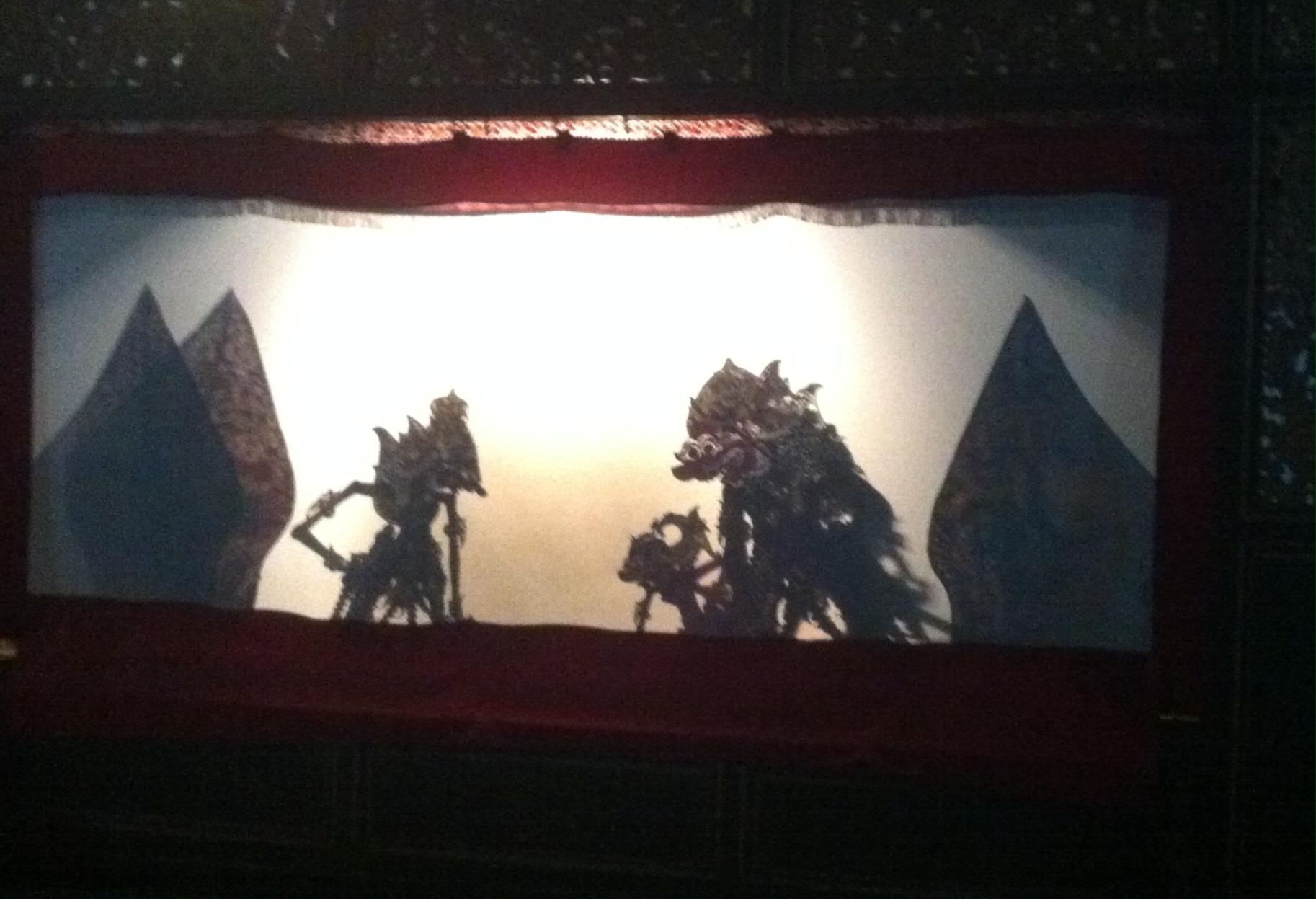
If you have two hours to spare (from 8:00 p.m. to 10:00 p.m.) and 20,000 Rp, you can attend this rather unique puppet show. They’re actually delicate figures made of bullhide (or so we were told), cut and shaped in a workshop at the entrance to the Sono-Budoyo Museum.
It was almost more interesting to watch the workshop—with two huge rolls of leather and a machine for chiseling it—than the performance itself, which was completely unintelligible, of course 😅
What to Do in Yogyakarta in Your Free Time: Shopping and Bars
What is there to do in Yogyakarta besides visiting monuments or museums? The truth is, there isn't much else to do…
Malioboro Street—the main street—is lined mostly with clothing stores, and, as you might imagine, the prices are very cheap: a T-shirt for 15,000 Rp, a cap for 20,000, or belts ranging from 25,000 to 100,000 Rp
I don't know much about bars, but Prawirotaman Street has a few—though they close at 11:00 p.m., at least during Ramadan—and it's quite far from downtown. A much better option is the narrow, central Sosrowijayan Street, a side street off Malioboro lined with small stalls and the occasional café.
Around Yogyakarta: Prambanan and Borobudur
I guess the question of what to do in Yogyakarta can be answered with these two words: Prambanan and Borobudur. Let's go!
Preliminary Note: Many hotels offer all kinds of tours that combine visits to both sites, typically starting with the sunset at Borobudur and ending at Prambanan.
The tours usually last about 9 hours, and although that might seem like a long time, it’s not really that long when you consider that each site is on opposite ends of Yogyakarta, the traffic is terrible, and Prambanan is sooooo big; I recommend visiting them separately because it’s also much cheaper that way.
Prambanan
The Prambanan complex is about 20 km from Yogyakarta. You can get there by taking bus 1A from Malioboro Street; the ride takes about 30–40 minutes and costs 3,500 Rp. Admission is 243,000 Rp for foreigners.
It is the largest Hindu temple in Indonesia and has been designated a World Heritage Site. It appears that there were originally as many as 240 structures in the complex (far fewer have survived), all dedicated to the principal Hindu deities: Shiva, Brahma, and Vishnu.
Candi Prambanan
There are two groups of temples: the first, which is the largest and most spectacular, is simply called Prambanan Temple (Candi Prambanan), and it’s where you’ll find the three towers that appear on all the postcards and advertisements featuring Prambanan.
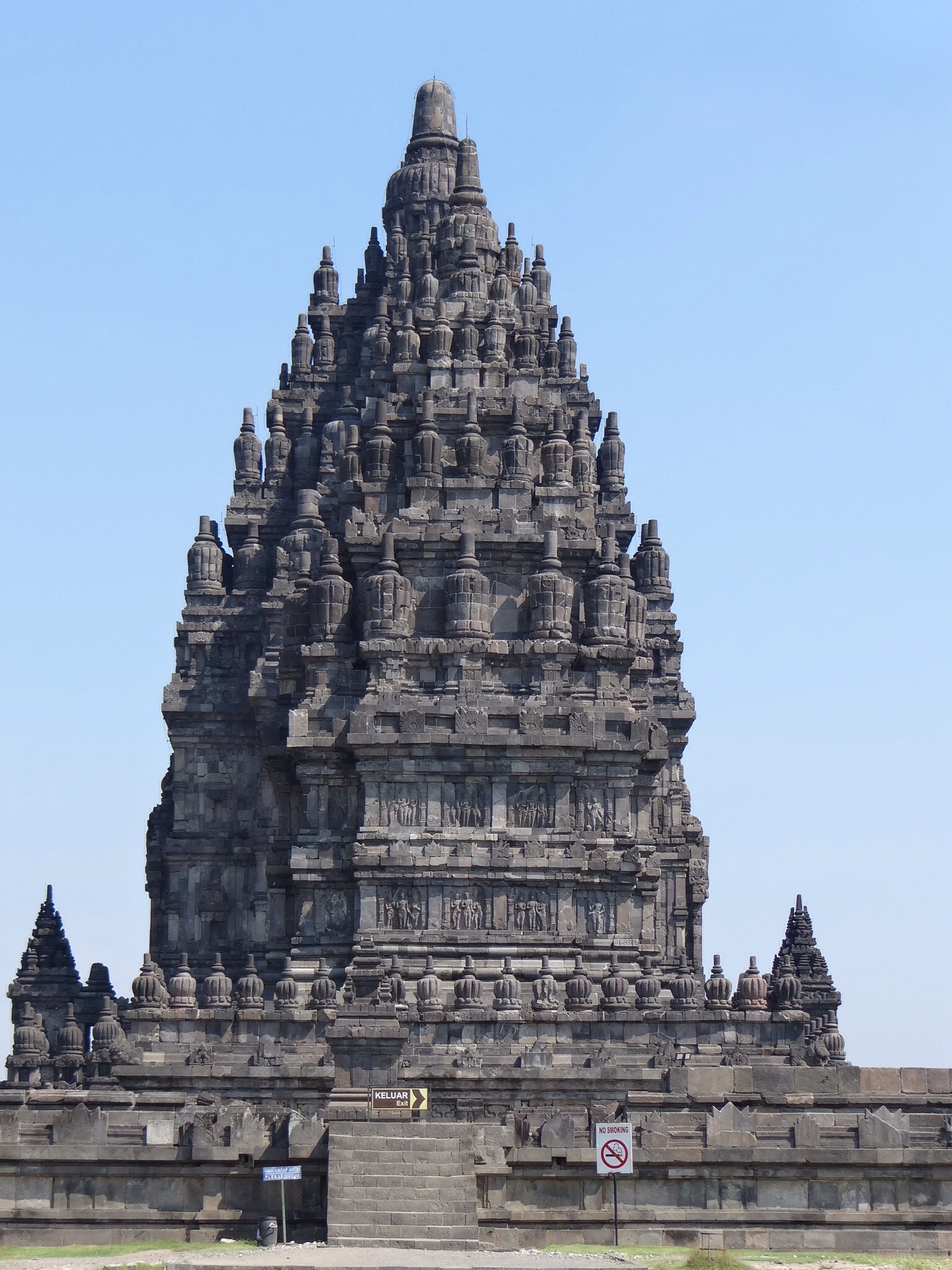
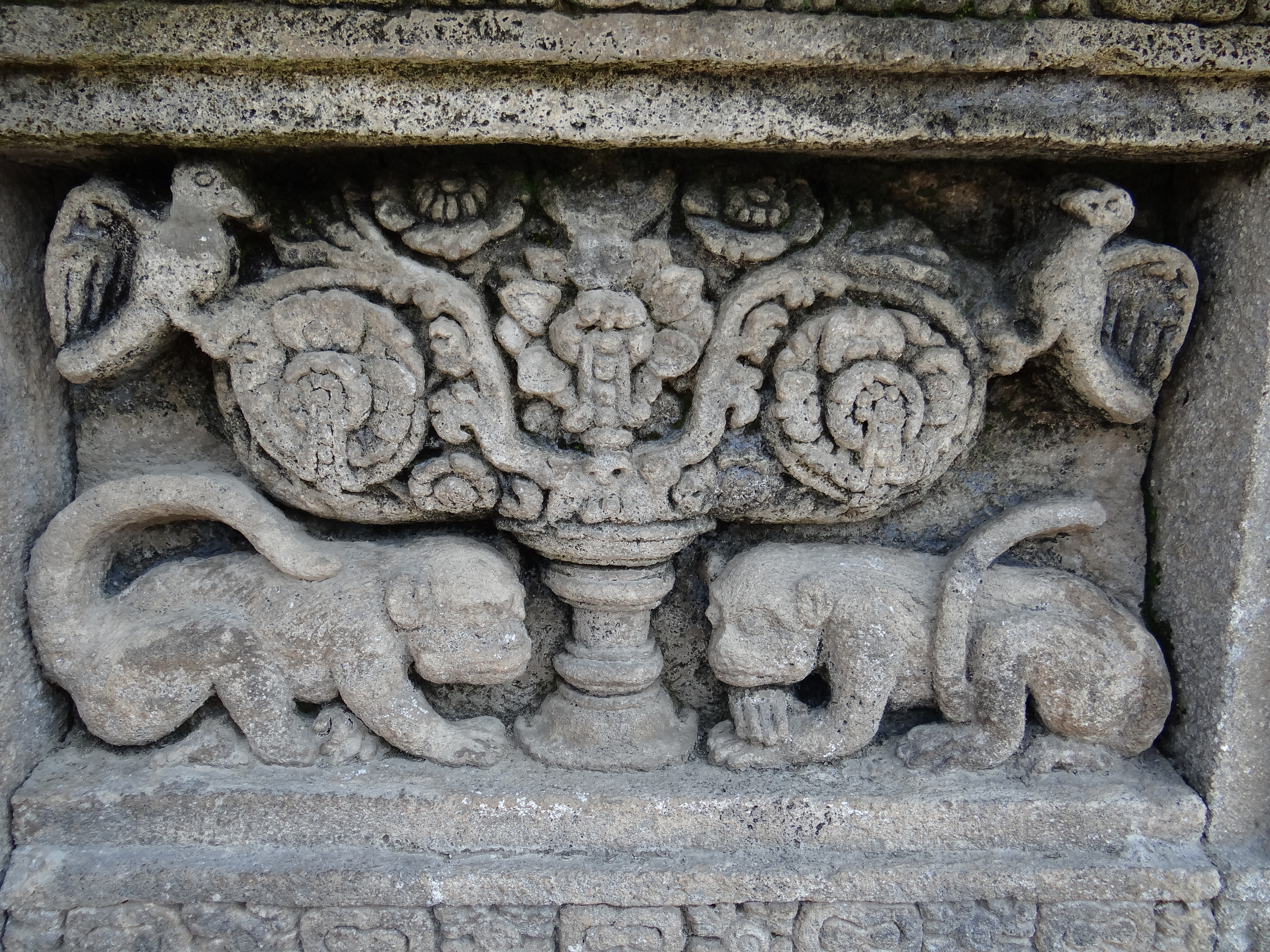
Here above, we see Candi Shiva, the tallest of them all. Just as at Borobudur, the important thing isn’t reaching the top, but understanding the journey: each level or platform tells a story. On the lowest level, there are scenes depicting various animals: monkeys, pigeons, etc.
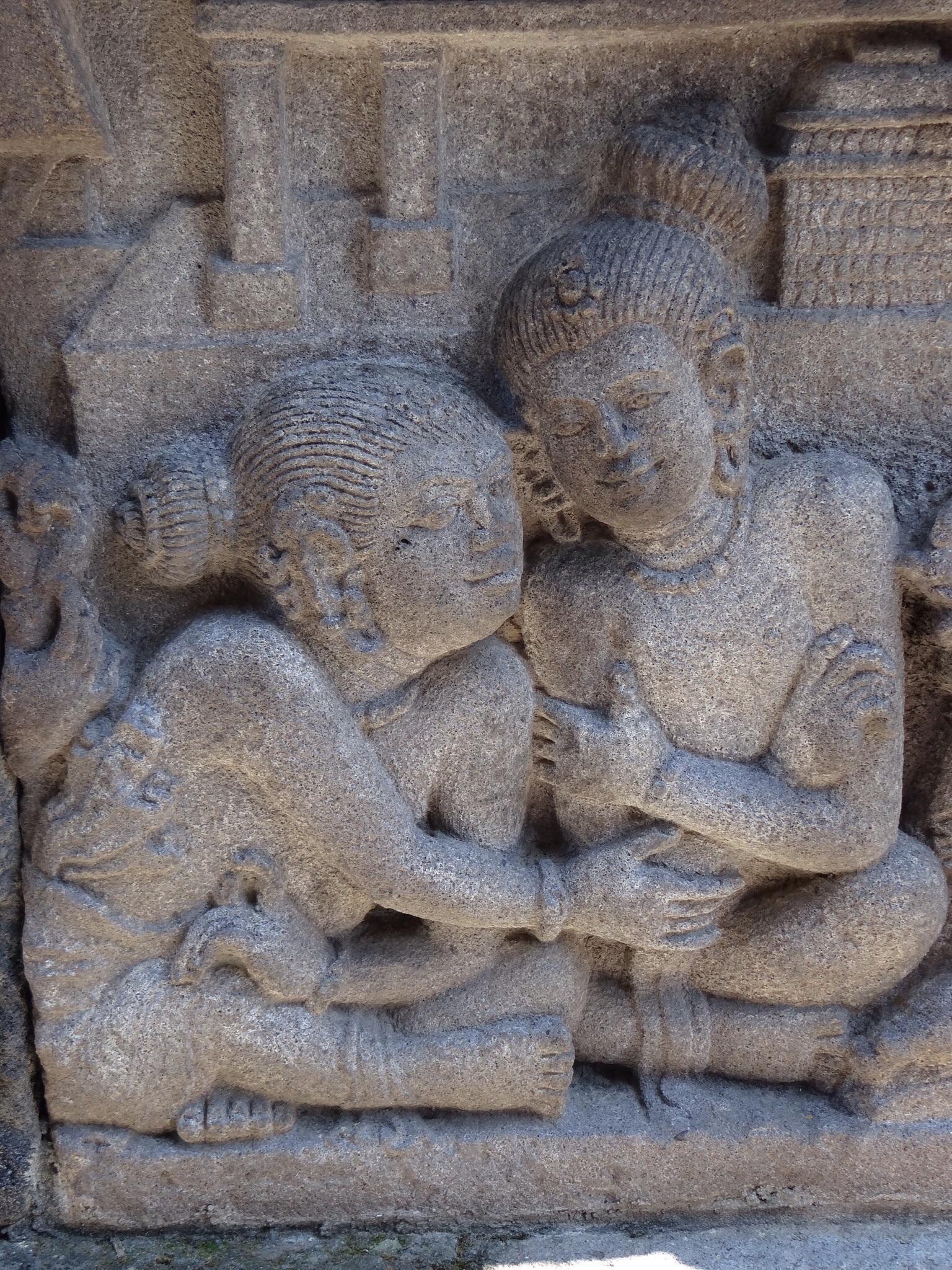
Further up, you'll find dozens of reliefs—I'm not sure if they depict mythological scenes or scenes from everyday life—but they're quite intriguing: some have an affectionate quality to them
Others, not so much….
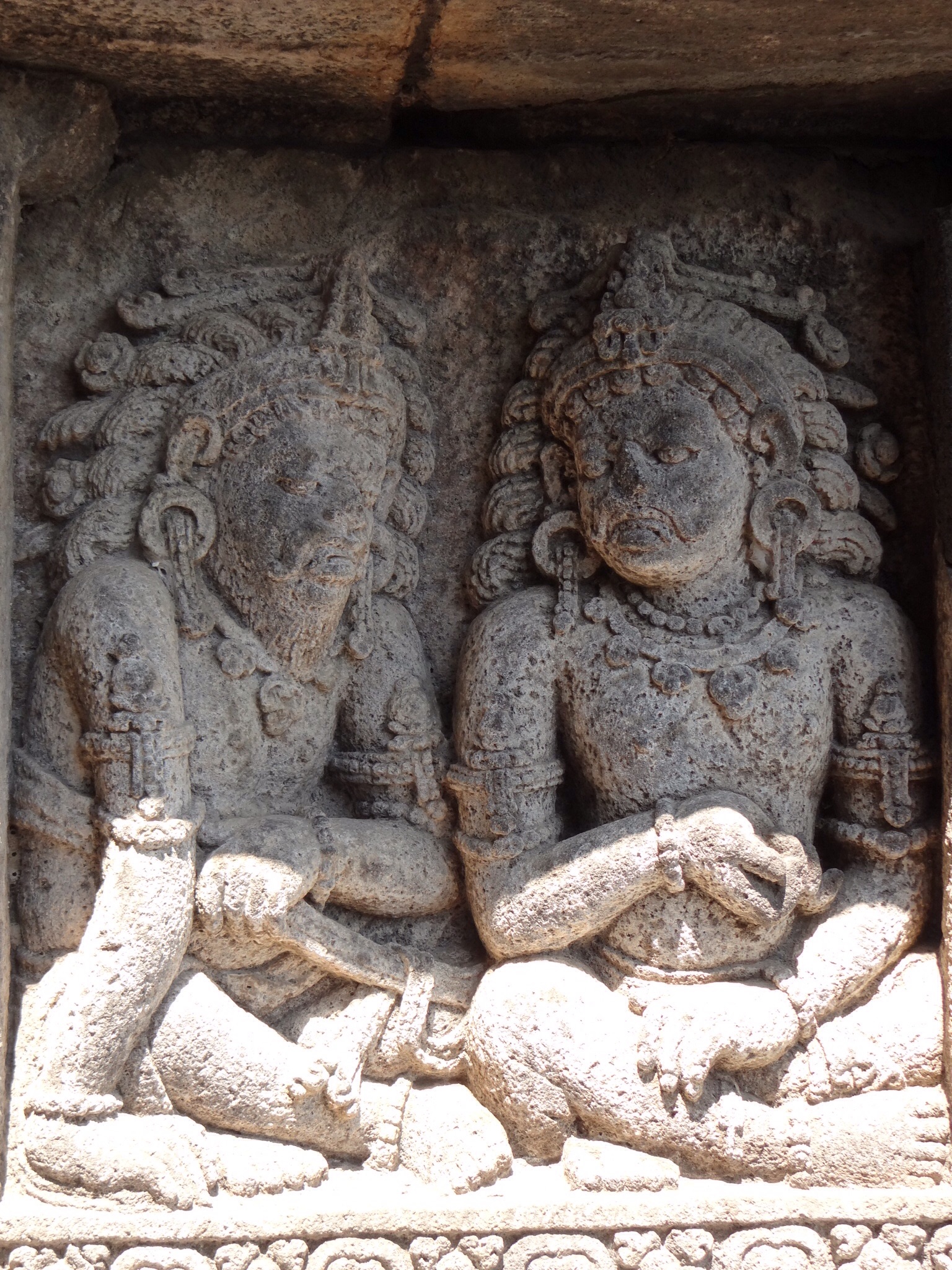
This guy is really getting an earful from his wife, isn't he? 😝
And some of them are even a bit risqué
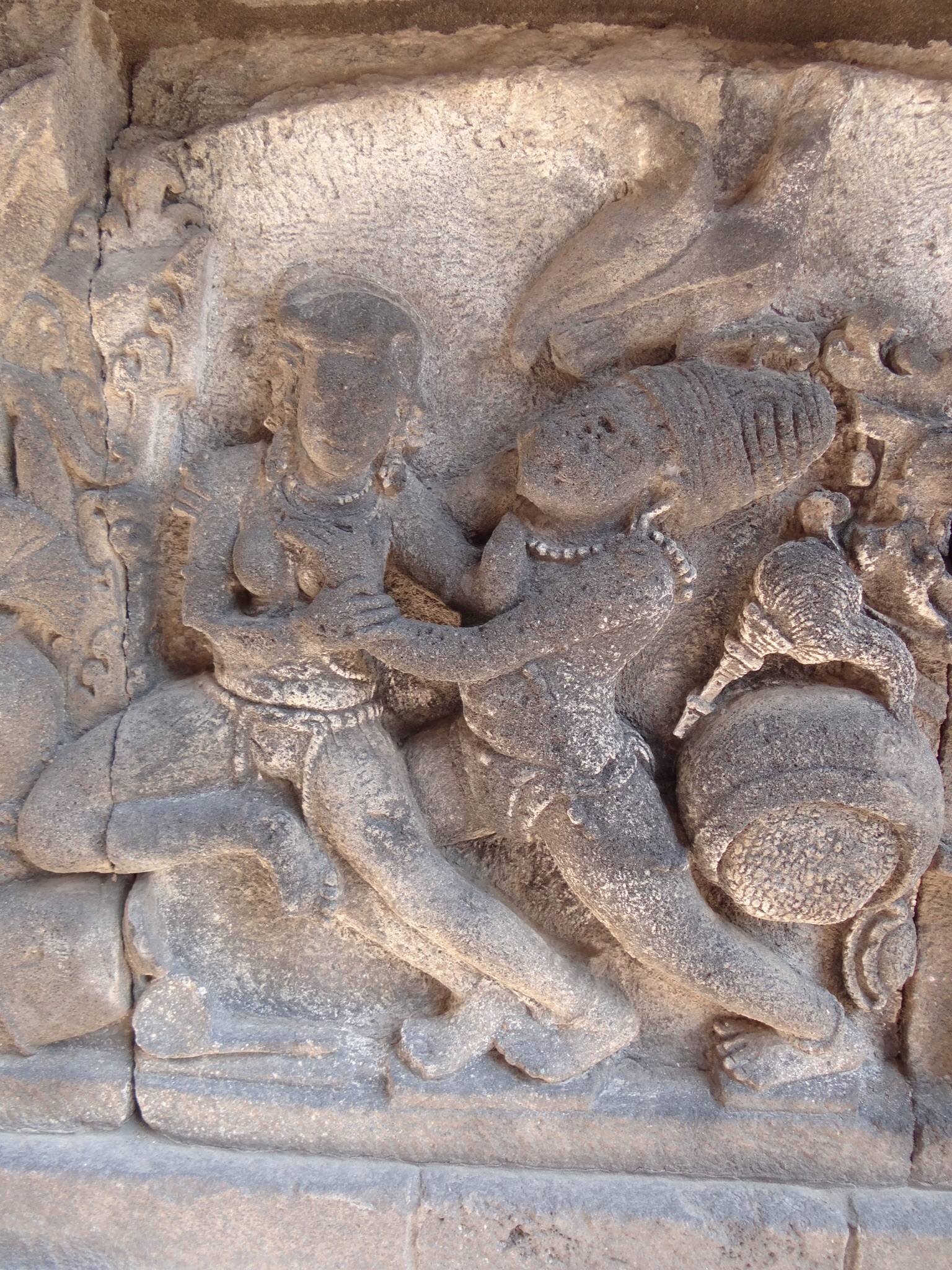
Once at the top, in the upper chambers of the various temples, there are statues of different Hindu deities.
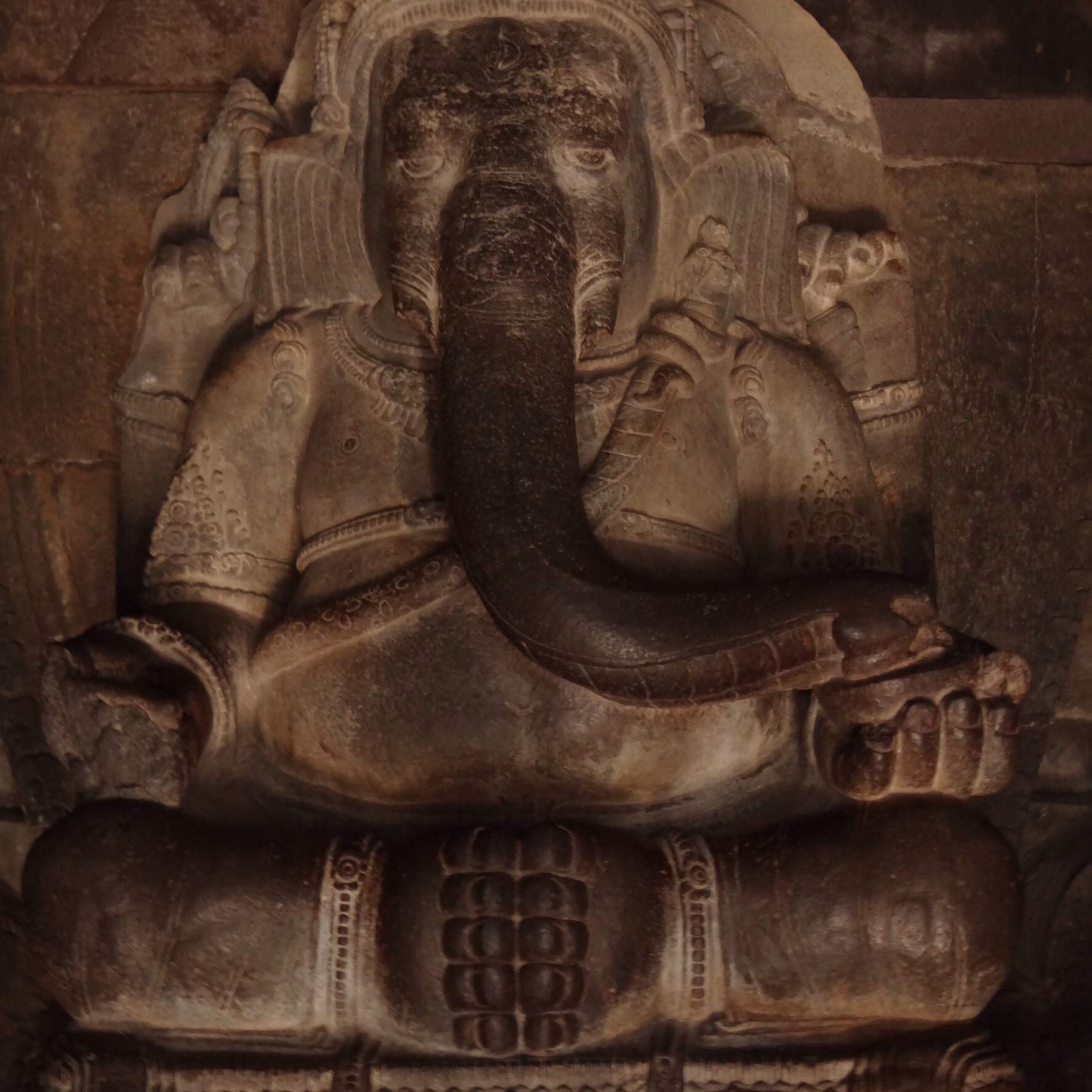
Let me introduce you to Ganesha, the patron of the arts and sciences.
Candi Lumbung, Bubrah y Sewu
The second group of temples is farther away: the Lumbung, Bubrah, and Sewu temples. The Lumbung temple wasn't much to look at, and the Bubrah temple was covered in scaffolding.
The most notable is the one at Sewu, guarded at its four entrances (at the four cardinal points) by these fearsome—and fat— dwarapala (guardians) and it is also a blend of religions: Hindu and Buddhist.
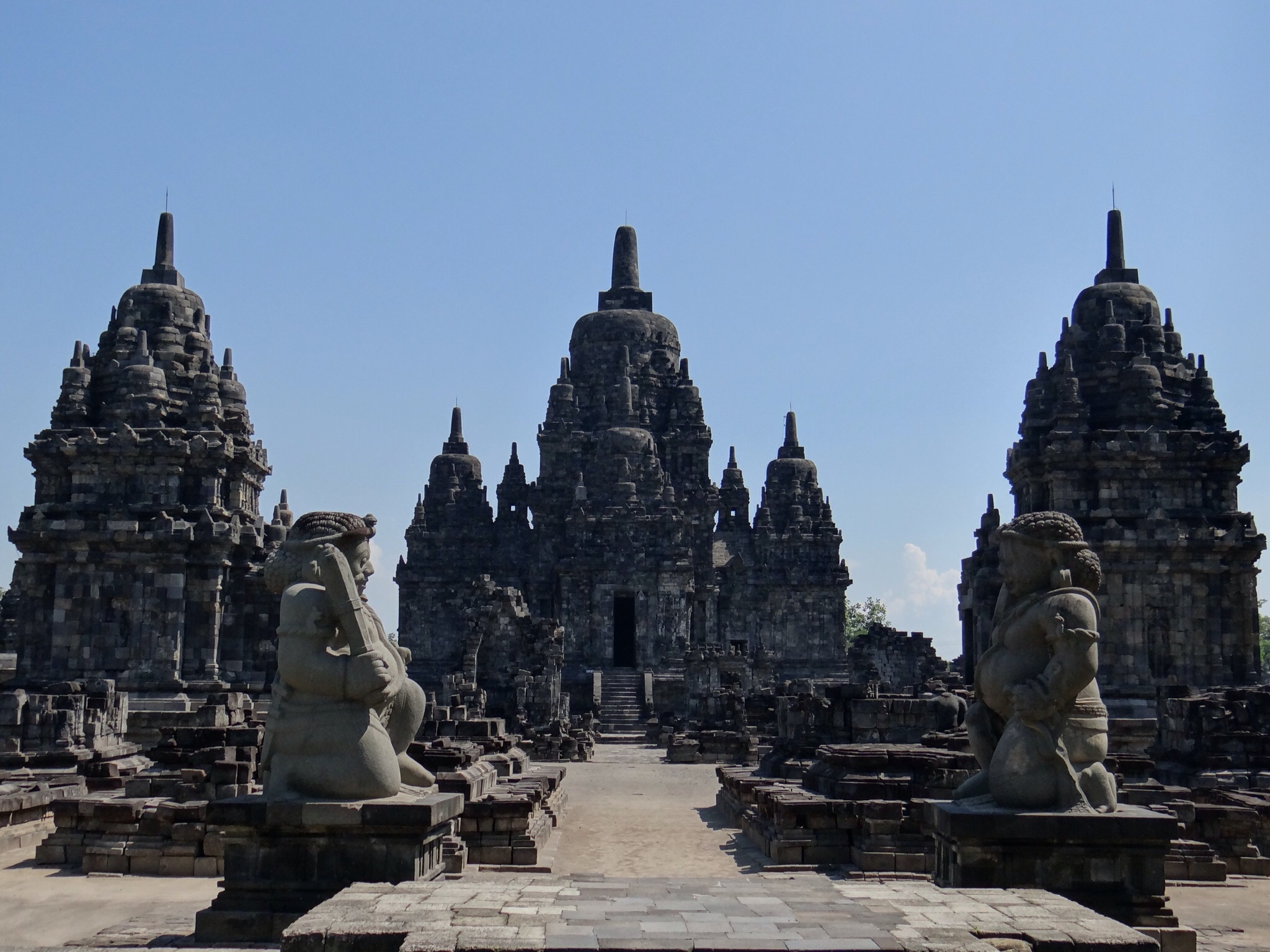
For some reason I don't understand, hardly any tourists come to see it, so you can visit it in peace.
Bonus: Let's visit Plaosan Plaosan
These two twin temples are located just about 4 km northeast of Prambanan.
It’s also a pleasant walk through the cornfields, so there’s no need to take any form of transportation. It’s nice to run into farmers along the way who offer you food or look at you in amazement, without the mischief of the hustlers who swarm tourist spots in Indonesia
It costs only 3,000 Rp to visit them
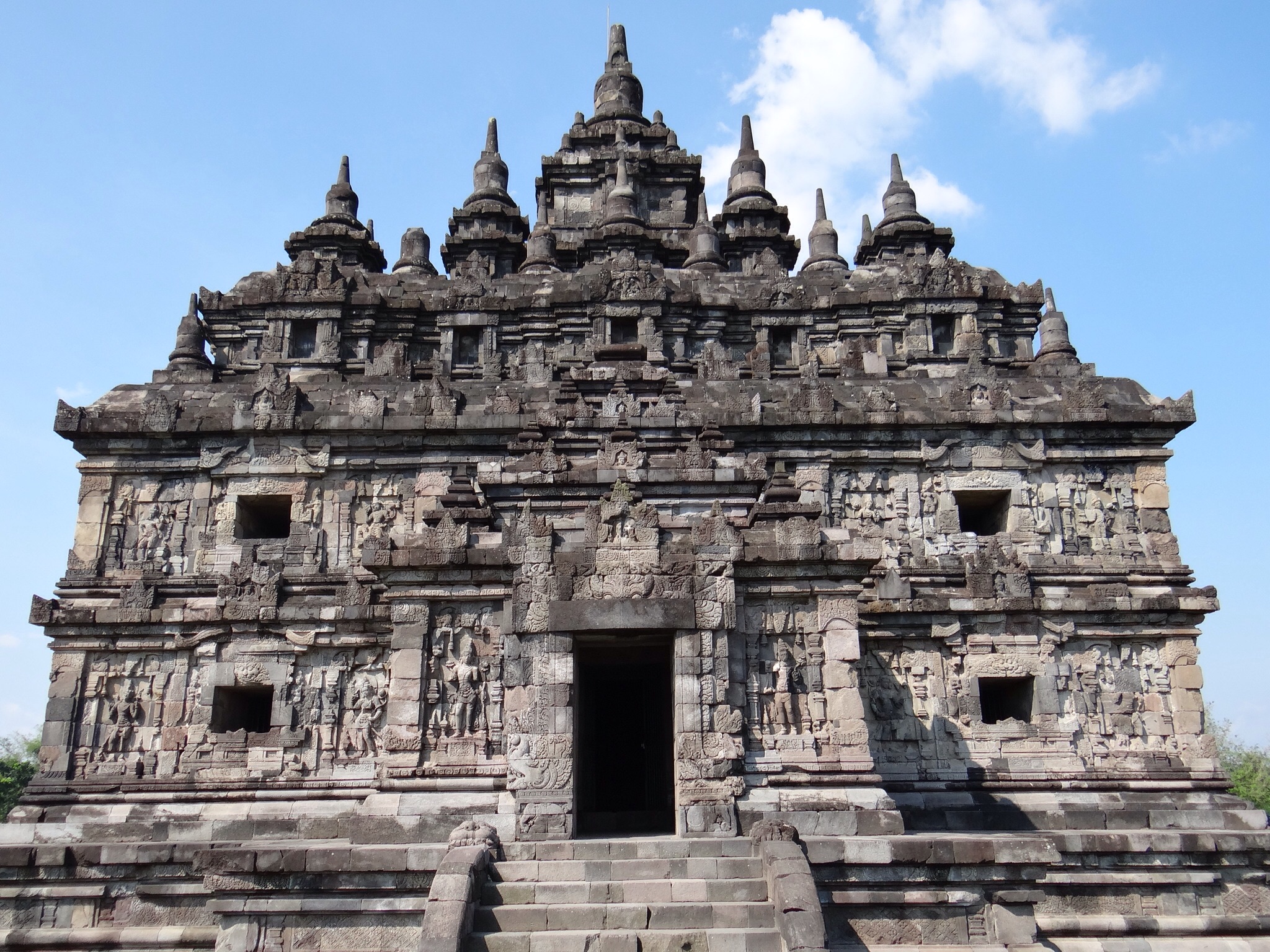
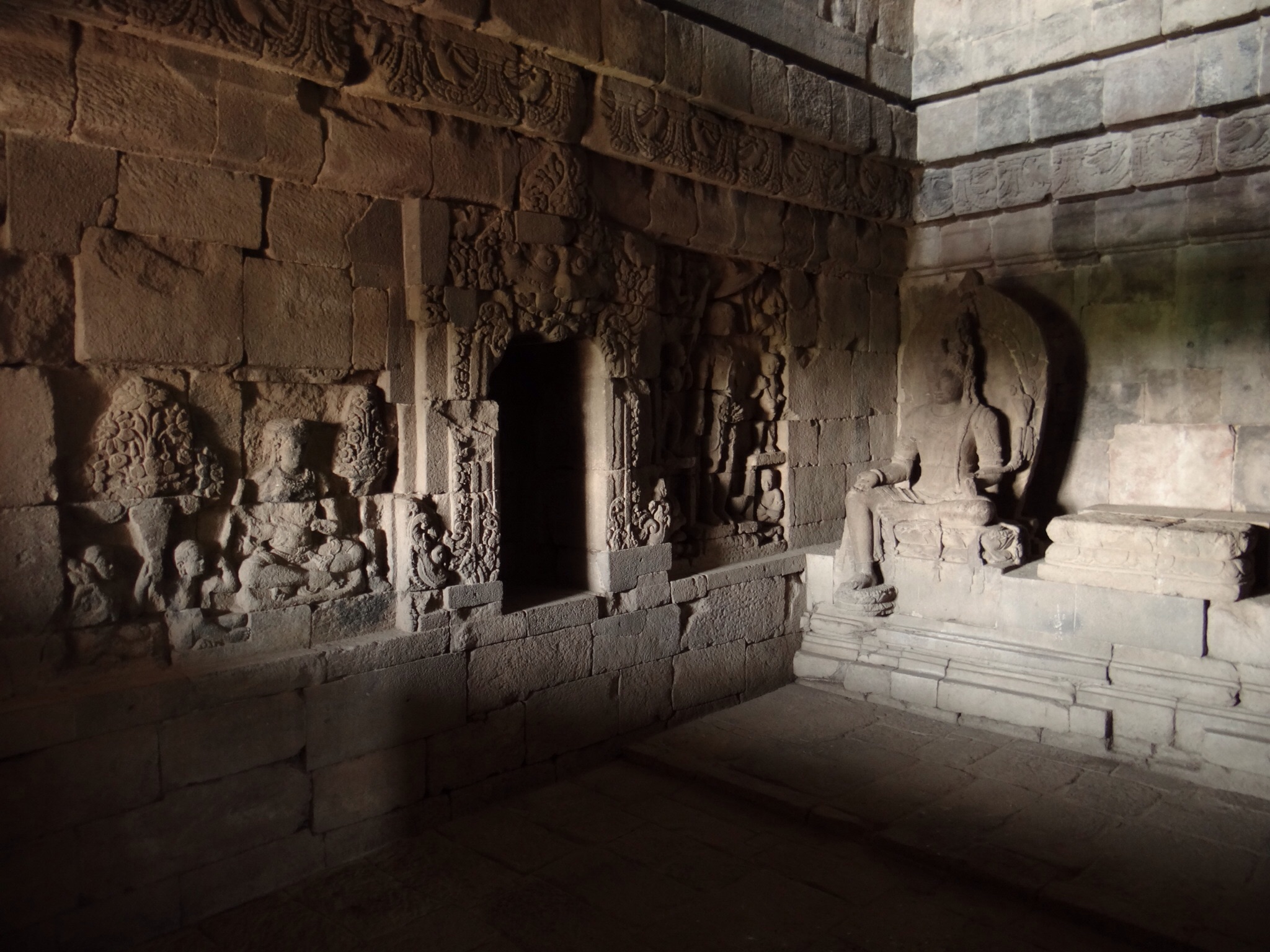
The best thing about these temples is that they’re empty (I guess tour groups don’t visit them) and how well-preserved the chambers are inside; the dim light filtering through the narrow stone doorways and the absolute silence give the place a mysterious atmosphere…
Borobudur
How do I get there?
It's a bit of a hassle to get here. You have to take the 3B city bus from Kha Dalan Street to Jombor (3,500 Rp, about 45 minutes) and then a minibus to Borobudur (25,000 Rp, about an hour).
The Borobudur bus station is a 5-minute walk from the entrance to the complex, so ignore the drivers who are very pushy in offering you rides.
The visit
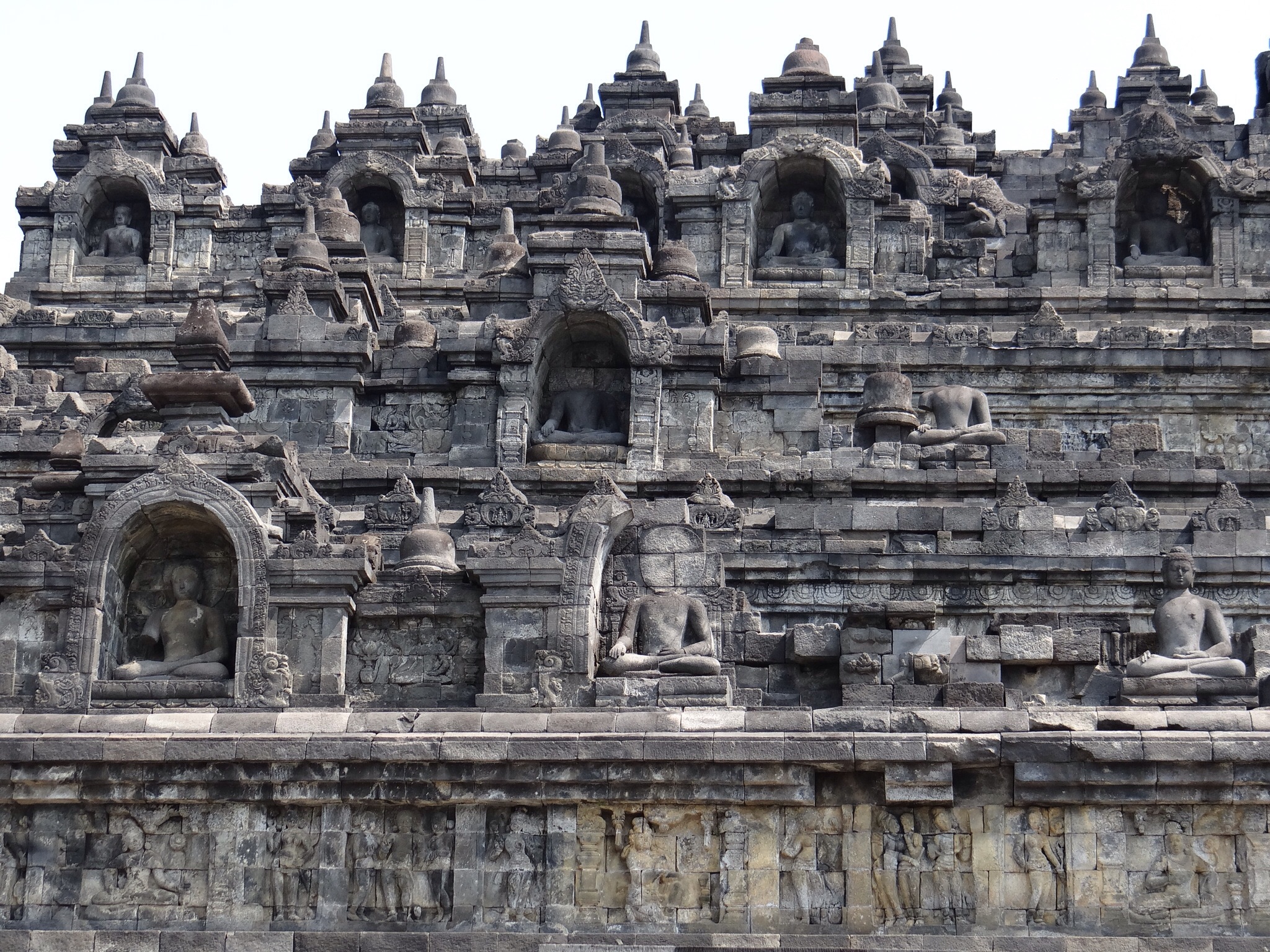
Borobudur is the largest Buddhist temple in the world. Unlike the towers of Prambanan, Borobudur is a circular, multi-story structure, not tower-shaped. Like the Sewu Temple, it has four entrances that correspond to the four cardinal directions, but that is where the similarities end.
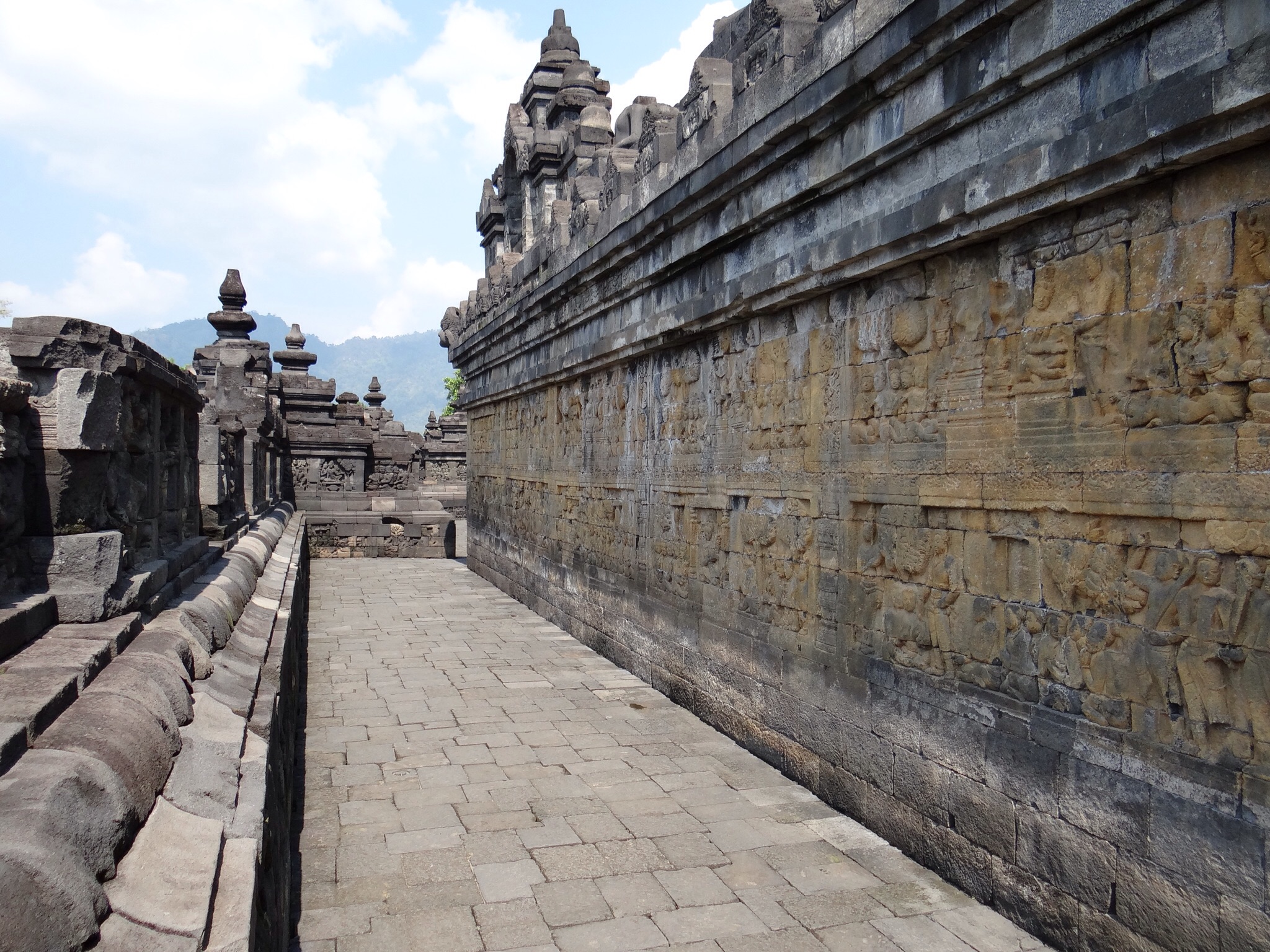
How do you explore this enormous pyramid? Borobudur is a map of the Buddhist universe, and across its three levels, we find the three paths leading to Nirvana: the World of Desires, the World of Forms, and the Formless World. All the reliefs on the different levels tell the story of the Buddha’s life and teachings as they relate to these different stages on the path to liberation.
You enter through the east gate and must walk through each of the circular floors clockwise before ascending to the next one (that is, heading south with the interior wall on your right). As many as 2,600 reliefs depict the life of Prince Siddhartha, the birth of Buddhism, and his teachings.
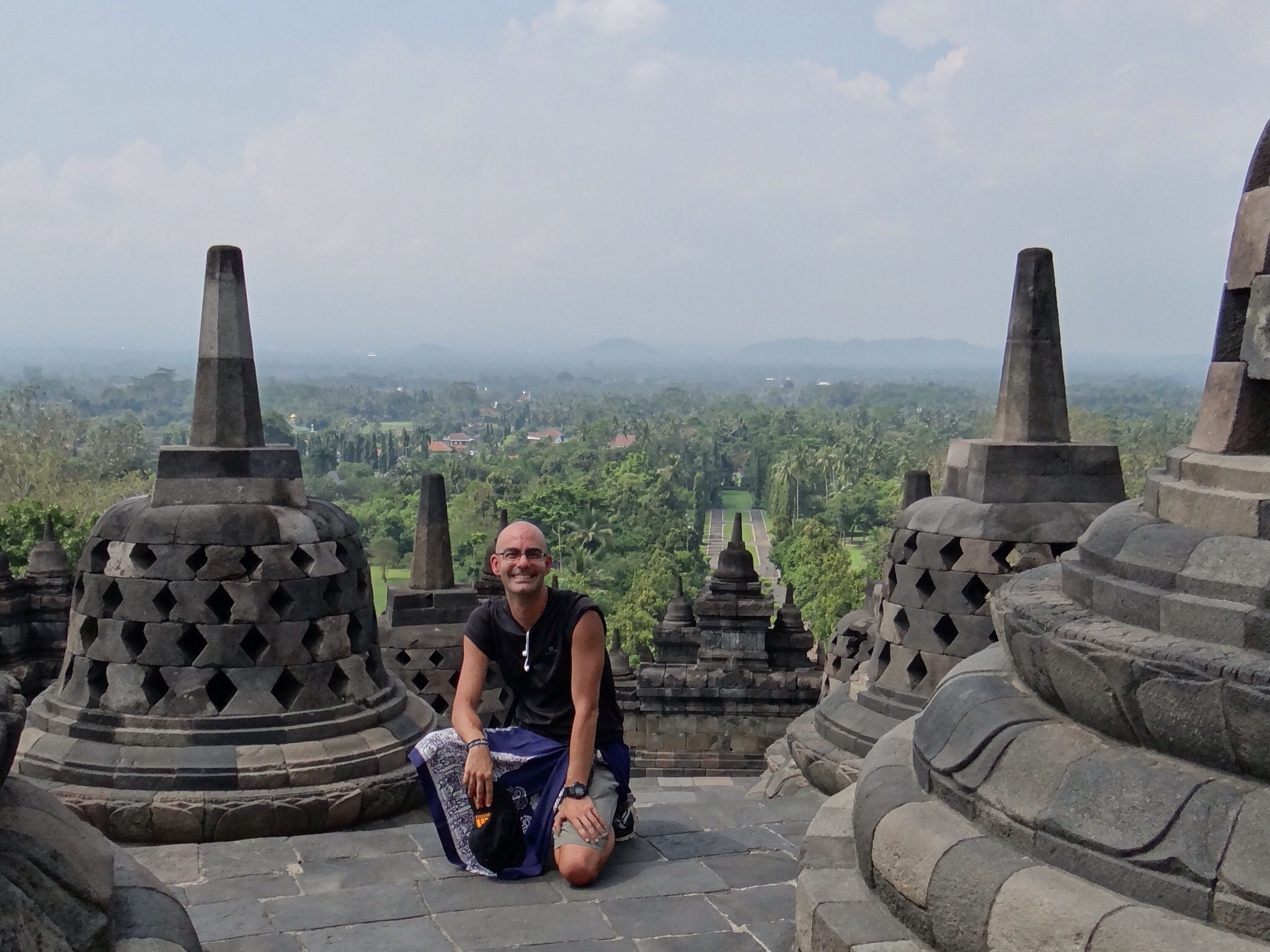
Well, after a short climb, we reach the top of the pyramid, where you'll see the famous “bells” that are the symbol of Borobudur. There are 72 in total, and inside each one is a Buddha seated in the meditation posture; the central “bell” or stupa—the largest one—is empty and symbolizes Nirvana.

Well, that's it—next stop: the Bromo and Ijen volcanoes ☺️
If you found this post helpful in figuring out what to do in Yogyakarta, let me know by leaving a comment!!!
And if you want to know more about Indonesia: https://999millas.net/category/paises/indonesia/
Or in its official website https://www.indonesia.travel/us/en
Foto y texto : Mike !
 EN
 ES