
Islas Galapagos
What to See in the Galápagos Islands?
It’s rare to find an entire archipelago designated as a World Heritage Site, but that’s the case with the Galápagos Islands. Why? Due to its geographic isolation and the convergence of three major ocean currents, the archipelago is home to an extremely high percentage of endemic species (those found nowhere else on Earth). You’ve probably read that Darwin visited the Galápagos. Well, yes. He spent five weeks here, and the experience must have made such an impression on him that it inspired him to write his Theory of Evolution. Translated with DeepL.com (free version)
INTRODUCTION: PREPARING FOR YOUR VISIT
The Galápagos Islands consist of 13 large islands. The largest, best-known, and most-visited are Isabela, Santa Cruz, and San Cristóbal. You should probably set up base on one of these if you also want to explore other islands in the archipelago.
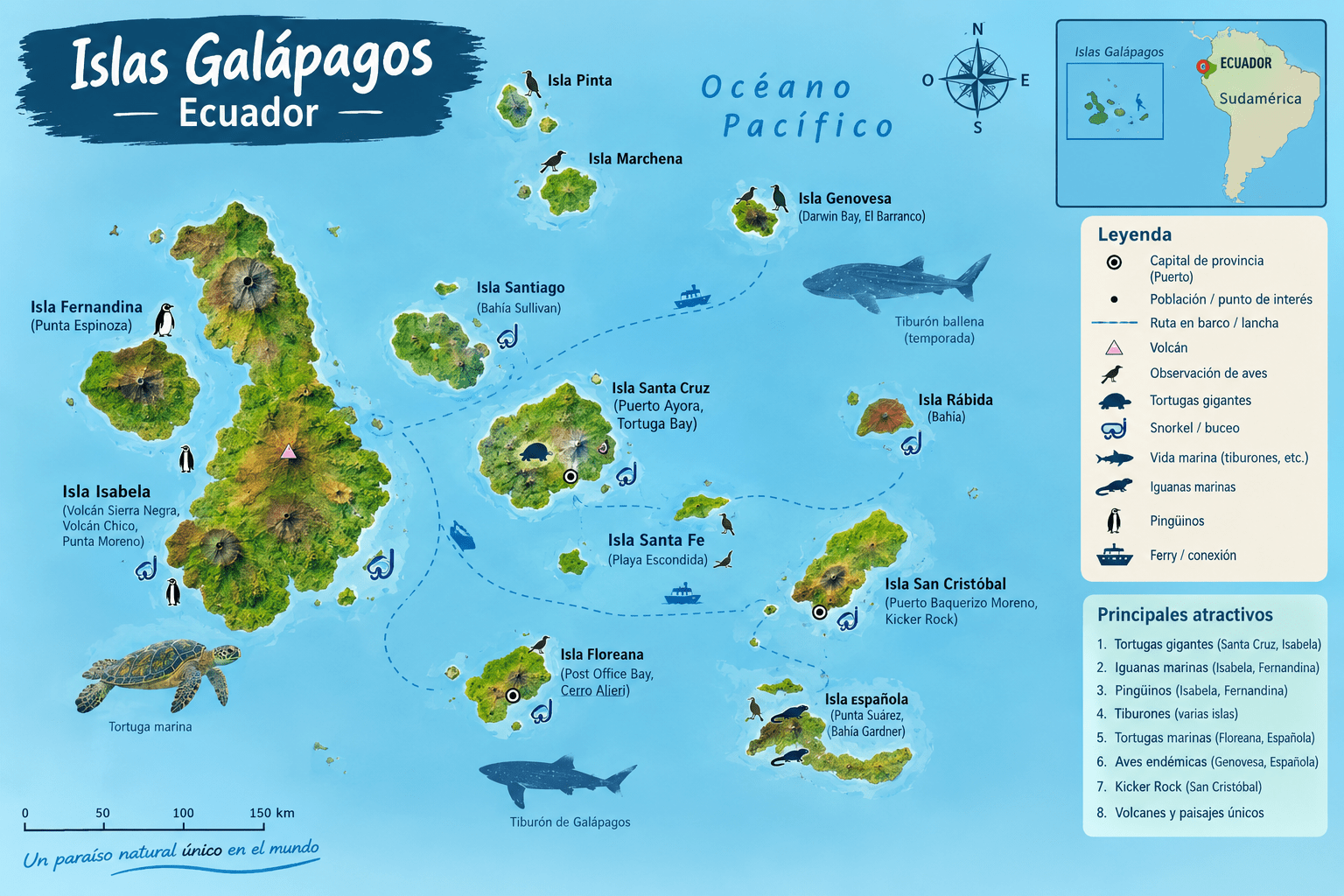
How to Get There and How Much It Costs
The most common way to get there from mainland Ecuador is via Quito or Guayaquil. The arrival airports are San Cristóbal and Baltra (near Santa Cruz).
Before boarding, keep the following in mind:
1. At the airport of departure, you must first go to the Galápagos Government Office to obtain a card called the Transit Control Card (TCT) for $20 (a simple entry fee that also serves to track how long you stay on the islands).
2.- The “Biosecurity Inspection”: All luggage (carry-on and checked) must go through a biological screening process. Your bags will be sealed to ensure you are not transporting prohibited species or items. This inspection is different from the usual check-in process and takes place BEFORE check-in. Do not proceed to check-in without first completing these steps. This check is conducted to ensure that you do not bring plants, animals, or seeds into the archipelago’s protected ecosystem that could endanger it, so be careful about what you pack in your suitcase because it may be confiscated.
3.- You've already landed in the Galápagos. Now it's time to brace yourself and pay the National Park entrance fee: $100 USD right as you get off the plane, just like that, without any warning or anything….
Inter-island transportation
Okay, step two in how to visit the Galápagos Islands: getting around the islands
The tour is conducted using small boats that can hold up to about 10 people for 30 US$.
The schedules are always the same: two boats, one leaves early in the morning (6–7 a.m.) and the other around lunchtime (2–3 p.m.); it’s best to make a reservation the day before, and they may cancel the trip if the weather is bad, so it’s wiser to arrive on the island from which your return flight departs the day before. The trip takes between 2 and 2½ hours, and if the sea is rough, it’s not suitable for those with sensitive stomachs.
WHAT TO SEE IN THE GALAPAGOS ISLANDS: THE TOUR
We've already checked into the hostel and are taking a leisurely stroll through Puerto Ayora on the island of Santa Cruz. The fun begins. What to see in the Galápagos Islands?
The photographer slowly approaches his subject. He wades through the pond, the water up to his knees, camera held high. He is fully convinced that his subject has spotted him and is mockingly laughing at his efforts….Fortunately for this blog—and for the camera’s safety—the bird finally lets him take a good photo. Test passed.

It is this symbiosis between humans and animals that surprised me the most during my visit to the Galápagos Islands: the animals roam freely even in the middle of town, and, surprisingly, people respect them… Where else could sea lions take a nap right in the middle of the stairs at the harbor without anyone bothering them?

Let's talk a little bit about a couple of islands I visited.
Santa Cruz Island
Puerto Ayora. The big city. A pier lined with expensive restaurants, somewhat posh hotels, ice cream shops… How will our wallets survive?
First of all, avoid the bars and restaurants on Charles Darwin Street (the one along the waterfront) if you don’t want to end up paying $4.50 for a small beer… It’s worth heading a little further into the city to cut the price in half. The same goes for meals. The locals eat on Charles Bindford Street, and you should do the same. It’s still expensive—set menus cost about $5–8—but it’s nowhere near as overpriced as the tourist restaurants.
Magic exists. Check out this trick: You open your wallet, and suddenly all the dollars you had have mysteriously disappeared. How can you avoid this? I’ll tell you about some FREE excursions (and I’ll also give you a free map of the best places to visit on the island).

Las Grietas
A gigantic sword splits a mountain in two. The gap fills with equal parts fresh and salt water. Marine life takes over the new habitat, an emerald hue settles over its waters, and the depths of the crevice await the most daring.
You've arrived at Las Grietas
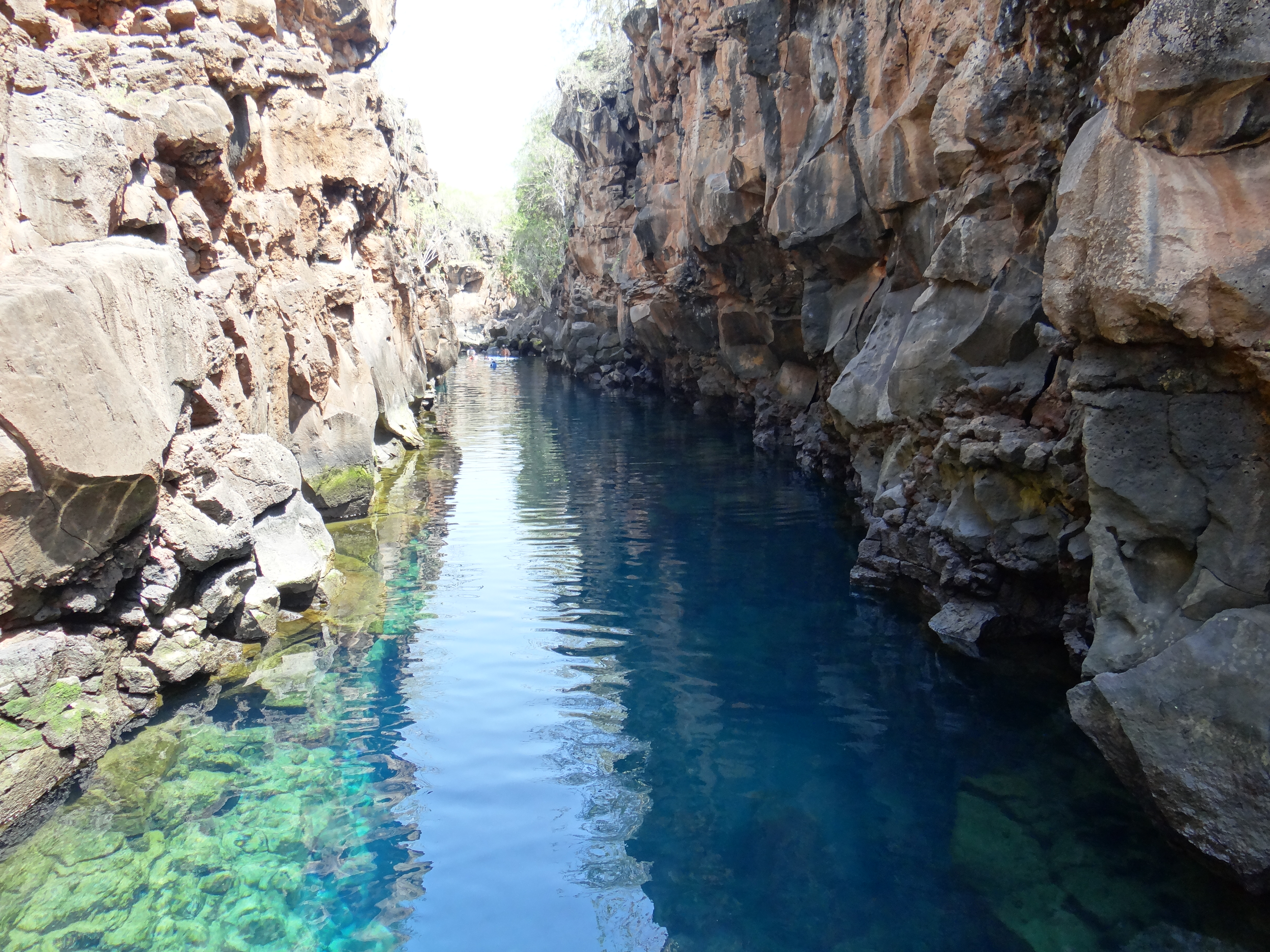
It's the perfect spot for snorkeling. Just take a motorcycle taxi from the pier—for just $0.80, you'll arrive at this marvelous spot. It's best to come very early in the morning (around 7:30 a.m.) or later in the afternoon (after 5:00 p.m.) to avoid the crowds of tourists.
Turtle Bay
West of Puerto Ayora, about a 40-minute drive away, a little piece of heaven fell from the sky.
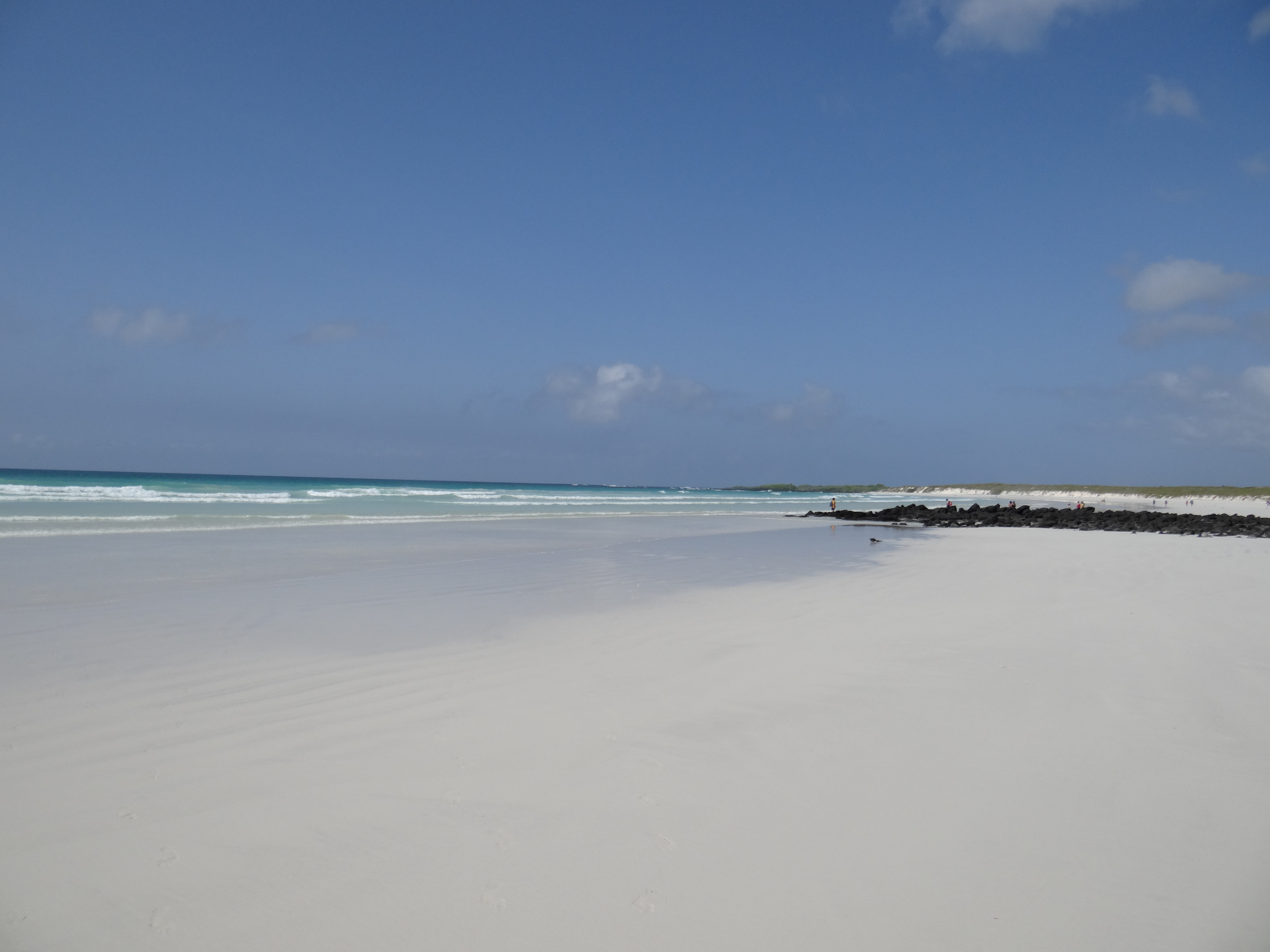
The animals quickly rushed to claim it, worried that the man might try to take it for himself. So they posted sentries to watch for any movement

Here we can see them as fierce guardians who patrolled the territory on land. Given the intensity of that gaze, it’s easy to understand why none of them would dare to escape…

The sea is also heavily guarded by this iguana; the beach was full of them, but they were harmless despite their appearance.

At the beach pictured above—Playa Brava—swimming isn't allowed (?), but it is at a beach a little further away—Playa Mansa. In short, it's a great place to get a taste of the Galápagos' natural beauty without having to pay an entrance fee.
Garrapatero Beach
At the eastern tip of the island, for a $30 taxi ride, you can enjoy a paradise-like beach—and if you get there first thing in the morning, you can have it all to yourself…except for the flamingos, of course
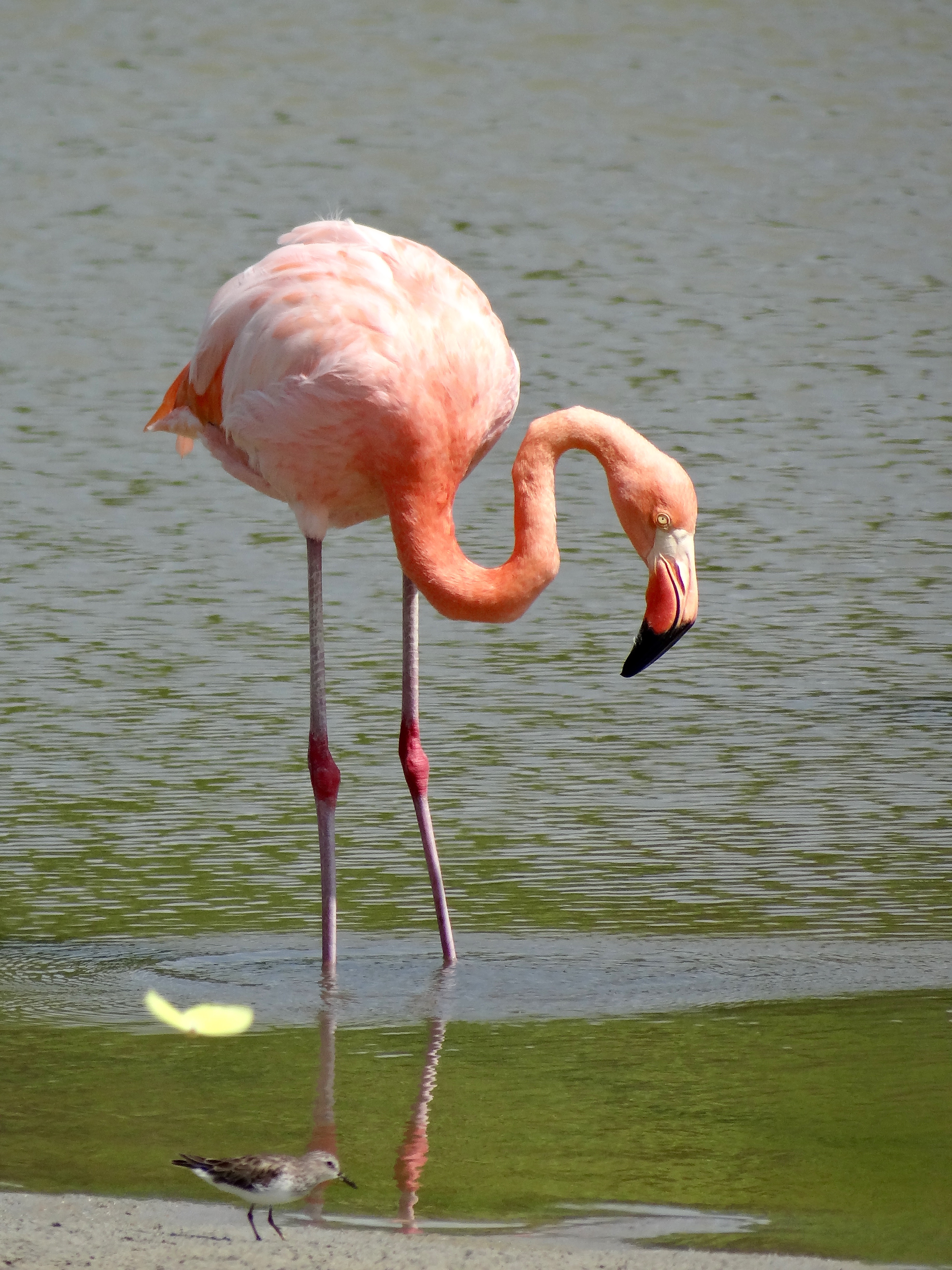
If you’re feeling adventurous after the beach, you can hitchhike to Bellavista, then on to Santa Rosa, and from there walk the 3 km to the Los Chatos Turtle Reserve. Can you hitchhike here? Yes, you can. People in the interior of the island are incredibly friendly, and with just a little patience, you’ll find a ride; if you’re looking for a more comfortable option, the taxi driver will try to charge you an extra 10 US$….
The Reserve offers visitors the chance to observe giant tortoises (Chelonoidis porteri) roaming freely in their natural habitat, as well as offering trails to explore. It's not bad, but to be honest, it didn't really impress me. If you want more information: https://ranchoelchato.com/contacto/

Tours available—for a fee—on Santa Cruz Island
Finally, a few words about the available tours: the one that seems to be the most popular (Bartolomé) should cost $110 USD, although the agencies tend to overcharge and may even ask for as much as… $180 USD during the off-season! Obviously, you can get much closer to that base price if you book two or more tours or for a group of people; the same goes for the Plazas tour—you don’t have to pay the $140 they ask for if you have some leverage to negotiate—or for the Seymour tour (no more than $110 if there are two or more of you).
ISABELA
The largest island in the entire archipelago is the perfect place to relax,

What are the most interesting places? Here's another map
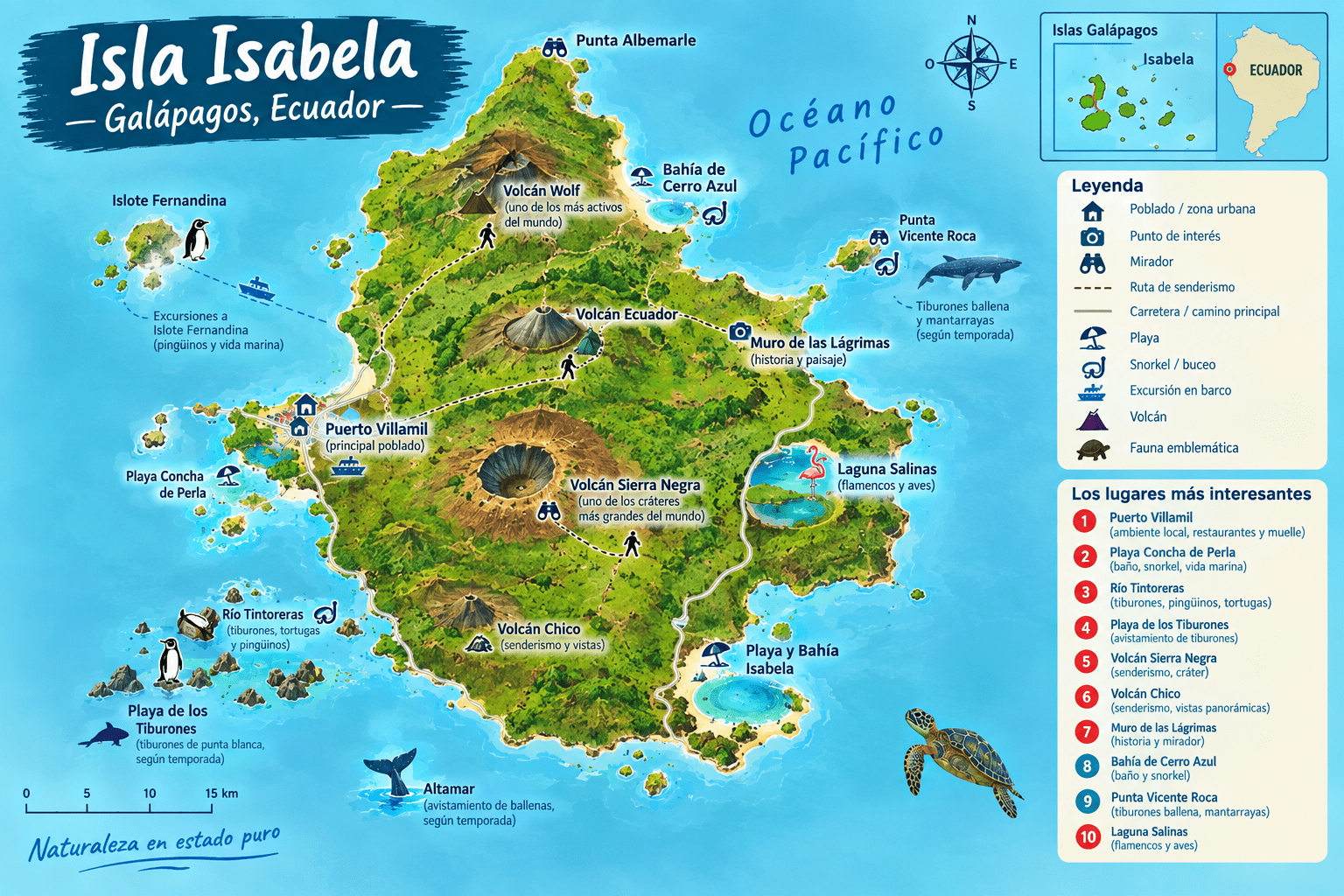
Partying isn't exactly the highlight of its capital, Puerto Villamil, so you'll have no choice but to soak up the sun on its endless beach with green waters and white sand. Surfers will also have a great time here, as long as they're careful not to run over any of the little sharks that prowl near the shore.

The author of this blog didn't lose any limbs when he approached the shark to take the photo….
The quintessential “free” outing is the walk to the Muro de las Lagrimas, a former prison where they used to send those they call “anti-social elements.” It’s “free” because if you want to rent a bike to ride the 5 km under the blazing sun, you have to pay 3 US$… per hour!
It's worth taking a tour to see the island's fiercest predator in action
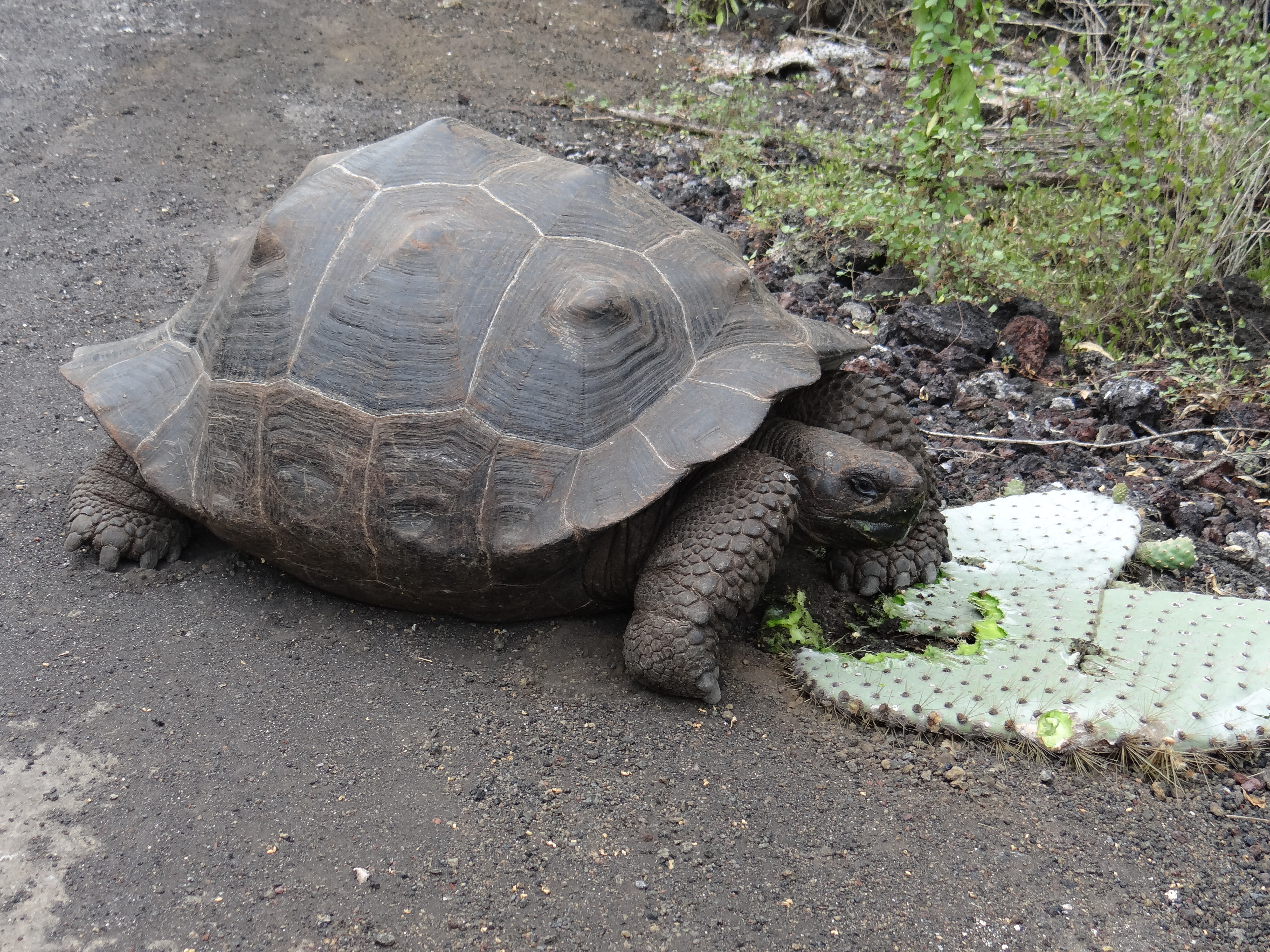
And finally, I can’t help but mention the best snorkeling trip I’ve ever been on—the Tunnels tour: sharks, various types of manta rays, giant turtles… the best $90 I’ve ever spent in my life. Almost all tour operators charge between $85 and $95; you’ll get a big discount if you book another excursion, or a small one if you’re a pain in the neck like me (free bike!).
Well, that's all there is to see in the Galápagos Islands. I won't bore you with more and more photos of animals or tour prices… The important thing to remember is that not everything is that expensive: there are single rooms for 15–17 US$ if you're patient, and supermarkets on all the islands that—even if they aren't very well-stocked—can help you save a few dollars…
If you liked this post or have more information to add, let me know in the comments!
And if you want to read more about Ecuador: https://999millas.net/category/paises/ecuador/
Well, that wraps up our time in the Galápagos Islands; next stop: Cuenca and Vilcabamba!
Texto y fotos : Mike ¡
 EN
EN  ES
ES