
Darwin
What is there to do in Darwin besides baking in the sun and dodging crocodiles?
Australians call this area the Top End. Very fitting. We’re at the very end, way up north, practically touching Indonesia. The city is well known for its old gold mines (sorry, there aren’t any left) and because it was bombed by the Japanese during World War II. The heat is tropical, the dozing crocodiles wait for some unsuspecting victim to come near them, and the roads are only for the bravest.
This region of Australia is home to two of the country's most impressive national parks: Kakadu and the Litchfield, and the best base for exploring both is Darwin
WHAT TO SEE IN DARWIN
This small mining town is generally overlooked, serving only as a gateway to the surrounding natural parks… but as always, there are hidden gems worth discovering—let’s take a look at them on a map
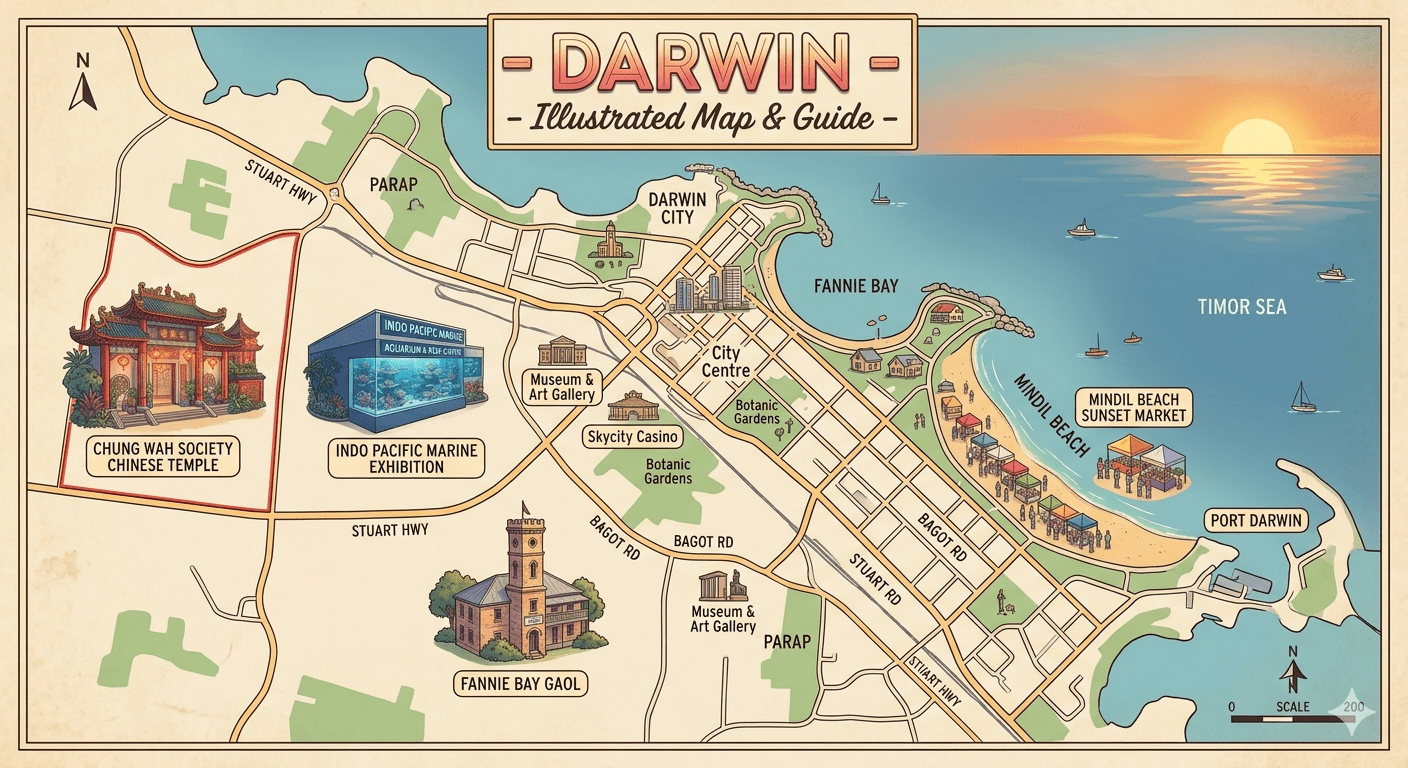
Let's start with the most unusual thing… a Chinese temple in the middle of the tropics?
Chung Wan Society Chinese Temple
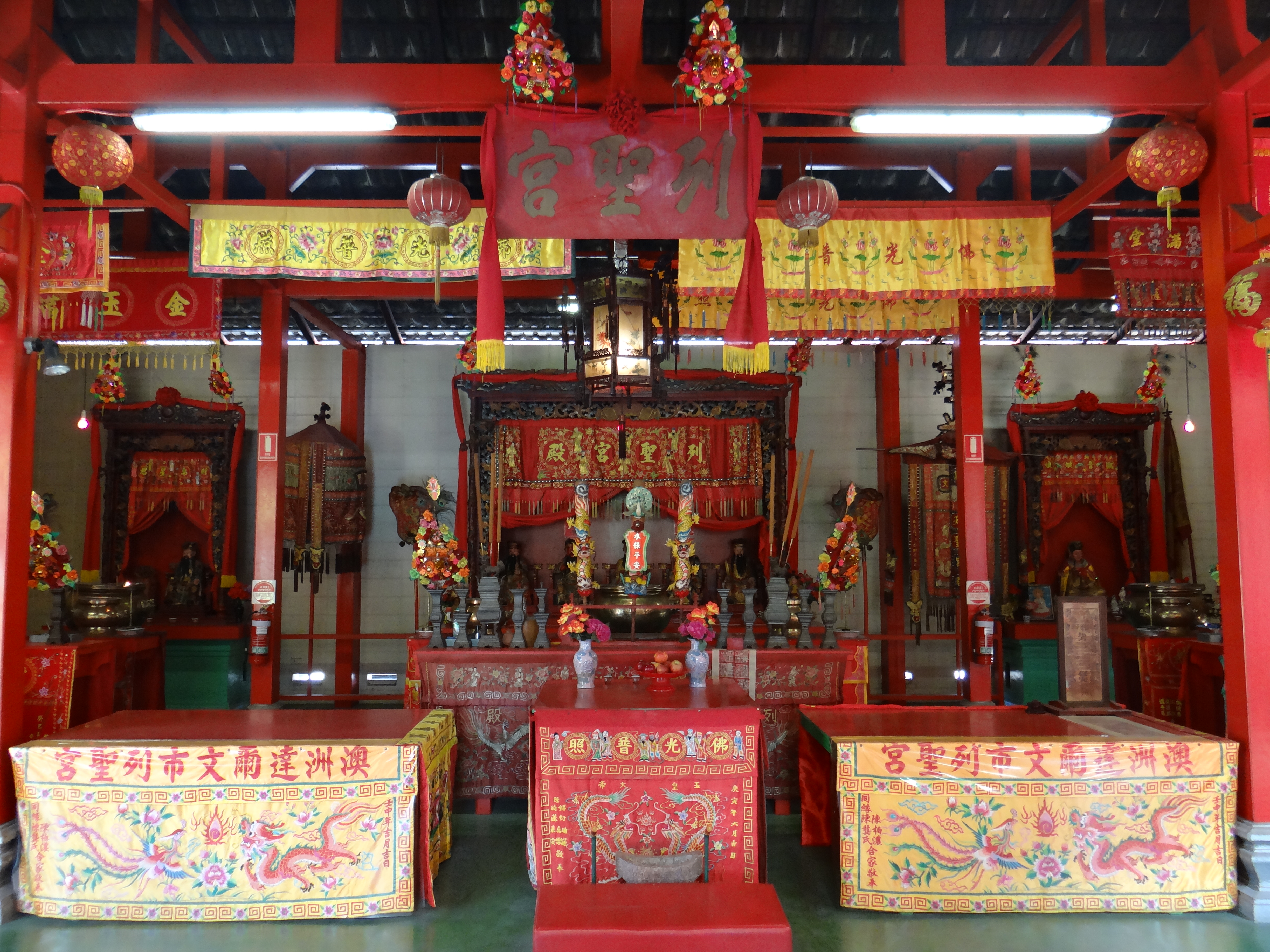
What on earth is a Chinese temple doing in the middle of tropical Australia? The 19th-century Australian gold rush brought a lot of Chinese people to Darwin. They settled there and began working on the railroad, the telegraph, and in the mines… eventually becoming the largest ethnic group in the region. Today, Chinese people are all over Australia—Melbourne is absolutely packed with them—and Chinese tourism is huge here.
The original temple was built around 1887—a date engraved on its ceremonial bronze bell—and the poor structure has endured all kinds of trials and tribulations. It was initially supposed to be built on the site of the current Cathedral of the Church of Christ, but local authorities protested the loud noise from the ceremonial drums, bells, and firecrackers, forcing it to be moved to Woods Street—and, paradoxically, that saved it from the Japanese bombings of 1942. What it could not survive, however, was Cyclone Tracy in 1974, which literally leveled it; it was subsequently rebuilt in the form we can enjoy today.
It's open from 8:00 a.m. to 4:00 p.m. and is a great place to escape the stifling heat of Darwin for a while
Indo Pacific Marine Exhibition
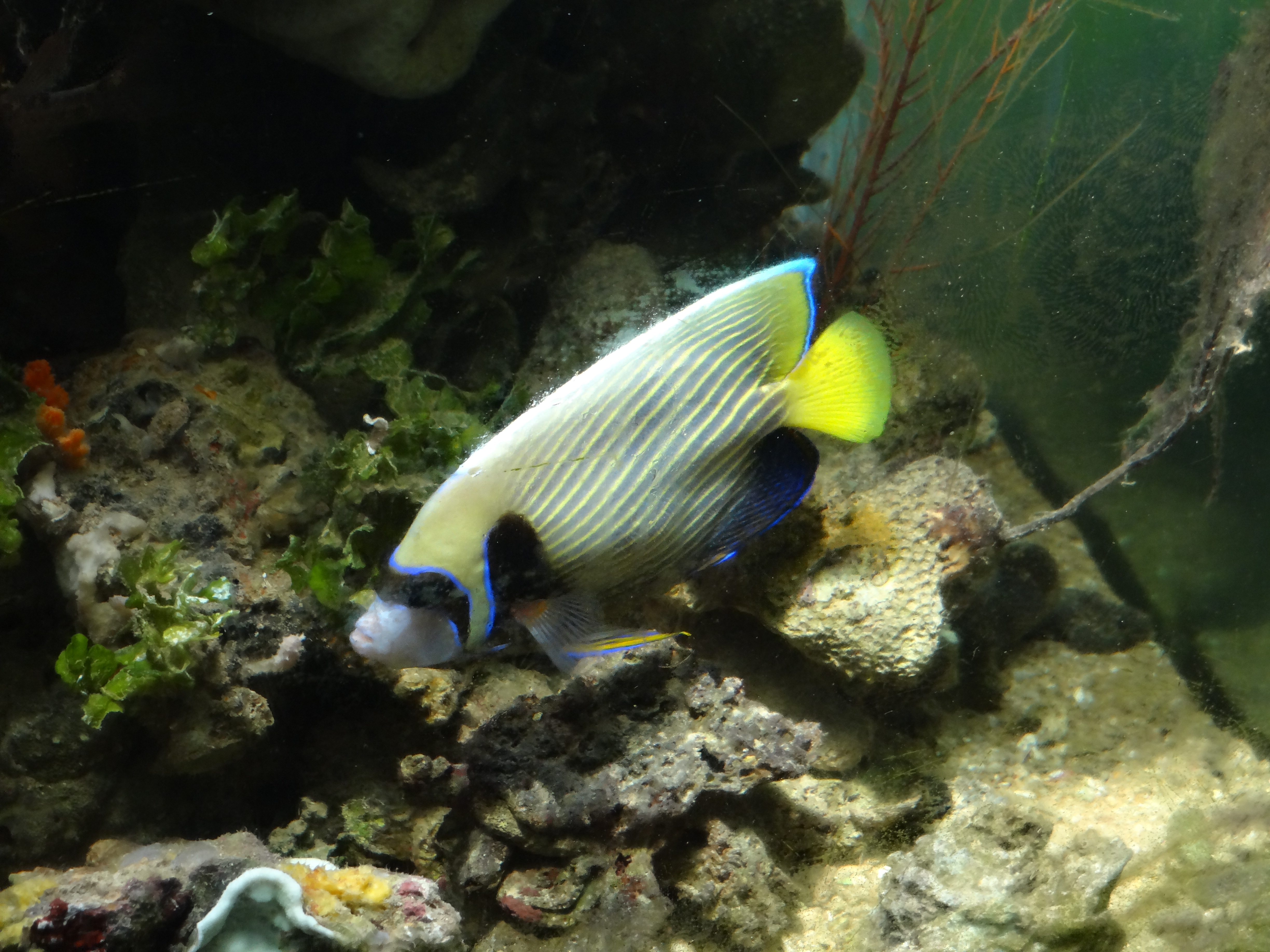
This little masked fish is one of the many we'll be able to enjoy at the Indo-Pacific Marine Exhibition. It's a tiny aquarium with hardly anyone there, which allows the owner to go from customer to customer, sharing all kinds of stories and facts about the fish. Highly recommended for the 24 AUS$ admission fee.
Fannie Bay neighborhood
If you want to get some exercise, you can head to the Fannie Bay neighborhood via an 8-km bike path that runs north to East Point Reserve. Along the way, there’s a free museum (Museum & Art Gallery of the Northern Territory) that not only teaches visitors about the Aboriginal people of the area but also features a permanent exhibition on the wildlife of the Northern Territory.
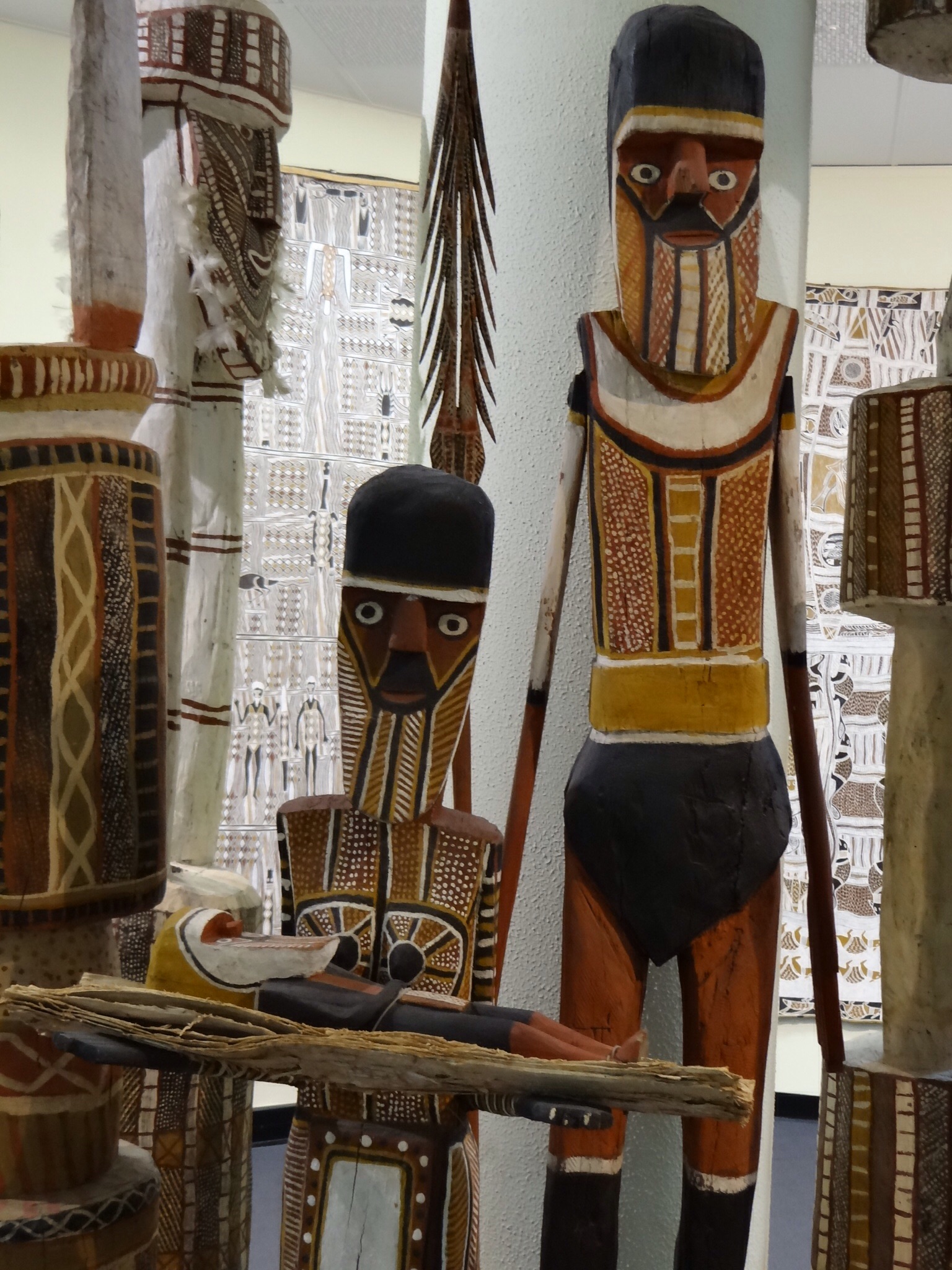
For more information: http://www.magnt.net.au
Get back on your bike, ride past the museum, and as you continue north, you'll enjoy these views

I hope you enjoyed the ride, because renting the bike will have cost you 28 AUS$ for 4 hours or 38 AUS$ for the whole day! 😁 …and one of the reasons to keep the bike until sunset is so you can visit the Mindil Beach Sunset Market.
Mindil Beach Sunset Market.
At dusk, a small market pops up on Mindil Beach with some pretty interesting items: from a little stall where they sell didgeridoos to another one where they sell all kinds of whips, including a demonstration by the owner
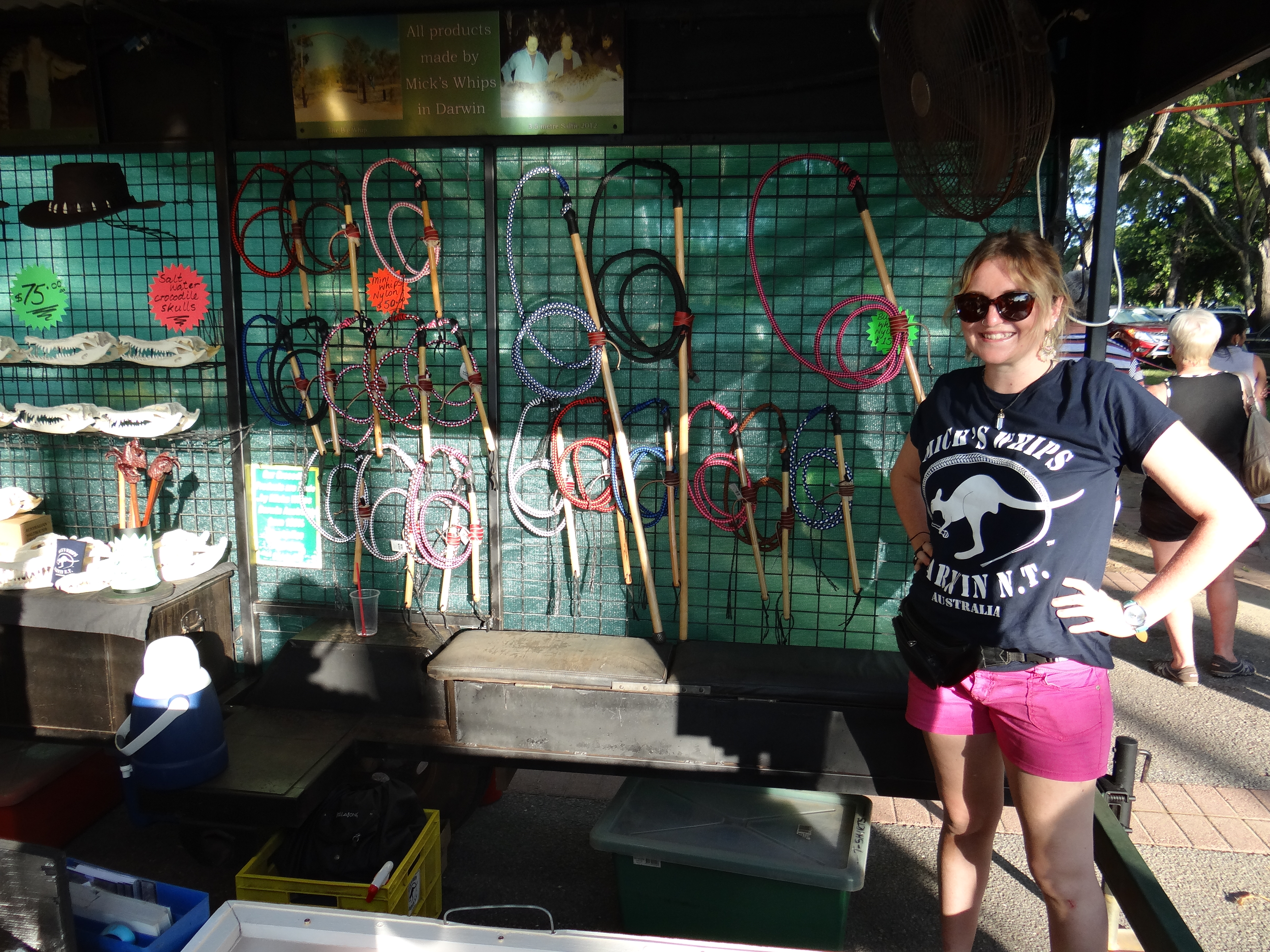
What is a didgeridoo?
It is a type of bamboo flute and one of the oldest wind instruments in the world. Indigenous peoples used it for their initiation ceremonies (the transition from childhood to adulthood), funeral rites, and celebrations of tribal totems. In some communities, the instrument was used in rituals for physical and spiritual healing. The healer (doctor man) played the didgeridoo very close to the body of a sick person. It was believed that the intense, low-frequency vibrations emitted by the instrument helped relieve pain, balance the patient's energy, and speed up the healing of injuries.

At this flea market, when the sun comes out, everything comes to a standstill. We tourists pull out our cameras, the locals bring out their beach chairs and beers, and for a few minutes we all fall silent, enjoying the moment…

Enough about things to do in Darwin; the rest of town is kind of like Marbella, with charmless bars and backpackers everywhere
For more information: https://www.darwin.nt.gov.au
WHAT TO SEE IN DARWIN: KAKADU NATIONAL PARK
When people ask me what to do in Darwin, my first answer is: visit Kakadu National Park. A long, long time ago, in a galaxy far, far away, the sea slowly receded from the northern part of what is now Australia. That new land gradually became covered with mangroves in the north and with forests just like the African savanna a little further south

And so, across an area of 20,000 square kilometers—roughly the size of Switzerland—shortly thereafter, 50,000 years ago, the indigenous people arrived to settle the land. The result of all this is Kakadu National Park.

Tips for Visiting
Here are some tips and hints for anyone who wants to visit
– Obviously, you won't see anything on a one-day tour (just getting there from Darwin takes 3 hours); at least 3 days is recommended, since the distances within the park itself are considerable
– There are two “seasons”: the rainy season (December through April) and the dry season (May through October). Needless to say, you should come during the dry season….
– It’s best to rent a 4×4 to explore on your own; even during the dry season, there’s a risk that the roads will get muddy. The roads that require a 4×4 are theoretically marked, but there are many that aren’t marked at all and still require one.
– Before heading out, check the road conditions and which areas are open to the public: it’s best to visit the official website – https://kakaduroadreport.wordpress.com
– Prices: Admission to the park is 100 AUS$, and camping costs an additional 38 AUS$ per day; in the “capital,” Jabiru, you can buy supplies.
In case anyone isn't convinced of how great this site is, here are a few highlights
You can explore the wetlands (or waterlogged areas) on short, hour-and-a-half boat tours—about 40 AUS$ per ride—and enjoy the local wildlife: geese, hummingbirds, cockatoos… even eagles!

Crocodiles are pretty shy, and it's hard to spot them; if you're really interested, let your hand float in the water for a while and you'll see one up close—at the risk of losing your arm, of course… The guide mentioned that every year the crocodiles eat a tourist, and I don't know if he was joking or serious 😁
This park isn't just about mangroves and birds. It also has its own mountain-river ecosystem with spectacular waterfalls, natural pools, and crystal-clear water.
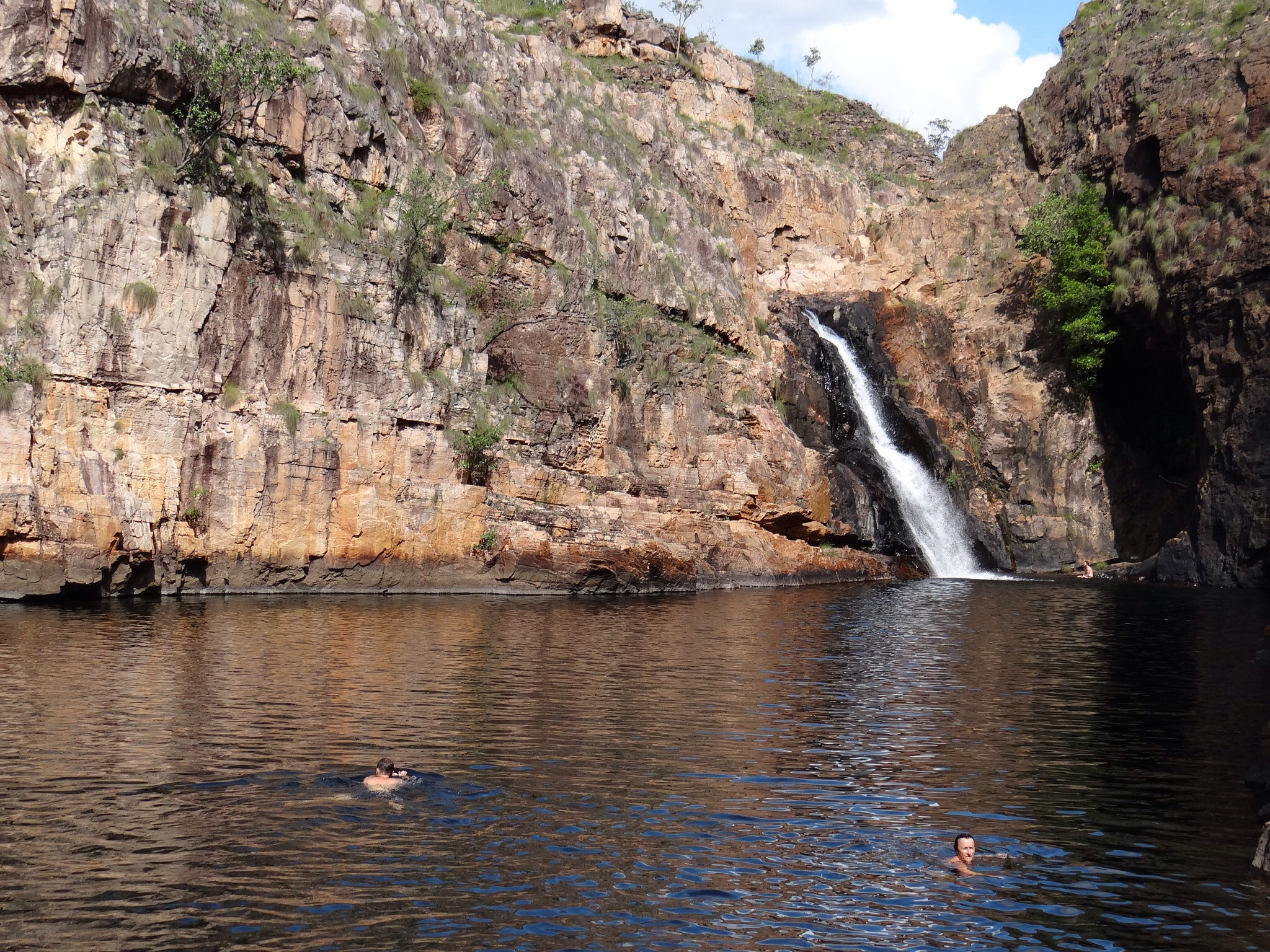
That's the Maguk area you see there; there are other smaller, hidden natural pools that even have several levels.

The Aboriginal Legacy
Theoretically, the Australian Aborigines are among the world’s earliest civilizations. Since they had no written language, they used pigments mixed with local minerals to depict their teachings and stories on stone…! Some of these paintings have survived for a whopping 20,000 years!
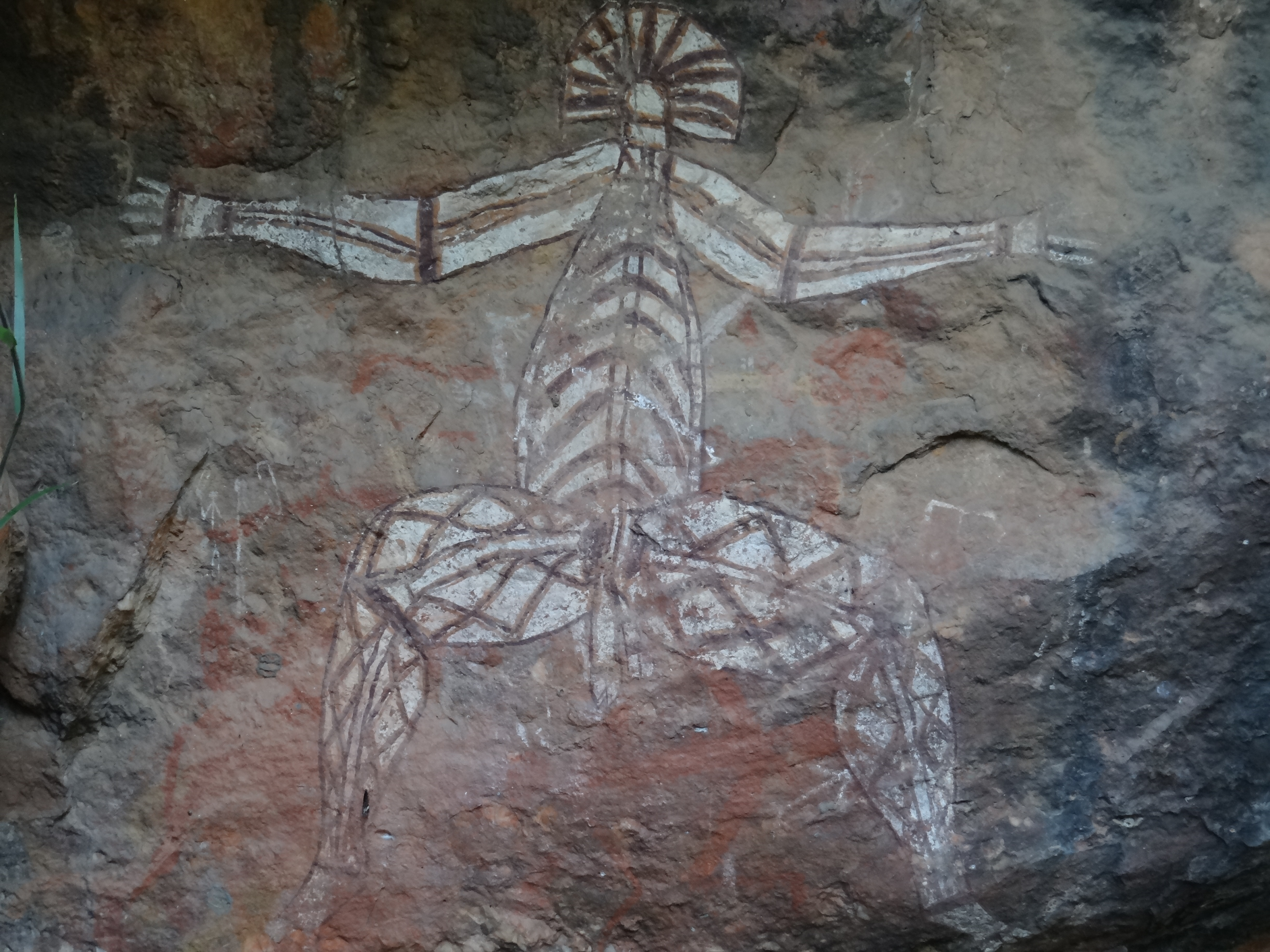
That figure up there has the unpronounceable name of Nawulwinjbulwinj. The Aboriginal people used to kidnap women from other tribes if they caught them far from their camp, so they made up the legend of this creature that strikes women if they stray from home as a way to teach them not to wander far from their camp.
Not all paintings are so gloomy, of course; there are some that are more cheerful, like this one featuring local wildlife.
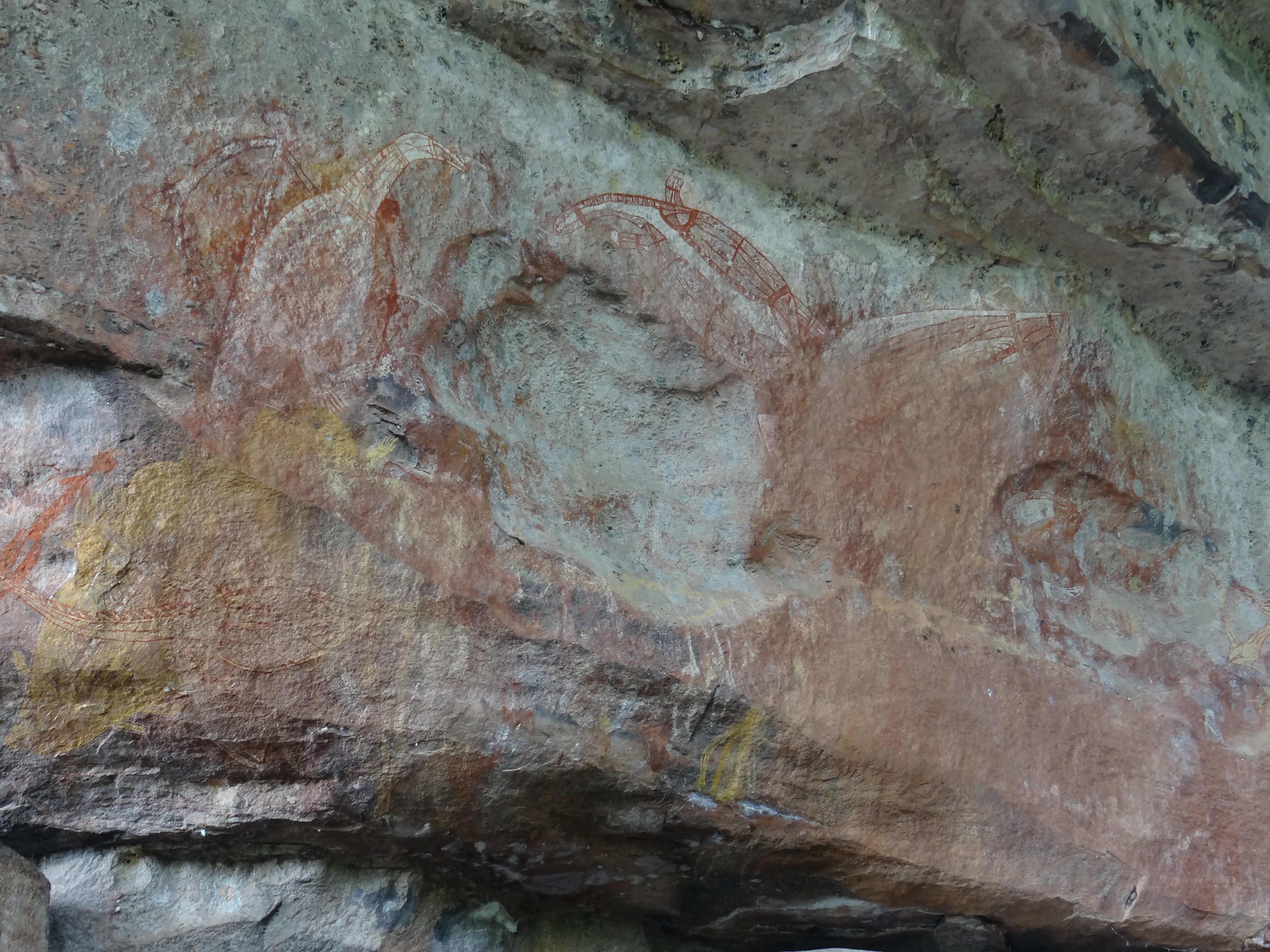
An eagle, a turtle, a fish… that’s how they taught children about the wildlife around them and the characteristics of each animal.
Kakadu has so many more landscapes that wouldn't fit in this post—which is already long enough… I hope this is helpful to anyone who decides to visit!
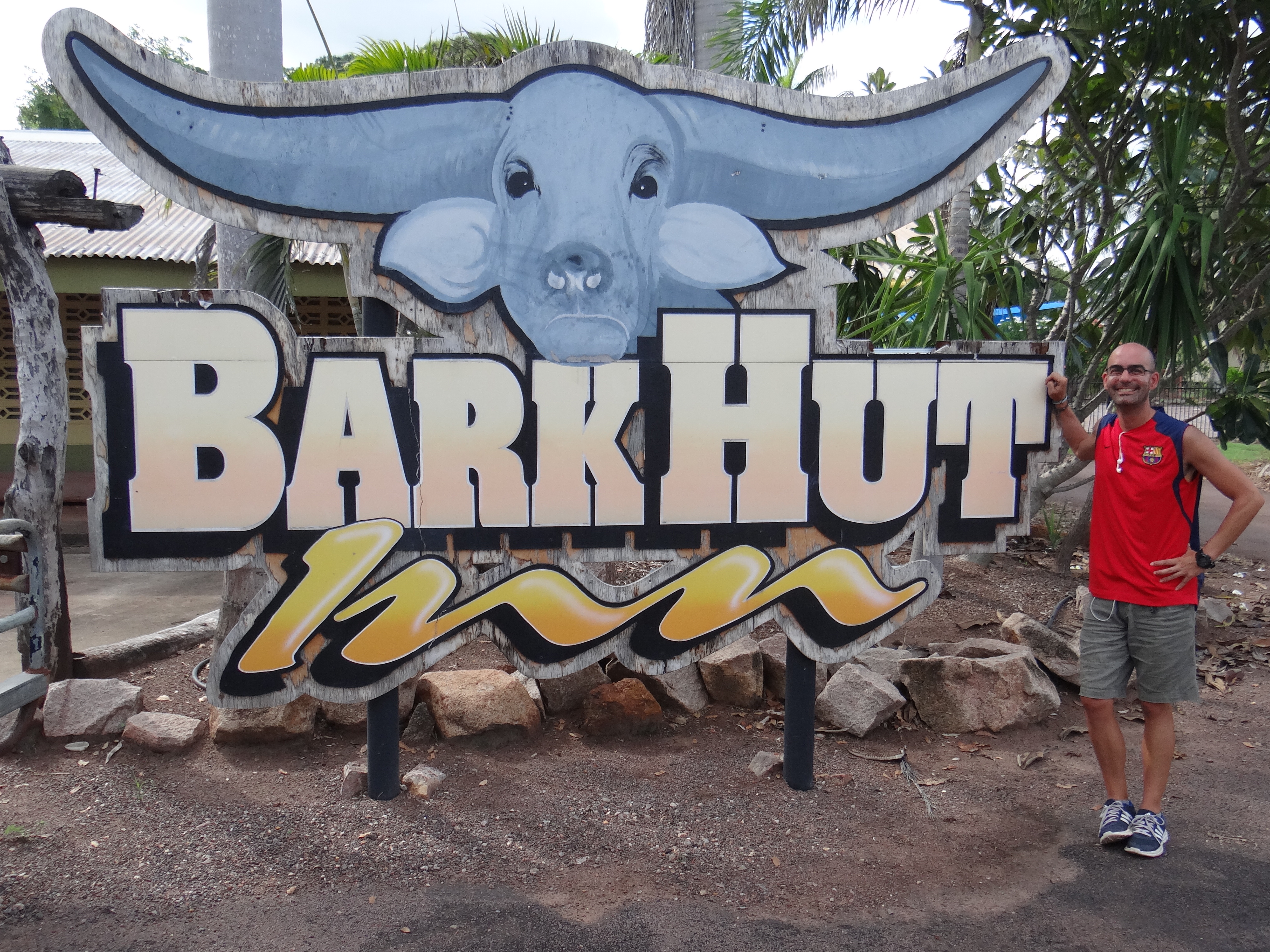
Well, I hope I've answered the question of what to do in Darwin 🙂
If you want to read more about Australia: https://999millas.net/category/paises/australia/
If you liked (or didn't like) this post, or if you have more information, feel free to leave me a comment!
Texto y fotos: Mike !
 EN
EN  ES
ES