


What can we do in Paraty in one day?
Let's start with a little history...
Gold! The discovery of the enormous mines in Minas Gerais, north of Rio de Janeiro, was a blessing for Paraty. Anyone who has been to Rio will have noticed that it is surrounded by mountains, and in the 16th century, the only way to transport goods there was via Paraty.
Being a relatively new and extremely wealthy city, things were done properly: the streets were paved to make them passable when the rain fell heavily, preventing them from turning into an endless muddy mess...
They were also designed to be “concave” and sloped toward the sea so that all the trash thrown into the street would be deposited in the center and naturally washed out to sea when it rained...

As in every city colonized by Europeans—in this case, the Portuguese—they built a multitude of white and pastel-colored churches.

Sailors who had been good during their voyages would go to give thanks at their respective parishes (in the photo, the church of St. Rita of Cassia); those who had been bad enjoyed the hospitality of the nearby Antiga Prisão (old prison).
To protect the gold trade, a fort was built on one of the hills surrounding the city (el Morro da Forte) ; today, practically nothing remains, but the walk among the trees and bamboo is pleasant and the views are rewarding.

And one fine day, a direct road was built between the mines and Rio de Janeiro, and Paraty's light went out... but fortunately, the locals have had the good sense to preserve their heritage in such an exquisite way that the gold trade (now converted into tourism) continues.

Original roofs, clean streets, and gleaming white buildings... here, graffiti artists who come to show off and paint your house are not tolerated.
La mitad de las casas son «pousadas» y la otra mitad negocios relacionados con la artesanía o el buen comer…o beber

Cachaça is obtained by distilling sugar cane (like rum) and can be drunk neat or, more commonly, in a caipirinha. Paraty is one of the most famous centers of artisanal production in Brazil—you will find several shops where the owners will explain how it is made. portoñol cómo ellos mismos la elaboran de sus propias plantaciones en las cercanías a la manera antigua , con alambiques y todo…

In this cachaçaria They get very happy when I tell them I'm going to talk about them on the blog; then they get sad when I refuse to buy them a bottle... that's life...
The former Captaincy General has been converted into a Cultural Center.

As in Cuba, I didn't get the impression that the locals were very interested in its content, and it seemed more focused on tourism—I spent two days in Paraty and didn't see anyone—but I could be wrong.
Another way to generate income is to recycle old fishing boats: they no longer cast their nets over fish but over tourists, offering tours of all kinds and for all tastes. There are many operators, so it seems easy to negotiate a lower price—after haggling in India, negotiating with Brazilians is like stealing candy from a baby.
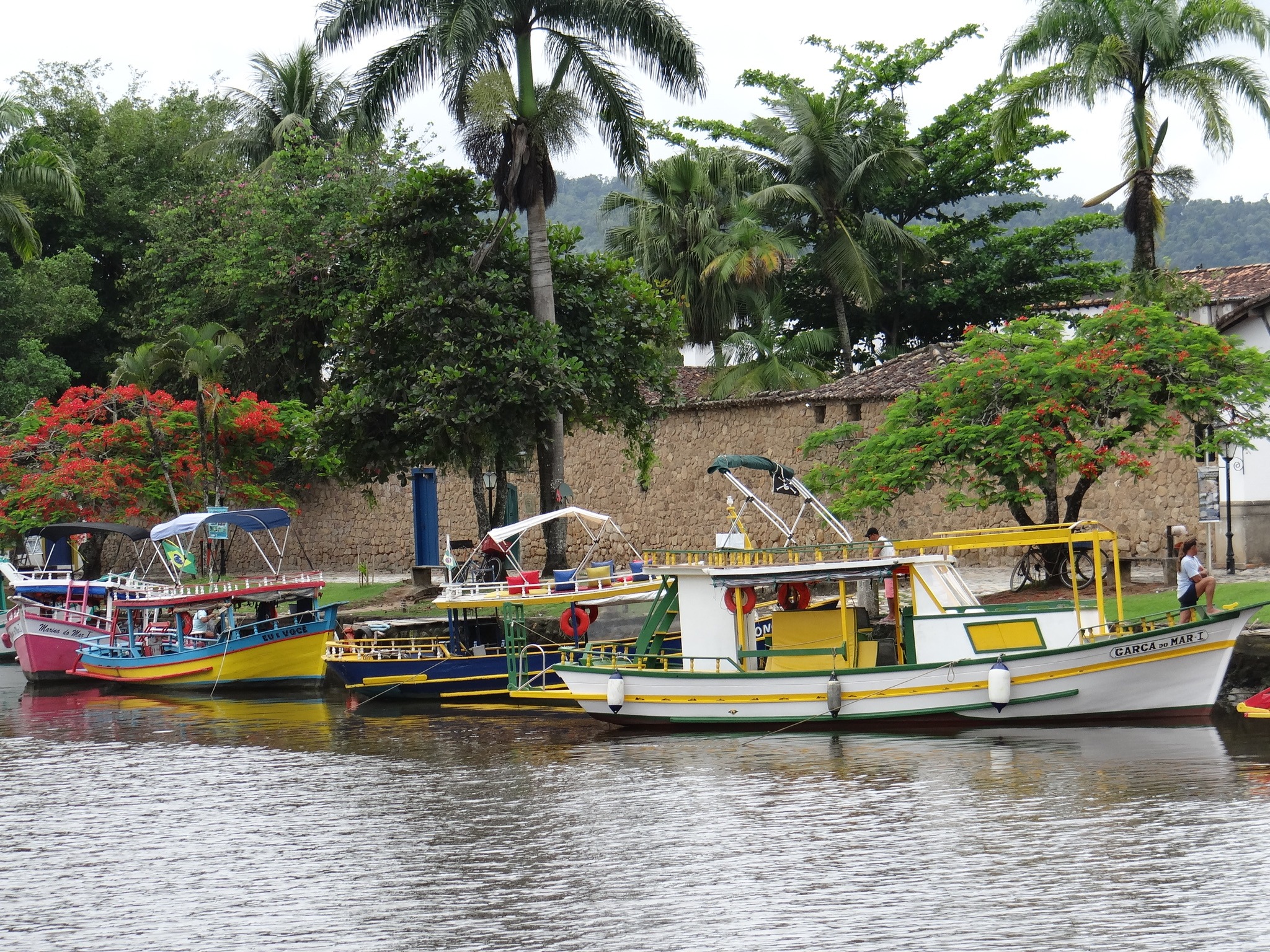
Anyway, jokes aside, this is a good example of how to revive a city threatened with bankruptcy using common sense, good taste, and imagination, and a must-see for anyone heading to southern Brazil.
Well, that was everything I did in Paraty in one day 🙂
If you want to know more about Brazil (or Paraty), here are two links: https://999millas.net/category/paises/brasil/
And the official website from Paraty city: http://www.paraty.com.br/us/
If you liked this post or have more information to add, let me know in the comments!
And don't forget to follow me on my X or Instagram accounts!
Texto y fotos : Mike !
 EN
EN  ES
ES